Practical Sales Training™ > How to connect with your buyer > The Ben Franklin Effect

The Ben Franklin Effect
Most people assume the way to build rapport is to give. Do someone a favour, offer something useful, be generous first. But the Ben Franklin Effect turns that logic on its head.
When you ask someone for a small favour, something changes. They help you, and then – almost without realising it – they like you more. Not because you earned it. But because helping you made them feel like they already do.
It is one of the most counterintuitive ideas in buyer psychology. And once you understand it, you will find ways to use it everywhere.
What Is the Ben Franklin Effect?
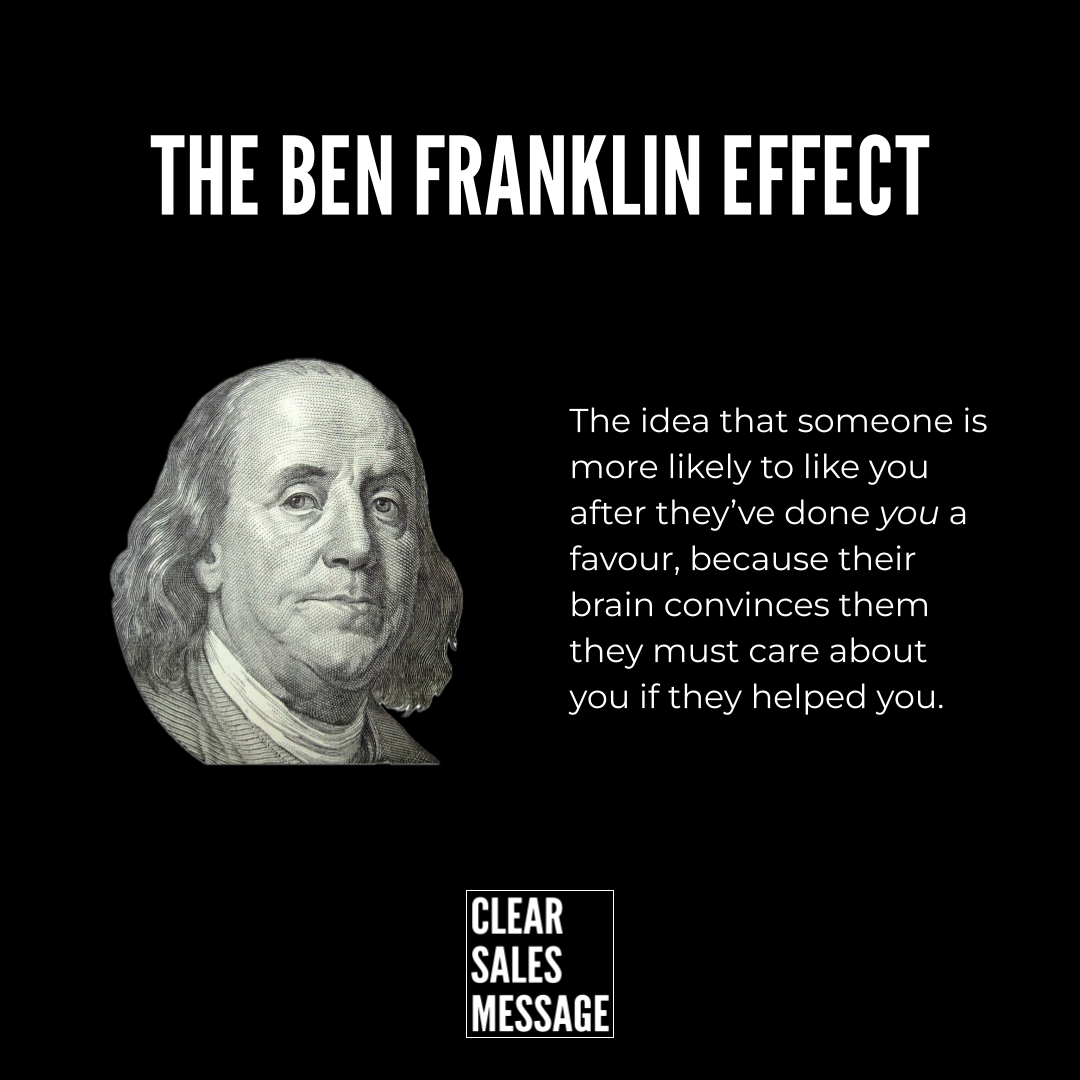
The Ben Franklin Effect is a psychological principle that says people are more likely to like you after they have done you a favour. Their brain justifies the effort by concluding: “I must like them, otherwise why would I help?”
It flips the usual assumption. We tend to think we help people because we like them. But the Ben Franklin Effect suggests the reverse is also true – we like people because we help them.
The effect is named after Benjamin Franklin, who noticed and used this principle in his own life long before psychology gave it a name.
Why Does the Ben Franklin Effect Work?
The mechanism behind it is cognitive dissonance. When someone does you a favour, a small tension appears in their mind: “I do not normally help people I do not like.” To resolve that tension, the brain upgrades how it feels about you. The discomfort disappears, and the liking increases.
Self-justification plays a role too. People want to see themselves as consistent. So if they help you once, their brain reasons: helpful people help people they like – and therefore they must like you. The identity follows the action, not the other way around.
There is also a reciprocity element, but in reverse. Instead of doing a favour to build goodwill, you ask for one. As a result, you let the other person invest in the relationship – and investment creates attachment. People protect what they have put effort into.
How Can You Use the Ben Franklin Effect In Sales?
Ask for a small opinion early on
Early in a sales relationship, ask the prospect for a quick thought or a view on something relevant to them. “Would you mind taking a look at this and telling me what you think?” is a small ask that costs them almost nothing. But because they helped, they are now more invested in the conversation than they were before.
Request one tiny action
Ask a prospect to check a link, confirm a detail, or review a short document. The task itself is not the point. The act of doing it is – because completing a small task for you shifts how they feel about the relationship, even if they do not realise it.
Use it in client onboarding
Ask new clients to send a small piece of information or confirm a preference before you begin. This starts the relationship on a cooperative footing, so they feel involved from the start. Clients who contribute early tend to engage more and stay longer.
Apply it in leadership and management
Ask a team member for help with something they are good at. It builds rapport fast, because they feel valued and capable. People also tend to respect leaders they actively support, so the favour strengthens the relationship from both sides.
Use it in networking
Instead of leading with an offer, ask for something small the other person can easily give – a recommendation, a quick perspective, a contact. Small asks build big connection, because the person who helped you now has a reason to feel positively toward you.
Apply it in content creation
Ask your audience to contribute something: “What is one thing you have tried that actually worked?” Or invite feedback on a draft or idea. People who interact with your content once are more likely to come back, because they have already invested in it.
When the Ben Franklin Effect Works Best
It works best early in a relationship, when you are still building trust and looking for a way in. A small ask at the right moment creates a connection that a polished pitch never could, because it involves the other person rather than performing at them.
It is also powerful when someone is neutral or slightly cold toward you. Because the favour shifts their internal narrative, it can move a hesitant prospect from cautious to warm without you having to change anything else about your approach.
Similarly, it works well when you want to deepen an existing relationship. Asking a long-term client for a small piece of input – their opinion on something, a quick review – reminds them they are valued and keeps them invested in the connection.
When the Ben Franklin Effect Becomes Dangerous
The risk is asking for too much too soon. A small favour builds liking. A large favour at the wrong moment feels like an imposition, and the effect reverses. So keep the ask genuinely small, especially at the start of a relationship.
There is also a transparency risk. If the other person realises they are being asked for a favour specifically to make them like you, the manipulation becomes visible. The Ben Franklin Effect works because it feels natural – so the ask must always feel genuine rather than engineered.
Overuse is another danger. Asking for favour after favour starts to feel one-sided. However well the effect works in the short term, a relationship that only flows one way will eventually produce resentment rather than rapport.
Common Ben Franklin Effect Mistakes
Asking for too much
The power of the Ben Franklin Effect comes from the smallness of the ask. When the favour requires real effort or time, it stops feeling like a generous act and starts feeling like a burden. So keep the initial ask light – something the other person can say yes to without thinking twice.
Not acknowledging the favour
When someone does you a small favour, acknowledge it warmly. A genuine thank-you completes the loop and reinforces the positive feeling they already have. Without it, the moment passes and the connection does not stick in the way it should.
Forgetting to give back
The Ben Franklin Effect is a starting point, not a strategy in itself. Once someone has helped you and the rapport has grown, reciprocate. Relationships built on one-sided asking will not last. The effect gets you the connection – but you still have to maintain it.
The Ben Franklin Effect – An Example
Benjamin Franklin used this effect himself. He once needed to win over a political rival who openly disliked him. Instead of offering a gift or doing him a favour, Franklin asked to borrow a rare book from the man’s personal library.
The rival agreed, sent the book, and Franklin returned it with a warm thank-you. After that small exchange, the man’s attitude changed completely – he became friendly, cooperative, and far more open to Franklin.
Nothing else changed. He simply liked Franklin more because he had helped him once. That is the Ben Franklin Effect in its purest form.
See Also