Practical Sales Training™ > How To Get Attention > The Stroop Effect

The Stroop Effect
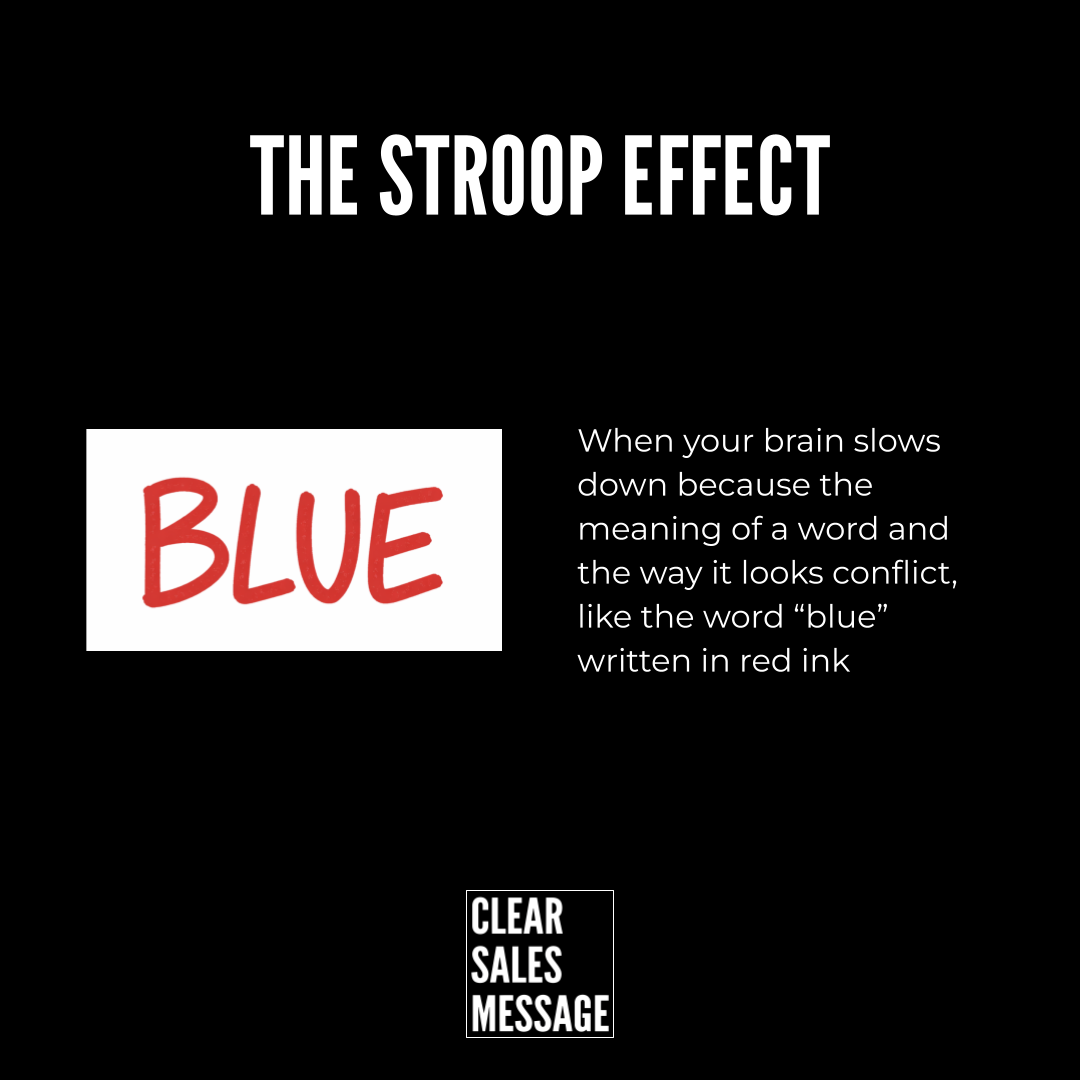
Read the word “blue” written in red ink, and your brain stumbles for a split second. It’s a tiny pause, but it’s real, and it happens every single time.
That’s the Stroop Effect. In sales, the same clash happens whenever what you say and how you present it don’t quite line up.
This page covers what the Stroop Effect is, why it slows buyers down without them noticing, and how to use alignment to keep momentum on your side.
What Is The Stroop Effect?
The Stroop Effect describes what happens when the meaning of something clashes with how it appears, causing the brain to slow down.
A classic example is the word “blue” written in red ink. Your brain automatically reads the word, but at the same time it tries to process the colour. Those two signals clash, so the result is hesitation.
In sales and messaging, this effect shows up whenever what you say and how you present it don’t quite align.
Why Does The Stroop Effect Work?
The brain likes consistency. When information agrees with itself, it flows smoothly and feels easy to process. But when signals conflict, even slightly, the brain has to pause and resolve the mismatch.
That pause is the Stroop Effect in action.
In a commercial setting, this can happen when confident language gets paired with uncertain design, when premium pricing shows up next to budget visuals, or when a promise sounds simple but the explanation feels complex. The buyer may not consciously spot the problem, but they feel it anyway.
That feeling often shows up as hesitation, rereading, or delay. Not because the offer is wrong, but because the signals don’t agree with each other.
How Can You Use The Stroop Effect In Sales?
Aim For Alignment
The goal is alignment. Your words, visuals, tone, and structure should all tell the same story. So when they do, the buyer doesn’t need to think about whether something makes sense. It simply feels right.
Use Conflict Only On Purpose
If you want to slow someone down deliberately, conflicting signals can actually help. Surprise, disruption, or contrast can grab attention when used with intent. But in most buying situations, clarity converts better than cleverness.
Remove The Need To Reconcile
The moment a buyer has to stop and reconcile mixed messages, momentum weakens. So when everything points in the same direction, decisions feel easier and more confident.
The Stroop Effect is a reminder that confusion isn’t always loud. Sometimes it’s just a quiet pause that costs you the sale.
When The Stroop Effect Works Best
It’s most useful to watch for in moments that decide whether a buyer moves forward, like a homepage, a pricing page, or the first few seconds of a pitch. A small mismatch there can quietly cost you attention before the message even lands.
It also matters most when you’re selling something premium or trust-based, since a buyer expecting quality notices a sloppy mismatch far faster than someone browsing a budget option.
When The Stroop Effect Becomes Dangerous
It becomes a real problem when the mismatch is large enough that buyers stop trusting the message entirely, rather than just pausing for a second. A site that looks cheap while claiming to be premium raises doubt, not curiosity.
It’s also risky if you never notice the clash yourself, because you’re too familiar with your own brand to see what a first-time visitor sees immediately.
Common Stroop Effect Mistakes
Mismatching Tone And Visuals
Confident, bold copy sitting next to a dated, low quality design sends two conflicting messages at once. Make sure your visuals back up the claims your words are making.
Overcomplicating A Simple Promise
A simple offer explained through complex, jargon heavy language creates exactly the kind of friction the Stroop Effect describes. Keep the explanation as simple as the promise itself.
Ignoring How A Newcomer Sees It
Familiarity with your own brand can hide mismatches that a first-time visitor spots instantly. Get fresh eyes on your messaging regularly to catch what you’ve stopped noticing.
The Stroop Effect – An Example
A software company prices its product as “premium” and “enterprise grade,” but its website still uses a free template with default fonts and stock photos. The pricing page reads like a five-star claim. The design reads like a budget one.
A visitor doesn’t consciously list out the contradiction. But they feel a flicker of doubt, because the two signals don’t agree with each other. That doubt is often enough to make them check a competitor before committing.
That’s the Stroop Effect costing a sale quietly. Nothing about the product itself was wrong. The mismatch between the claim and the appearance was the only thing standing in the way.
See also