Practical Sales Training™ > How To Get Attention > Imminent Problem

The Imminent Problem Effect
Most buyers do not act because a problem got worse. They act because it started feeling closer.
The risk feels real now. The timeline feels short. And that shift changes everything.
People react far more to problems that feel near than to problems that feel distant. So imminence is often more powerful than importance.
What Is The Imminent Problem Effect?
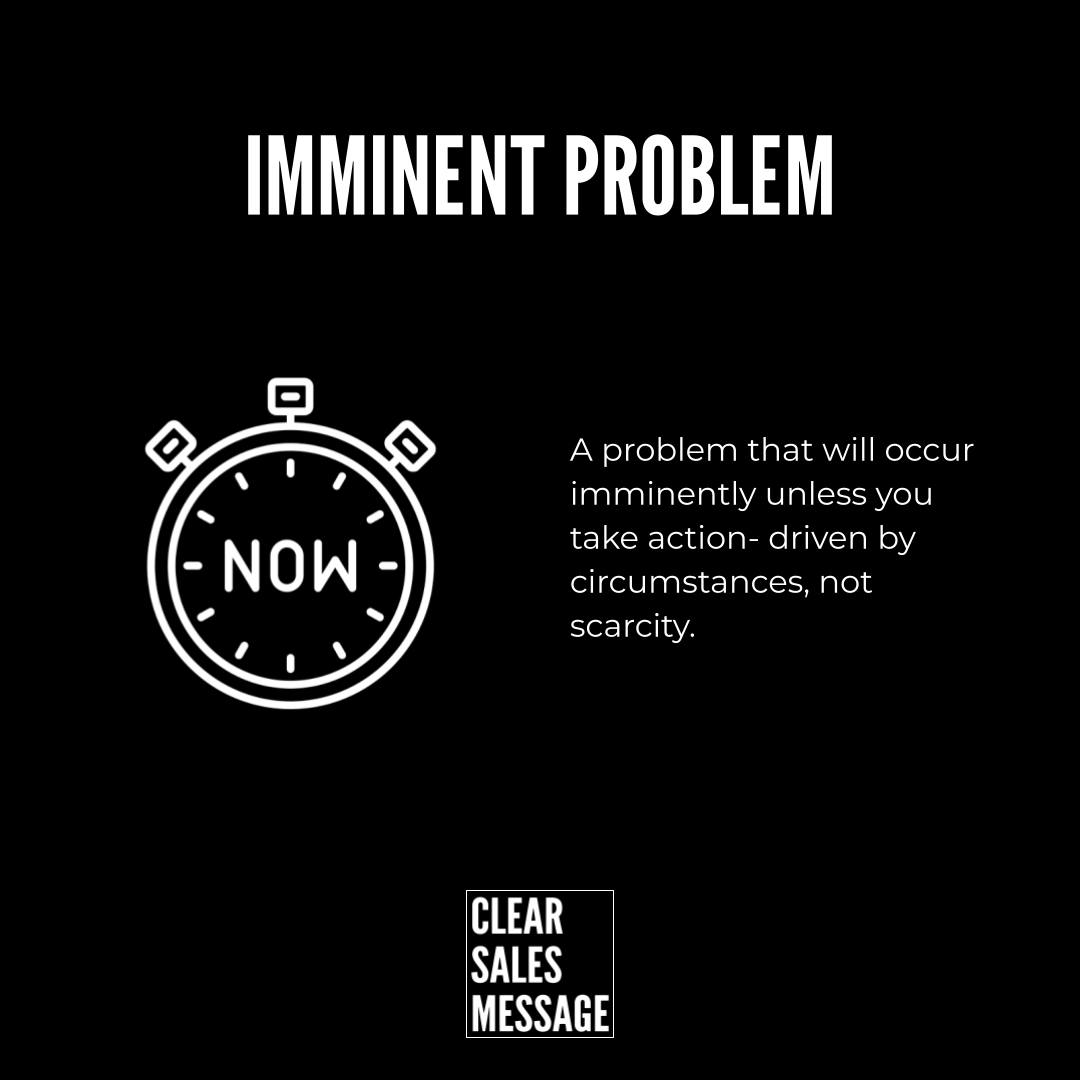
The Imminent Problem Effect is simple. Buyers act when a problem feels close, unavoidable, or time-sensitive. The issue may have existed for years. But once the consequences feel near, urgency rises fast.
Think about a contract renewal coming up, a key person leaving, or a compliance deadline getting closer. These things feel urgent not because they are new – but because they are now.
Proximity changes how serious a problem feels. And that change drives action.
Why Does Imminence Affect Buyer Psychology?
People are wired to respond to immediate threats. Distant problems feel manageable. The brain assumes there is still time. But imminent problems feel different. Delay starts to feel risky. So priorities shift.
That matters a lot in sales. Urgency is driven less by how big a problem is and more by how close the consequences feel. A small problem arriving tomorrow can create more action than a large problem still years away.
How Does The Imminent Problem Effect Influence Sales?
Strong sales conversations help buyers see not just the problem – but what happens next if nothing changes. That is not pressure. It is visibility. Because buyers often delay simply because no one has helped them see the timeline clearly.
Help buyers understand what is coming, what delay will cost, and why timing matters now. Urgency follows naturally once the consequences become visible.
Deadlines Change Behaviour
Deadlines turn vague future risk into a real event with a date attached. Once a buyer thinks “this is about to affect us,” priorities shift fast. The problem stops feeling theoretical. It starts feeling real. And that changes what they do next.
Visible Consequences Create Momentum
Buyers delay when consequences feel far away. But when consequences become specific and time-linked, momentum builds. Clarity increases urgency. Vagueness weakens it. So the more clearly a buyer can see what is coming, the harder it becomes to keep putting things off.
How Can You Use The Imminent Problem Effect?
Help buyers understand the timeline – not just the problem itself. Show them what is approaching. Make the consequences feel real and close. Help them connect doing nothing now to pain later.
Think about approaching deadlines, growing risk, and future pressure. These things already exist. Your job is to make them visible before the buyer feels them directly.
When The Imminent Problem Effect Becomes Most Powerful
This effect is strongest when buyers face time pressure, financial deadlines, or visible business risk. Proximity combined with uncertainty creates real emotional urgency. The closer a consequence feels, the harder it is to ignore. That is often when stalled decisions suddenly start moving.
Research Behind The Imminent Problem Effect
This effect links to temporal discounting, loss aversion, and urgency psychology. Research shows people respond more strongly to near-term threats than distant ones. Proximity increases emotional weight. So the same problem feels more serious when it is close than when it is far away.
You can read more here: Temporal Discounting
Common Imminent Problem Effect Mistakes
The most common mistake is describing a problem well but failing to explain why timing matters. The buyer understands the issue. But it still feels distant. So they file it away and move on.
Creating Fake Urgency
Artificial deadlines and pressure tactics usually backfire. Buyers spot fake urgency quickly – and it damages trust. Real urgency works because the consequences feel logical and believable. So instead of inventing pressure, help buyers see the real timeline clearly.
Failing To Attach A Timeline
Describe a problem without a timeline and the brain assumes there is always “later.” Without a sense of when consequences arrive, urgency fades. But give the same problem a visible date or trigger point and it feels far more pressing – even if nothing about the problem itself has changed.
The Imminent Problem Effect – An Example
A company knows its legacy software is outdated. But it feels manageable, so they keep delaying. Then the provider announces support ends in 90 days.
Suddenly the risk feels immediate. The disruption feels real. The project gets prioritised.
The problem did not change. But the timeline did. And that is what shifted everything.
See also

