Practical Sales Training™ > How To Connect With Your Buyer > Branded Moment

Branded Moment
What Is It
A Branded Moment means naming a small, everyday moment and quietly attaching your brand to it. It’s not an advert for a product. It’s a claim on a habit, a feeling, a familiar pocket of someone’s day that already happens whether your brand exists or not.
Once that moment has a name, and your brand is stitched into that name, buyers start doing the linking for you. They don’t think “I should buy this.” They think “this is that moment,” and your brand rides along for free.
Why Does It Work
People don’t remember most adverts. But they do remember their own routines, since routines repeat constantly and adverts don’t. So if you can attach your brand to something that already repeats in someone’s life, you get remembered without needing to interrupt them again and again.
This also works because naming a moment makes it feel real and shared. “That feeling when…” is a phrase everyone recognises instantly. Give that feeling a name tied to your brand, and you’ve turned a private, everyday moment into something buyers associate with you specifically, rather than with a generic idea nobody owns.
How Can You Use It
Find A Moment That Already Exists
Don’t invent a moment from nothing. Look for one your buyers already live through regularly, like the second coffee slump, the Sunday scramble, or the last five minutes before a deadline. The moment needs to feel instantly familiar the second you name it, or the whole idea falls flat.
Give It A Name Your Buyer Would Actually Say
The name has to sound like something a real person would say out loud, not something a marketing team invented in a meeting room. Test it by saying it in a normal sentence. If it sounds natural, keep it. If it sounds like a slogan, rework it.
Repeat It Everywhere, Consistently
A Branded Moment only sticks through repetition. Use the same phrase across your packaging, your ads, your social posts and your in-store signage. The moment it starts changing wording, buyers stop building the automatic link, so consistency matters more than cleverness here.
Let The Moment Stay Bigger Than The Product
Resist making it purely about the product itself. The moment should feel like it belongs to the buyer’s life first, with your brand simply present inside it. If it feels like an advert dressed up as a moment, buyers see straight through it.
When It Works Best
This works best for everyday products bought out of habit rather than research, like food, drink, or small routine purchases. It also works well for brands trying to build warmth and familiarity rather than pure performance claims, since the whole approach relies on feeling rather than logic.
When It Becomes Dangerous
It becomes weak fast if the moment feels forced or invented purely for the campaign. Buyers can tell the difference between a moment that was always there and one built backwards to fit a product. Once that gap shows, the whole idea loses its warmth.
It also fades quickly without repetition. A Branded Moment used once and dropped never gets the chance to become automatic in someone’s mind. Commit to it long enough, or don’t start it at all.
Common Mistakes
Naming A Moment Nobody Recognises
If buyers don’t instantly know the feeling you’re describing, the name does nothing. Test the phrase on real people before you build a whole campaign around it.
Changing The Wording Over Time
Small tweaks to the phrase across different campaigns quietly break the link buyers were starting to build. Keep the exact wording locked once you’ve chosen it.
Making The Brand Louder Than The Moment
If your logo and product dominate every mention, the moment starts feeling like an advert again. Let the moment lead, with the brand sitting quietly inside it.
Branded Moment – An Example
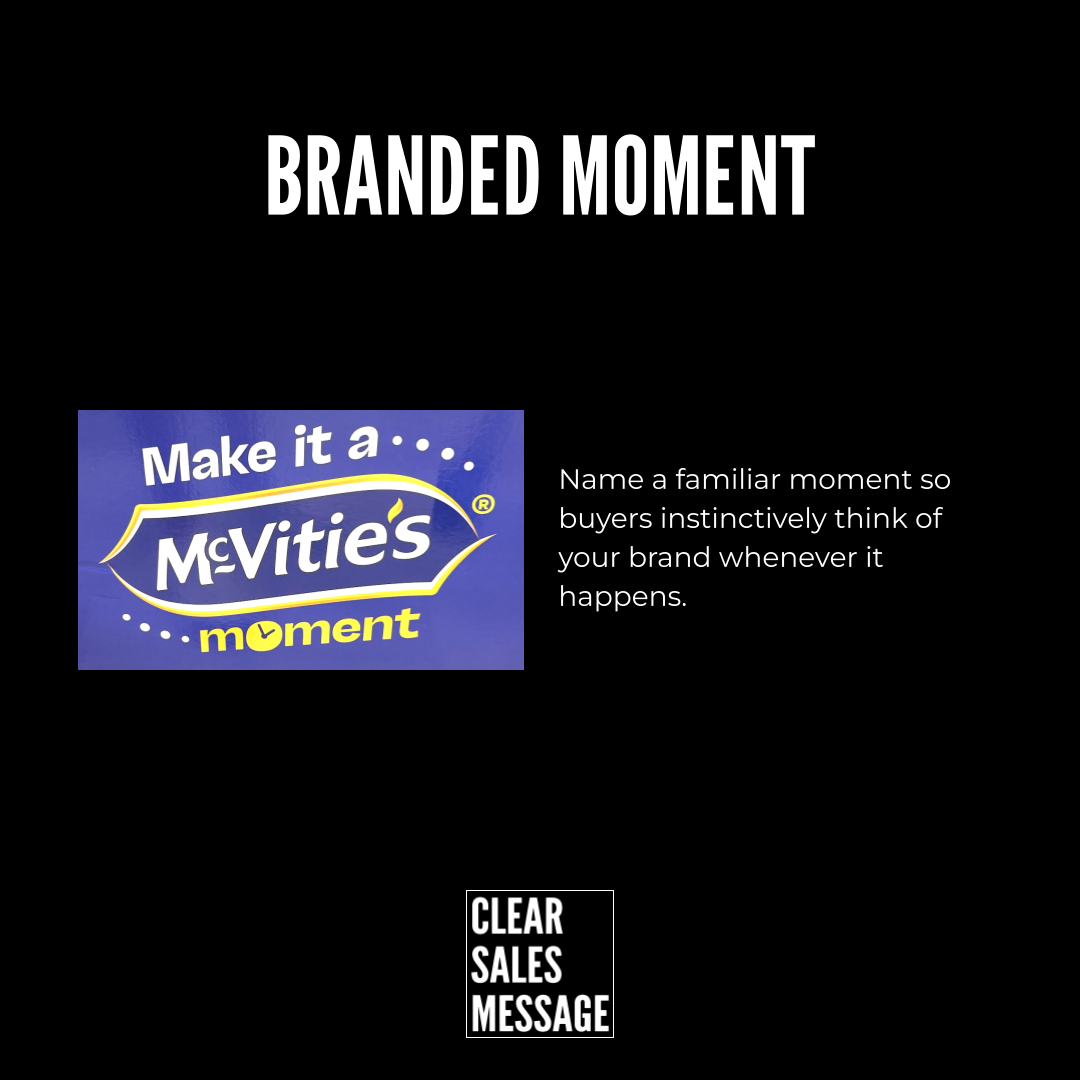
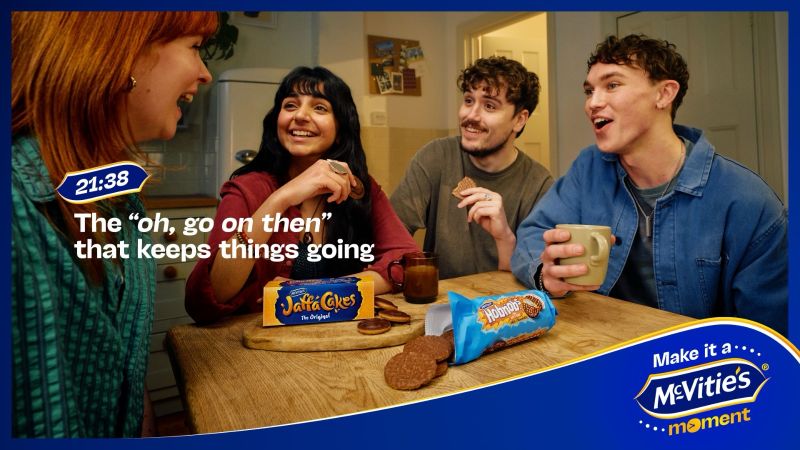
McVitie’s built exactly this with their “Make it a McVitie’s moment” campaign. It doesn’t sell biscuits directly. It names a familiar scene instead, friends round a kitchen table, a packet passed round, that easy “oh, go on then” when someone offers you a second one.
None of that requires explaining what the product does. It just points at a moment everyone already recognises and puts the brand quietly at the centre of it. Next time that moment happens in real life, the brand is already sitting there in the buyer’s head, waiting.
See Also