Practical Sales Training™ > How To Get Attention > Dismissive Success
Dismissive Success
You’ve seen it a hundred times. Someone posts a huge result and tags it with a shrug. And you click. Of course you click. Because if it was that easy for them, maybe it’s easy for you too.
That’s the whole trick. So let’s look at why it works, and how to use it without looking smug.
What Is Dismissive Success?
Dismissive Success is when you share a real win but shrug it off. So a big result comes out sounding easy, lucky or no big deal. The hard work drops out of the story. As a result, the win looks close enough for anyone to touch.
Most people do the reverse. They tell you how hard it was, then list the late nights and the setbacks. That earns respect, sure. But it also builds a wall. Now the result feels out of reach for most people.
Dismissive Success flips that. In effect, it says, “I did this, and it wasn’t even hard.” And that tiny shrug does a lot of heavy lifting.
Why Does Dismissive Success Work?
It works because it hits two nerves at once. First, a big result grabs your eye. Then the shrug makes it feel within reach. So you get the pull of the prize and the hope that you could win it too.
People buy what they think they can pull off. If a result looks hard, most buyers quietly rule themselves out. They admire it, but they don’t act. However, when the effort looks small, the risk looks small too. And a small risk is easy to say yes to.
There’s also a gap in the story. You showed the result but hid the method. In fact, that missing piece keeps people reading. They want to know what you know. So they click, ask or book a call to find out.
Finally, it reads as quiet confidence. Anyone who brags loudly seems to need the praise. But a person who shrugs seems to have plenty more where that came from. That calm makes the result feel real.
How Can You Use Dismissive Success?
Dismissive Success works best as a hook that you then back up. Here’s how I’d use it.
Put The Shrug In The Headline
Your headline is where the shrug earns its keep. A plain result like “We cut churn by a third” is fine. But add a light touch and it pulls harder. For example, “Turns out fixing churn took one email.” Now the reader wants that email.
Shrink The Effort, Keep The Result Big
The effort is the part you play down. Your prize has to stay large, or there’s nothing to want. So keep the number or the outcome clear and sharp. Then make the path to it sound short and simple. That mix is what makes people lean in.
Pay It Off Straight Away
The shrug opens a gap, so close it fast. Right after the hook, show the simple method behind the win. That’s the moment trust forms. Otherwise, the shrug starts to look like a trick. And people who feel tricked scroll on for good.
Use It On Your Buyer’s Win, Too
This works well in case studies. Most case studies read like a war story, full of hard work and big change. But your buyer fears both. So tell it the other way round. “Their team barely changed how they worked. The numbers just moved.”
Suddenly your buyer thinks, “We could do that.” As a result, the fear of change shrinks. And that fear stalls more deals than price ever does.
When Does Dismissive Success Work Best?
It works best when you have proof. A real number, a real client or a real screenshot gives the shrug something to stand on. Without it, you just sound smug.
It also suits crowded feeds. On social posts, video titles and email subject lines, you get a split second to stand out. So a shrugged result makes people stop.
And it fits buyers who feel stuck. If someone has tried and failed before, a hard story only proves their fears right. Instead, an easy story gives them hope. Maybe this time will be different.
When Does Dismissive Success Become Dangerous?
Dismissive Success turns risky the moment it bends the truth. If you say something was easy and it wasn’t, your buyer finds out. Usually right after they’ve paid. So the shrug that won the sale also sets up the refund.
It can also insult your buyer. Say a buyer has spent years on a problem. Then you breeze in and call it simple. That can feel like you’re mocking their struggle. So read the room before you shrug.
Big, high stakes deals are risky too. A buyer signing off on a large contract wants to feel you take their risk to heart. So “lol” in a board pitch costs trust. In those deals, save the shrug for the top of the funnel.
Take care in markets like money or health, too. Making results sound easy there can land you in real trouble. So keep the shrug on the effort and the claims plain.
What Are The Common Mistakes With Dismissive Success?
I see the same few slip-ups again and again.
Shrugging Off A Small Result
A shrug only works on something worth shrugging at. If the result is small, the shrug just makes it smaller. Then nobody cares. So save this for your biggest, clearest wins.
Faking The Ease
Some people make up the easy part to make a hook work. It might get the click. But buyers compare notes, and the truth comes out. Once they catch you, every other claim you make looks shaky too.
Hiding The Method For Good
The shrug plants a question in your buyer’s head. If you never answer it, they feel teased. Worse still, they start to doubt the result itself. So always follow the hook with the how, even if it’s short.
Overdoing The Tone
One “lol” is charm. Three feels like trying too hard. Keep the shrug light and let the result do most of the talking. Also, match it to your brand. If you normally sound formal, a sudden jokey tone will feel forced.
Dismissive Success – An Example
The “lol” That Does A Lot Of Work
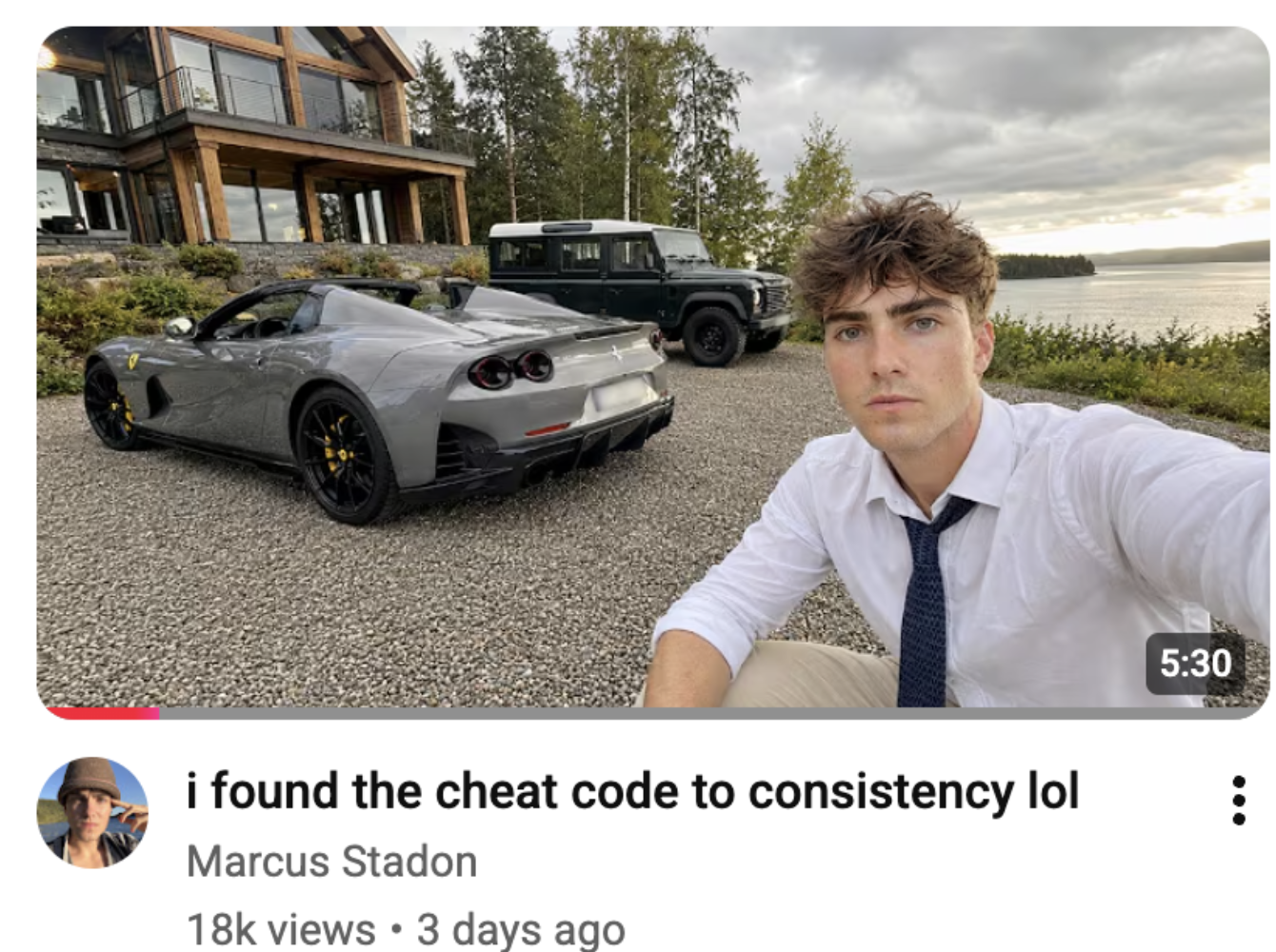
The “lol” in this YouTube title makes the success feel easy, accidental and low effort. Yet that’s almost certainly NOT the case.
Think about what that tiny word is doing. The result in the title is clearly a big deal. But the “lol” turns it into a happy accident. So the viewer thinks, “If it just happened to them, it could happen to me.” That thought earns the click.
Of course, big results rarely fall out of the sky. There’s usually years of work behind them. Still, the title hides all that on purpose. After all, the effort would only put people off.
And it’s a trick you can borrow. Take your best result and ask how you’d say it if it had been easy. Then back it up with the real method.
See Also