Practical Sales Training™ > Selling Communication Basics > Published Pricing
Published Pricing
Think about the last time you hit a “get a quote” button. You probably paused. Maybe you guessed the price was huge. Or maybe you just didn’t fancy a sales call to find out. So you clicked back and looked somewhere else.
Your buyers do the same thing. That’s why your pricing choice matters so much. It shapes who calls, how they feel and how fast they decide. And most firms make the call on gut feel alone.
What Is Published Pricing?
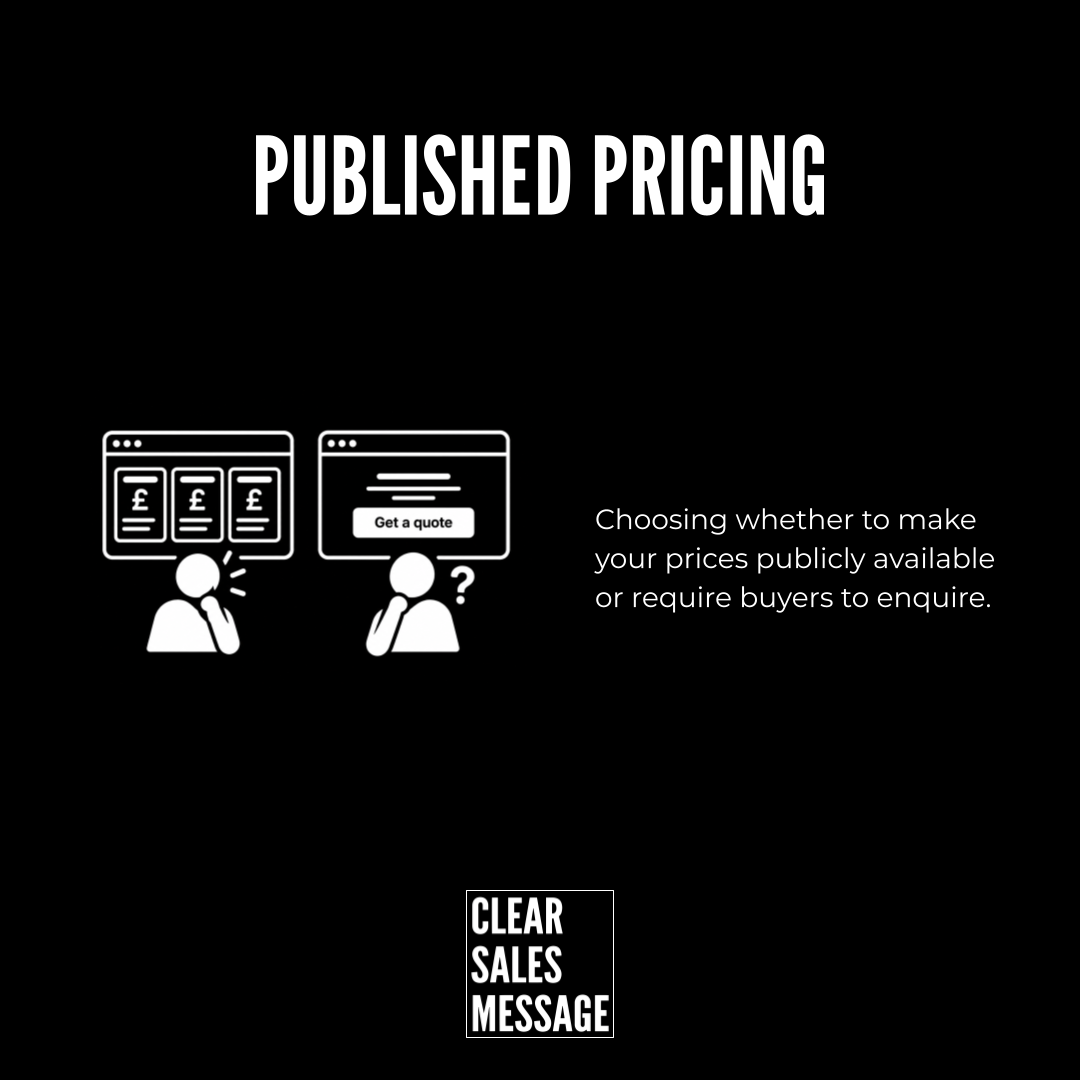
Published pricing is the choice to put your prices where buyers can see them. The other option is to hide them and ask buyers to enquire. Both are real choices with real costs. So it pays to make the call on purpose.
There’s also a middle ground. For example, you can show “from” prices, a typical range or the price of your entry offer. Each one also tells buyers a little. Yet each one still leaves room for a proper chat about the details.
Here’s the key point. Your price is part of your message. Whether you show it or hide it, buyers read something into it. So you’re always saying something about price, even when you say nothing at all.
Why Does Published Pricing Work?
Buyers hate not knowing. A missing price creates a gap, and buyers fill that gap with fear. So they assume it’s too dear. Or they worry you’ll push them into a hard sell. As a result, many quietly leave before they ever speak to you.
A clear price removes that fear. Buyers can check fit on their own, in their own time. So the ones who get in touch have already said yes to the ballpark. That makes the first call warmer and shorter too.
Published prices also build trust. They show you’re confident in what you charge. In fact, an open price feels like a promise of fair terms. And buyers like to feel they’re getting a fair deal.
How Can You Use Published Pricing?
Show What Drives The Price
Your work may vary too much for one number. Even so, you can show what moves the price up or down. For example, team size, speed or the scope of work. So buyers can roughly place themselves before they call. That alone cuts a lot of wasted chats.
Use A Range To Qualify Buyers
A line like “most clients invest between X and Y” works hard. It filters out buyers who can’t afford you. Plus it stops big buyers thinking you’re too small. Then your sales team spends time on people who can actually say yes.
Put Value Next To The Price
A price on its own is just a cost. So always pair it with what the buyer gets and what it saves them. For example, show the cost of the problem next to your fee. Then the price stops looking big. Instead, it looks small next to the pain it fixes.
Make The Quote Route Easy
If you do hide prices, make asking painless. Keep the form short and say how fast you’ll reply. Also tell buyers what happens next, so the step feels safe. Every extra field gives a nervous buyer another reason to leave.
When Does Published Pricing Work Best?
Published pricing works best when your offer is fairly standard. Think fixed packages, set training courses or simple monthly plans. Buyers can compare like for like, so a clear price speeds things up.
It also works well when buyers research alone first. Many buyers now want to shortlist before they talk to anyone. So with no price, you may drop off the list unseen. Meanwhile, a rival with clear prices gets the call.
And it helps when you sell on value rather than haggling. A public price sets the anchor early. As a result, buyers walk in knowing the number and focus on fit instead.
When Does Published Pricing Become Dangerous?
Price can land before value does. If a buyer sees your fee before they grasp the problem you solve, the number feels steep. So they judge you on cost alone. That’s a fight you rarely win.
It also gets risky with complex, custom work. One headline number can mislead buyers badly. For example, some will expect the low end and feel cheated later. Others will see the high end and never call.
Rivals can see your prices too. So they may undercut you or copy your packages. Still, the answer is to make your value harder to copy than your price.
What Are The Common Mistakes With Published Pricing?
Hiding The Price But Saying “Affordable”
This one makes buyers twitch. You claim good value but won’t show the number. So buyers assume you’re hiding something. If it really is affordable, prove it with a range.
Too Many Tiers
Firms often add tier after tier to cover every case. But a wall of options makes buyers freeze. They can’t tell which one fits, so they put off the choice. Three clear options with a clear best pick usually beats six.
Showing The Price With No Context
A bare number invites a bare comparison. So buyers line you up against the cheapest option they can find. Instead, wrap the price in outcomes, proof and what’s included. Then they compare value, and price takes a back seat.
Using “Get A Quote” As A Trap
Some firms hide prices purely to grab contact details. But buyers know this trick. In fact, many expect a pushy follow up the moment they hit send. So if you gate the price, give real value back fast. Otherwise you burn trust before the first call.
Published Pricing – An Example
The Training Firm That Stopped Hiding
Picture a small sales training firm. Their site lists every course, but each page ends with “get a quote”. Yet enquiries only trickle in. And half of them vanish once they hear the price.
So the team tries something simple. They add a typical price range to each course page. Each page also explains what pushes the price up, like group size. Then they add a line on the cost of a weak sales team.
At first, fewer people get in touch. But the ones who do already know the ballpark. As a result, calls skip the awkward money talk and go straight to fit. More of them turn into sales, and the team wastes far less time.
That’s the real win here. Published pricing simply made the buying step feel safe. And when buyers feel safe, they move faster.
See Also