Practical Sales Training™ > Wordplay > The Asterisk Effect
The Asterisk Effect
Small print usually exists to protect companies from their own claims. But the Asterisk Effect does something different. It uses the footnote as a punchline.
The idea is simple. You say something bold, funny, or a little provocative. Then the asterisk leads the reader to a line that reframes it with honesty or wit. Think of it as a bold headline with a wink in small print.
Done well, it makes your message more human, more memorable, and far harder to ignore.
What Is the Asterisk Effect?
The Asterisk Effect is the use of a small clarifying footnote (*) to make a big impact. You say something strong or slightly ambiguous, then use the small print to add context, humour, or truth.
The asterisk itself does a job before the reader even reaches the footnote. It signals that something more is coming. That signal creates a moment of curiosity, and curiosity keeps people reading.
So the structure is always the same: a hook, a pause, and a payoff. The asterisk is the bridge between them.
Why Does the Asterisk Effect Work?
When people see an asterisk, they instinctively pause. They know something is being clarified, and they want to know what. That pause is valuable because it creates a moment of mental tension.
When the footnote then delivers something witty or honest, that tension releases. The reader gets a small moment of delight, and delight makes things memorable. Your brand feels more human as a result.
There are three things happening at once. The bold statement hooks attention. The asterisk builds intrigue by signalling more is coming. The footnote delivers the payoff through humour, honesty, or surprise. Each step earns the next.
How Can You Use the Asterisk Effect In Sales?
Headlines and taglines
A bold claim with a clever footnote works well as a headline because it rewards readers who look twice. For example: “Guaranteed results* / *If you actually follow the plan.” The asterisk turns a bold promise into something honest and likeable.
Adverts and social posts
The Asterisk Effect stands out in paid ads because most copy tries too hard to impress. A wry footnote does the opposite. It shows confidence, so buyers lean in rather than scroll past.
Defusing an overclaim
If your main message risks sounding too good to be true, an asterisk lets you add the honest caveat without killing the energy. It shows self-awareness, which buyers find more credible than a claim with no caveats at all.
Building brand personality
Use it when you want to show confidence and wit without sounding arrogant. The footnote does the heavy lifting because it says “we know how that sounds, and here is the honest version.” That kind of self-awareness builds trust fast.
When the Asterisk Effect Works Best
It works best when your main claim is strong enough to need a footnote. If the headline is too safe, the asterisk has nothing to work with. But when the bold statement creates a small doubt in the reader’s mind, the footnote resolves it in a way that feels satisfying.
It also works well when your buyer has heard too many polished promises. A witty footnote signals that you are different because you are willing to say the thing everyone else leaves out.
Similarly, it suits brands that want to be taken seriously but not too seriously. The technique shows confidence and personality at the same time, which is a hard balance to strike any other way.
When the Asterisk Effect Becomes Dangerous
The risk is using the asterisk to hide something rather than add to the message. If the footnote is a genuine get-out clause rather than a witty twist, buyers will feel misled. The technique only works when the honesty is real.
It can also misfire if the humour does not land. A footnote that tries too hard to be funny ends up feeling awkward and draws attention to the effort. The best examples feel effortless, as if the writer just told the truth.
Overuse is another problem. One well-placed Asterisk Effect is memorable. However, if every line in your copy has a footnote, the technique loses its impact and the page becomes hard to read.
Common Asterisk Effect Mistakes
A weak main claim
The asterisk only creates tension if the headline is bold enough to earn it. If the main statement is too vague or safe, there is nothing for the footnote to reframe. So start with a claim that is strong enough to raise an eyebrow.
A footnote that explains rather than delights
The payoff should feel like a reward, not a disclaimer. Instead of using the small print to clarify a technicality, use it to say something honest, funny, or unexpected. The reader should feel glad they looked.
Using it in the wrong context
The Asterisk Effect suits informal copy, ads, and social content. However, it can feel out of place in a formal proposal or a serious follow-up email. Always match the technique to the tone your buyer expects.
The Asterisk Effect – An Example
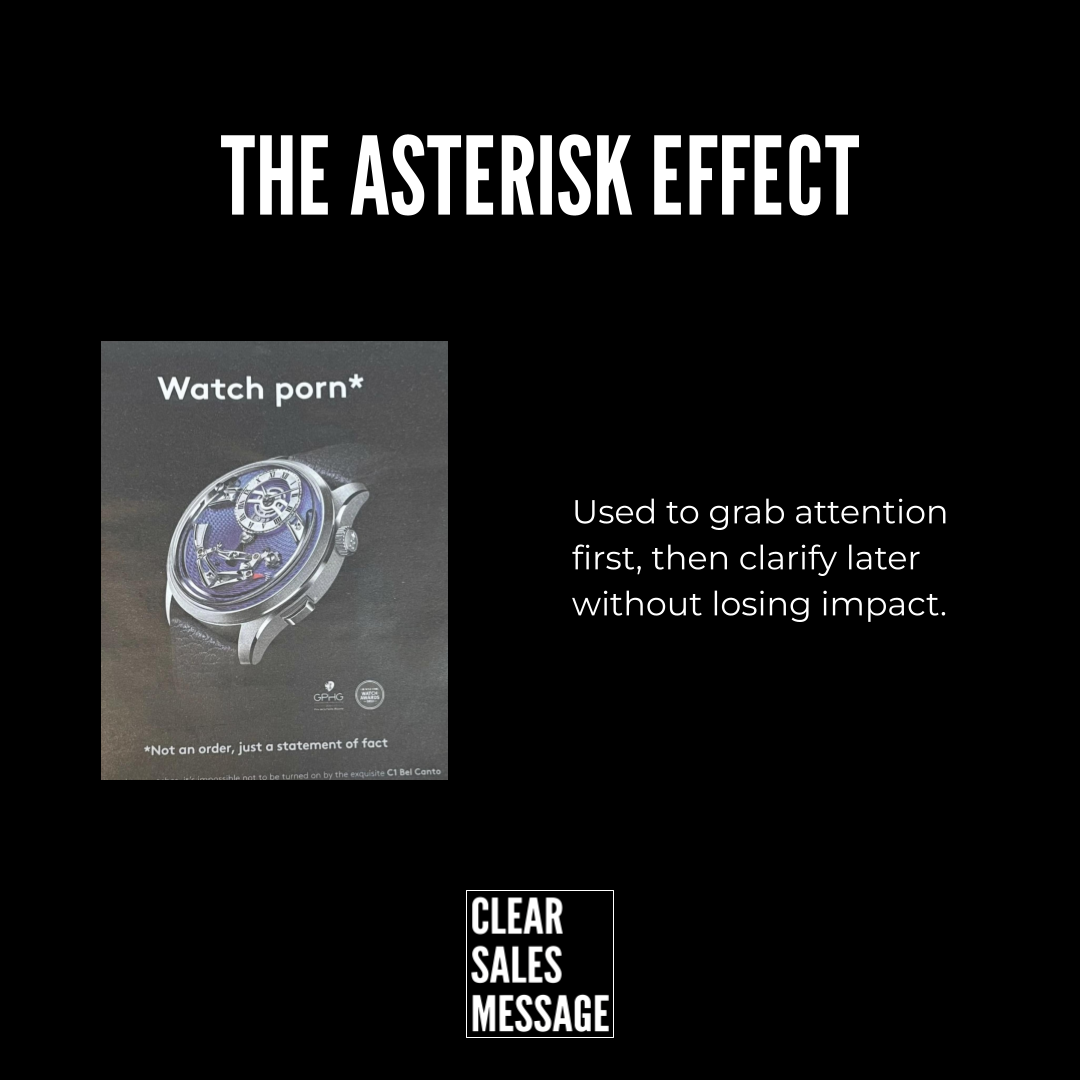
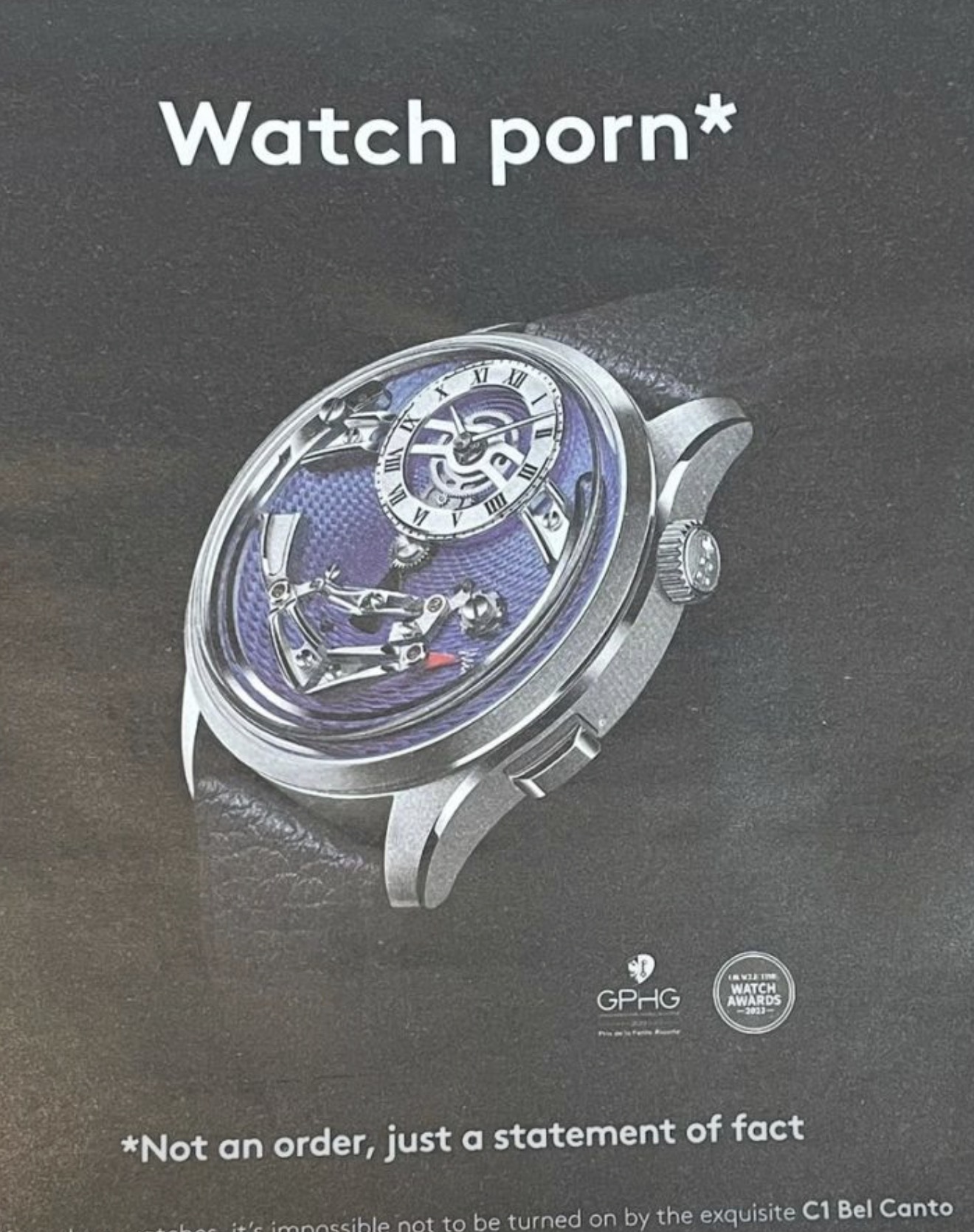
This watch advert is a real-world example. It is somewhat bold in its use of language, which is exactly the point. The asterisk earns its keep by reframing the headline in a way that is clever rather than offensive.
See Also