
Practical Sales Training™ > How To Get Attention > Censorious

Censorious
Some people can’t walk past an error without noticing it. A typo in a subject line. A wrong word in a headline. A missing attachment that was promised. These are the censorious buyers. They’re critical, detail-focused, and they spot mistakes fast.
Most sellers try hard to avoid any kind of error. But with censorious people, a deliberate mistake can work in your favour. Because the error catches their eye, they stop, they look, and suddenly you have their attention.
It sounds counterintuitive. However, when it’s done well, it’s a clever way to stand out in a crowded inbox or feed, and it can even be used to demonstrate the very quality and care that your offer is built on.
What Is Censorious?
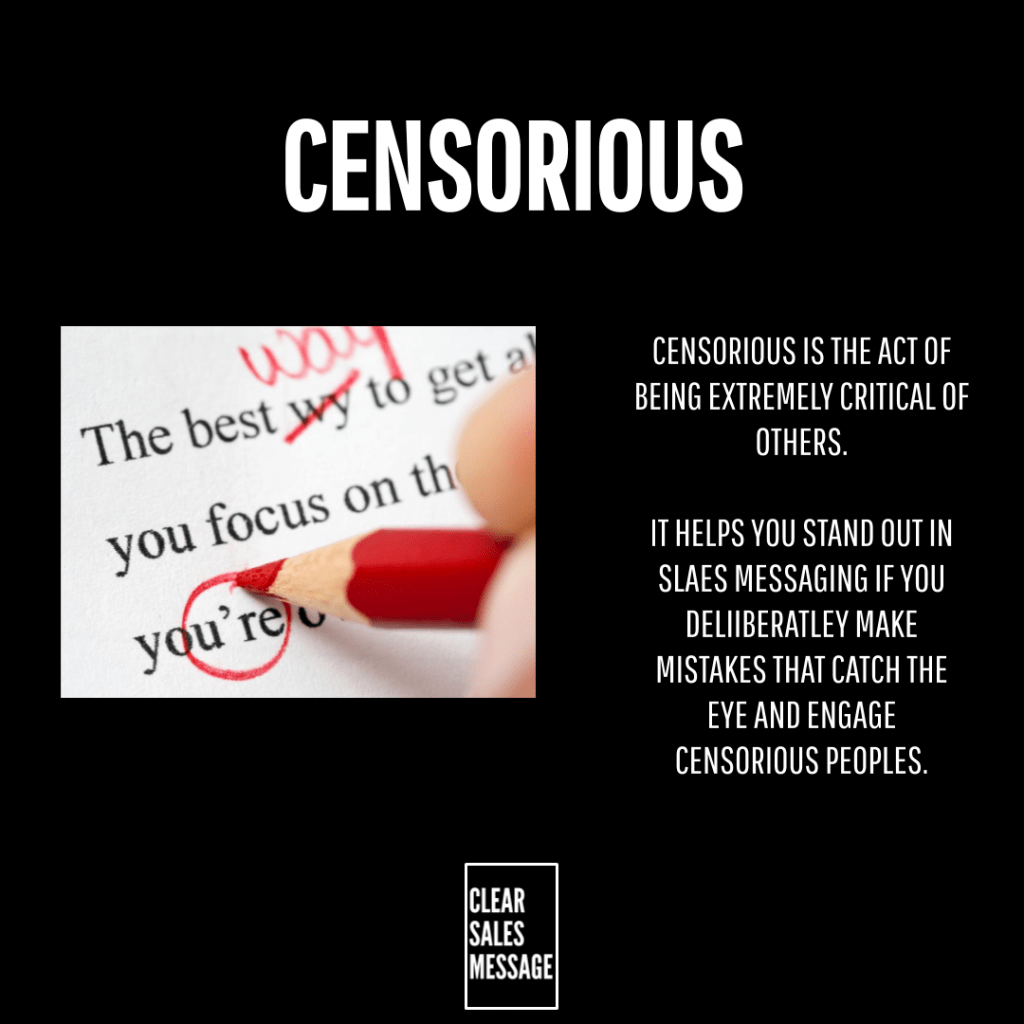
Censorious people are those who are very critical of others. They have an eye for detail. They’re the pedants. The ones who notice when something is off and feel compelled to respond to it.
In a sales context, you can use this trait to your advantage. By making an obvious, deliberate mistake in your copy, subject line, or communications, you create a trigger that censorious buyers almost can’t ignore. So they engage, and that engagement opens the door.
The technique works because of the Von Restorff Effect. Anything that stands out from the expected pattern gets noticed. An error in otherwise polished copy is exactly that kind of pattern break.
Why Does Censorious Work?
It works because anything incorrect is obvious and stands out to detail-oriented people. Their brain flags it before they’ve even decided to engage. As a result, they’re already paying attention before they’ve consciously chosen to.
There’s also an emotional pull to it. Censorious people feel a small but real urge to correct or point out the mistake. So the error creates a reason to interact that didn’t exist before. That interaction is the start of a conversation.
Similarly, it works because most sales copy is polished and predictable. Everything looks the same. A deliberate mistake breaks that pattern instantly, and pattern breaks are one of the fastest ways to earn a second glance.
How Can You Use Censorious In Sales?
There are several ways to use this technique. Let your creativity run with how it could fit your business, but here are four solid starting points:
Make an obvious mistake in your sales copy
A typo in a subject line, a wrong word in a headline, or a misspelling in an ad. Make it obvious enough that detail-focused readers will catch it immediately. The more visible the mistake, the stronger the trigger.
Promise an attachment and don’t include it
Mention in an email that you’ve attached something, but leave the file out. Many recipients will reply to tell you. That reply is the conversation you wanted. Because now you’re talking, and you can respond with warmth and the actual content.
Use the mistake as a hook
Don’t just make the error and leave it hanging. Instead, use it to make a point. A designer who typos their subject line and then reveals it was deliberate, to show why details matter, turns the mistake into a demonstration of their own skill.
Take a leaf from Starbucks
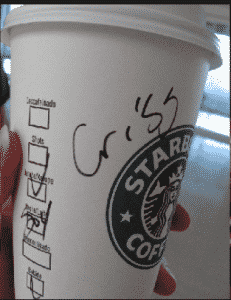
There is a rumour that Starbucks deliberately spell their clients’ names incorrectly to generate social media attention. Whether true or not, it certainly works. People photograph the cups, share them, and talk about the brand. A small error creates a ripple effect that no polished campaign could buy.
When Censorious Works Best
This technique works best when your target buyers are detail-oriented by nature. For example, accountants, lawyers, engineers, editors, designers, and developers. These are people who notice errors as a reflex. So a deliberate mistake will land with them far more reliably than with a general audience.
It also works well in email marketing, where subject lines are make or break. A typo that triggers a censorious open is just as valuable as a great headline that earns one. Both get the email read. However, the typo has the added benefit of feeling human and unexpected.
Similarly, it suits brands that want to show personality. A deliberate mistake signals confidence. It says you’re comfortable enough in your craft to play with it. That kind of brand character builds connection over time.
When Censorious Becomes Dangerous
The risk is that the mistake looks unintentional. If buyers think you simply don’t proofread, the effect backfires. Instead of engaging, they lose confidence in your attention to detail. So the error has to be obvious enough to feel deliberate, or followed up in a way that reveals the intent.
It also becomes a problem if it’s overused. A one-off typo is a surprise. The third one in three months is just carelessness. Therefore, use this technique sparingly and only when the execution is sharp enough to land the right way.
And be careful with the context. A mistake in a casual email or social post can charm people. But in a formal proposal or a legal document, the same error will simply damage trust. Know where the line is before you use it.
Common Censorious Mistakes
Making the error too subtle
If only one in ten readers spots it, the technique isn’t doing its job. The error needs to be obvious enough to catch the eye of most detail-focused people. So go for something clear and visible rather than something only a true pedant would notice.
Not having a follow-up ready
If someone replies to point out the mistake and you have no clever response prepared, the opportunity is wasted. Think through the follow-up before you send. Because the reply is where the real conversation begins.
Using it in the wrong format
A typo in a subject line is playful. A typo in a contract or a case study is just unprofessional. Always consider the format and the context before you deploy this technique. The same error lands very differently depending on where it appears.
Doing it too often
Novelty is what makes this work. Use it once or twice a year at most. As a result, it stays surprising, and surprising is exactly what makes it effective.
Censorious – An Example
A graphic designer sends a marketing email with a deliberate typo in the subject line:
“I can make your designs stand out – even if your brnad doesn’t yet.”
Many detail-oriented recipients notice the misspelling of “brand” and open the email thinking, “They should fix that!”
Inside, the designer explains:
“Did you spot the typo? That’s how much small details matter. I make sure your designs are flawless so your audience never spots a mistake like this.”
The deliberate mistake triggers attention, engages censorious readers, and creates a clever hook to demonstrate expertise. Because the mistake was the message, the message lands harder than any polished subject line could.
See Also
- The Von Restorff Effect
- The Small Flaw Effect
- The Outdated Effect
- 100+ ways to seize buyer attention