

Practical Sales Training™ > How to connect with your buyer > The Poll Effect
The Poll Effect
Not everyone who follows you is ready to buy. So polls help you work out who’s actually paying attention.
The Poll Effect uses a simple question to separate suspects from prospects.
What Is It
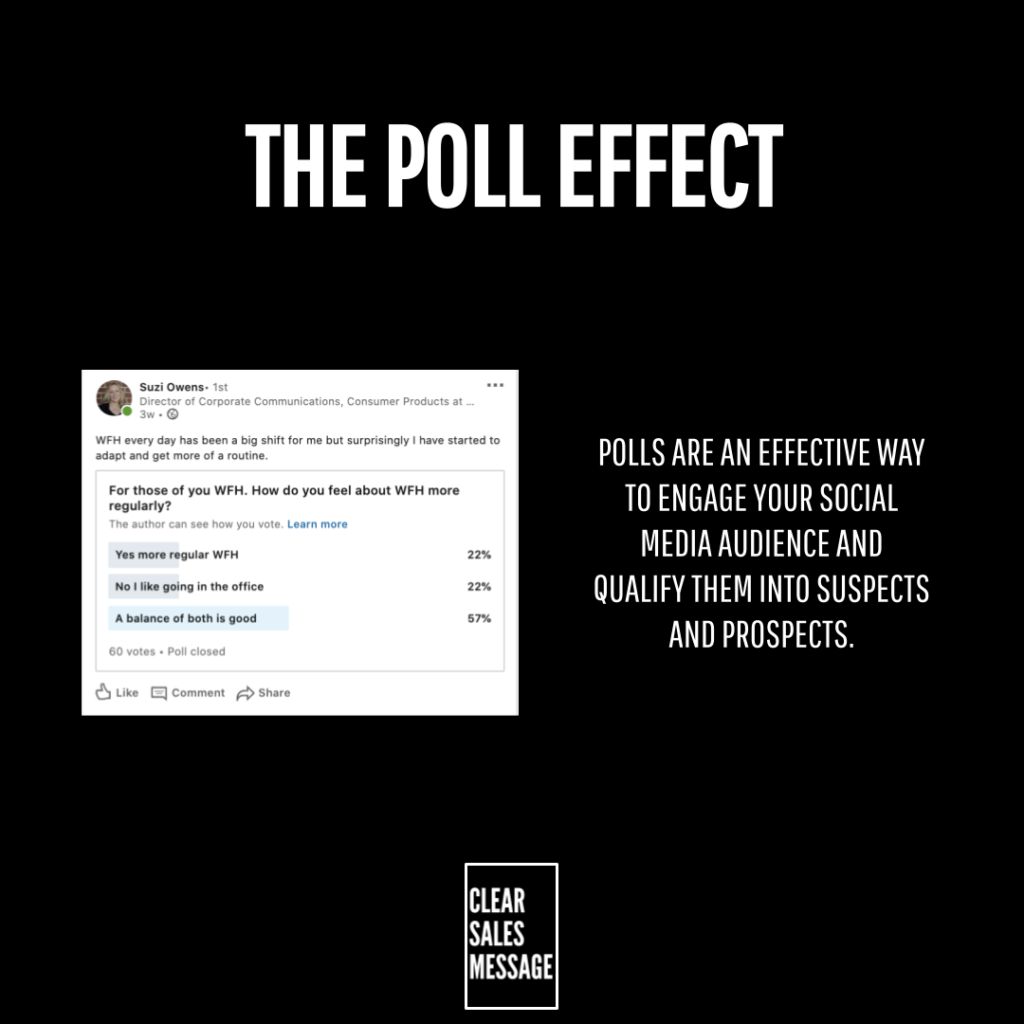
The Poll Effect means using a poll to sort your followers. It shows who’s engaged, and who’s ready to buy. So it separates the suspects from the prospects.
Why Does It Work
Asking a question in a poll qualifies people without them realising it. Especially when the question relates to the problem you solve. Or the solution you offer.
Say I ask if you feel confident selling, and you tell me you don’t. Now I know you might want help, so I can send you a message.
How Can You Use It
Ask The Right Kind Of Question
Ask what buyers actually want, then message the people who respond. Or ask about their biggest current challenge. Then offer to help with that specific thing.
You can also ask where their focus sits right now. Use the answers to shape your offer, and message the people worth following up.
Use Polls Sparingly
So don’t overdo the number of polls you run. Use them sparingly, then pay attention to who responds.
When It Works Best
This works best on platforms where polls feel native, like LinkedIn or Instagram. So the poll blends in, rather than feeling like a sales tactic.
It also works well when the question relates directly to a problem you solve. So every answer tells you something useful about the person who gave it.
When It Becomes Dangerous
This backfires if you run polls too often. So followers start ignoring them, and the tool loses its power.
It also fails if you follow up too hard, too fast. So a pushy message straight after someone answers feels invasive, not helpful.
Common Mistakes
Asking A Question That Doesn’t Qualify Anyone
A generic or unrelated poll question tells you nothing useful. So tie every poll back to the problem you actually solve.
Sending The Same Follow Up Message To Everyone
Copying one generic message to everyone kills the personal feel. That’s what made the poll work. So reference their specific answer when you follow up.
The Poll Effect – An Example
So a sales coach posts a LinkedIn poll. It asks: “What’s your biggest sales challenge right now?”
- I don’t know what to say
- I struggle with follow-up
- I’m afraid of rejection
- I don’t have a clear offer
So once the poll closes, they review who voted for each option. Then they send a personal follow up message.
“Hey Sarah, I noticed you selected ‘follow-up’ as your biggest challenge. That’s something I help people with every day. Want me to send you a free resource that might help?”
So this approach feels non-invasive and low pressure. Also, it starts warm, already qualified conversations.
It also helps segment an audience by need. And it gives insight into what the market actually cares about. That insight can shape future content and offers.
See also