Practical Sales Training™ > How to connect with your buyer > The Defined Problem Effect

The Defined Problem Effect
Buyers rarely turn up with one tidy problem. Most of the time they arrive with a jumble of worries, half formed and hard to put into words.
The Defined Problem Effect takes that mess and turns it into a short, clear list. Suddenly the buyer feels understood, and your offer feels like the obvious next step.
Get the list right, and buyers relax almost instantly. Get it wrong, and you look like someone who doesn’t really understand their situation at all.
What Is The Defined Problem Effect?
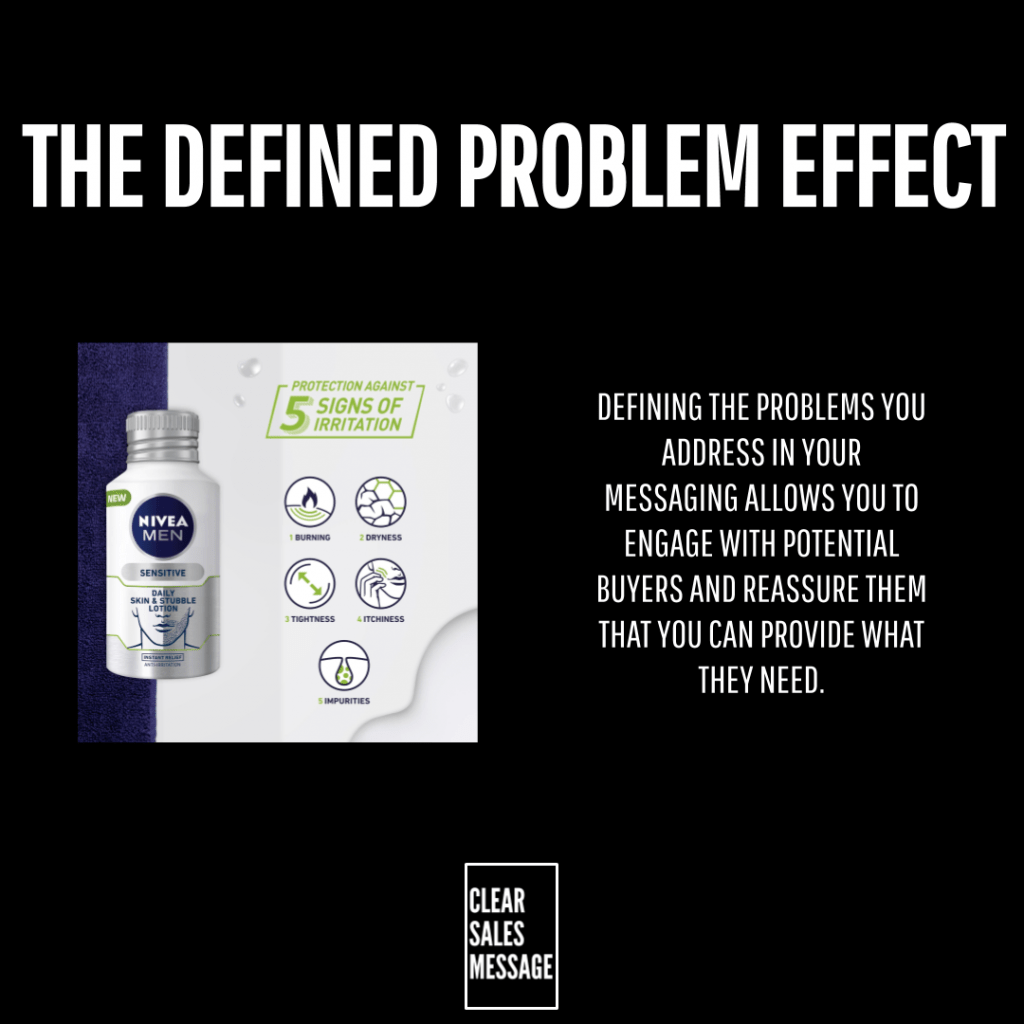
The Defined Problem Effect takes the many issues your buyers face and turns them into a short, defined list. Instead of a vague pile of worries, buyers see two to six clear points that sum up exactly what they’re dealing with.
This matters because most buyers arrive confused about how to describe their own problem. They know something isn’t working, but they can’t always name it. When you name it for them, in plain language, you save them the effort and earn their trust in the same moment.
Why Does The Defined Problem Effect Work?
It works because buyers who come to you are often confused, unsure, or a little overwhelmed. They want a solution they can trust, and before that, they want to see confidence, certainty and expertise. A clear list of defined problems shows all three at once.
When you can name someone’s problem better than they can name it themselves, they assume you can solve it better too. That single moment builds more trust than any list of features or benefits ever could.
Presenting problems as a short, defined list also shows empathy. It tells the buyer you’ve seen their exact situation before, many times, and that you understand it well enough to sum it up in a sentence. That recognition is where real connection starts.
How Can You Use The Defined Problem Effect?
Start by listing every problem your buyers bring to you, however small or specific. Group similar issues together until you land on a short, defined list, ideally somewhere between two and six points. Any more than that, and the list stops feeling defined and starts feeling like the overwhelm you’re trying to remove.
Group Issues Into Clusters
Individual buyers describe their problems in dozens of different ways, even when they mean roughly the same thing. Use clustering to group similar issues under one heading, so your list stays short even if the raw pile of complaints is long. This keeps things simple for the buyer without leaving anything important out.
Know What Kind Of Fix You’re Offering
Most offers solve problems in one of a handful of ways. You might diagnose an issue, help buyers avoid one, minimise its impact, solve it outright, improve or maintain something that already works, create something new, help someone learn, open up an opportunity, hand over an advantage, or simply change how someone feels. Knowing which of these fits your offer makes it much easier to write a list that rings true.
Write It In The Buyer’s Language
Use the words your buyers actually use, not internal jargon or technical terms. A defined list only works if buyers read it and think “that’s exactly it,” and that recognition depends on hearing their own language reflected back at them.
When The Defined Problem Effect Works Best
This works best when your buyers arrive unsure or overwhelmed, and when you deal with the same handful of problems again and again. If you can predict what’s bothering someone before they’ve fully explained it, a defined list will land well.
It also works particularly well early in the buying journey, on a homepage, in a sales call opener, or in an ad. That’s the moment buyers are deciding whether you understand their situation at all, and a clear list answers that question immediately.
When The Defined Problem Effect Becomes Dangerous
It becomes dangerous if your list doesn’t actually match what buyers experience. A defined list that misses the real problem does the opposite of what it’s meant to do. It signals that you don’t understand your buyer at all, at the exact moment you were trying to prove that you did.
It’s also risky if the list goes stale. Buyer problems shift over time, so a list that was accurate two years ago might feel out of touch today. Revisit it regularly and check it still reflects what buyers are actually telling you.
Common Defined Problem Effect Mistakes
Making The List Too Long
A list of ten problems isn’t a defined list, it’s just the overwhelm again with numbers attached. Keep it tight. Somewhere between two and six points is usually the sweet spot.
Using Vague Or Generic Language
Problems described in vague terms, like “inefficiency” or “poor results,” don’t land the same way as specific, buyer-language problems do. Specific always beats vague, because specific is what makes a buyer feel truly seen.
Guessing Instead Of Asking
Some businesses write their defined list based on assumptions rather than real buyer conversations. Talk to actual clients and prospects before you finalise your list. Their exact words are far more powerful than anything you could invent on their behalf.
The Defined Problem Effect – An Example
Sales Training Consultant
Rather than saying, “We help improve your sales,” a consultant could define the client’s core issues directly, in the client’s own words.
“Most sales teams we work with struggle with one (or more) of the following:
- Not knowing what to say to close a sale
- Inconsistent follow-up that leads to lost deals
- Relying too much on discounts to win business
- Low confidence in conversations
- Confusing or unclear messaging”
We help fix all of these.”
That list does more work than any features page ever could. It shows the buyer you already understand their world, before they’ve said a single word about their own situation. And because the list is specific, most buyers will recognise at least one line as their own.
See also