
Practical Sales Training™ > How To Lose The Sale > Over Flattery Effect

Over Flattery Effect
We all enjoy a genuine compliment. Hearing something positive about our work or our thinking feels good. But there is a version of this that triggers the opposite reaction entirely.
When a stranger appears in your inbox loaded with praise you have not earned from them yet, your guard goes up immediately. The compliments feel less like admiration and more like a setup. Because you have seen this pattern before, you know what is coming next.
That is the Over Flattery Effect. And once a buyer spots it, the sale is already in trouble.
What Is the Over Flattery Effect?
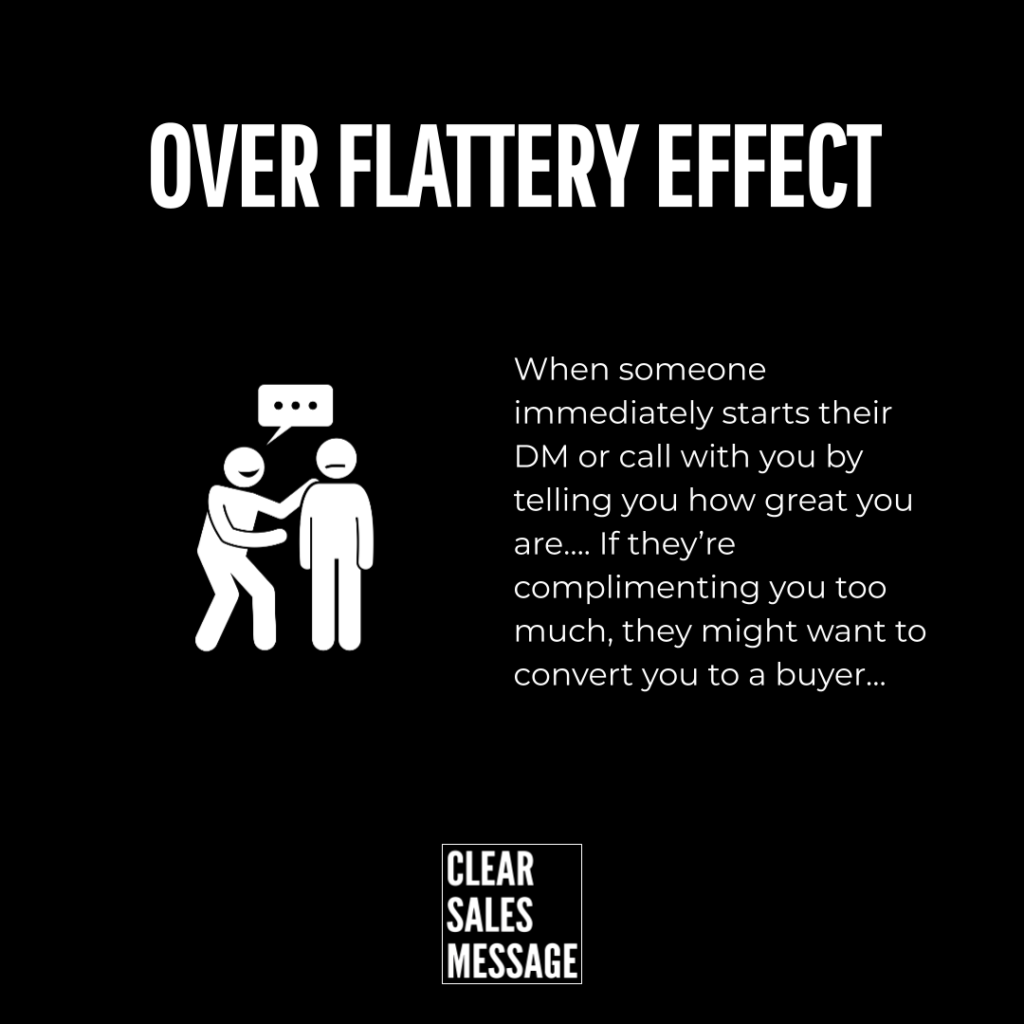
The Over Flattery Effect happens when a seller leads with excessive or exaggerated compliments in an attempt to warm up a cold contact. Rather than building goodwill, the flattery signals that something is about to be sold. The buyer shifts from open to defensive before the pitch even arrives.
The giveaway is always speed and quantity. A single genuine compliment from someone who clearly knows your work carries real weight. Ten compliments from someone who found your profile thirty seconds ago carries none. In fact, the more flattery stacks up, the more suspicious the buyer becomes.
Why Does the Over Flattery Effect Lose Sales?
It loses sales because buyers have seen this pattern too many times. An overly complimentary opening is now widely recognised as a signal that a pitch follows. So instead of relaxing the buyer, the flattery puts them on alert. Their defences rise and they start looking for the angle rather than listening to the message.
There is also a credibility problem. Genuine compliments require specific knowledge of the person. Vague, sweeping praise like “you’re clearly one of the smartest business minds I’ve encountered” tells the buyer nothing except that the sender did not research them at all. Far from flattering, it feels lazy and dishonest.
Paired with fake enthusiasm, the effect compounds. The buyer does not just distrust the compliment. They start to distrust everything that follows it, including the offer itself.
How Can You Avoid the Over Flattery Effect?
Lead With Relevance, Not Praise
The most effective cold outreach skips the compliments entirely and opens with something specific and relevant to the person. Reference a piece of their work, a challenge their industry faces, or a result you have achieved for similar businesses. That signals genuine research and creates far more goodwill than any compliment ever could.
Keep Any Compliments Specific and Earned
If you genuinely admire something specific about the person’s work, you can say so. But make it precise. “I read your piece on X and the point you made about Y really landed” is credible because it shows you actually engaged with their content. Vague superlatives like “amazing” and “incredible” tell the buyer you copied and pasted their name into a template.
Earn the Right to Warmth Over Time
Warmth and familiarity work well once a relationship exists. In early outreach, professionalism and clarity do more work. So save the enthusiasm for when it reflects a genuine connection rather than using it as a tool to manufacture one that does not yet exist.
When the Over Flattery Effect Does the Most Damage
It does the most damage in cold LinkedIn and email outreach, where buyers already receive dozens of flattery-led messages every week. In that context, an over-flattering opener does not stand out in a good way. It blends in with every other pitch the buyer has already ignored.
Senior or experienced buyers tend to be especially alert to it. The more someone has achieved, the more Over Flattery they have encountered, and the faster they spot it. So the very people you most want to reach are the ones most likely to dismiss you the moment the praise starts.
When the Temptation Is Hardest to Resist
The temptation peaks when you feel anxious about a cold approach and want to soften the landing. Leading with a compliment feels like a natural way to create warmth before asking for something. But the buyer reads the sequence as transparent. The compliment does not hide the ask. It announces it.
Some sellers also use flattery because it gets a response rate in the short term. A small number of people do reply. But those replies rarely convert into sales because the relationship started on a false note. And the buyers who did not reply now associate your name with spam.
Common Over Flattery Effect Mistakes
Stacking Multiple Compliments in One Message
One generous compliment might pass without raising suspicion. Three or four in the same opening paragraph cannot. Each additional compliment makes the previous ones feel less genuine. So if you do open with praise, one specific and well-placed observation is the limit. Beyond that, you are doing more damage than good.
Following Up With More Flattery After No Response
If a flattery-led message gets no reply and you follow up with another round of compliments, the buyer’s suspicion deepens. Each ignored message followed by more praise confirms that you are working through a list rather than engaging with a person. A different approach on follow-up, more direct and more specific, gives you a better chance of recovery than doubling down on the same tactic.
Mistaking a Response for a Win
Some buyers reply to flattery-led messages out of politeness rather than genuine interest. Getting a reply feels like progress, but a polite acknowledgement is not an open door. If your opener was built on Over Flattery, the foundation of the conversation is already weak. Build on substance from the second message onwards or the relationship will not go anywhere useful.
Over Flattery Effect – An Example
You open your LinkedIn inbox and find this message: “Hi James, wow, I just have to say your profile is amazing! You’re clearly one of the smartest business minds I’ve ever come across. Honestly, mate, I don’t know how you do it – total inspiration! Let’s jump on a quick call so I can share how I can take your success to the next level!”
Your guard goes up immediately. The praise is vague, excessive, and clearly copied from a template. Rather than feeling flattered, you feel set up. The “flattery bomb” approach does not build trust. It destroys it before the pitch even arrives. A message that opened with a specific observation about your work, and a clear reason for reaching out, would have had a far better chance of getting a genuine response.
See Also: