
Practical Sales Training™ > Lose > The Fake Enthusiasm Effect

The Fake Enthusiasm Effect
You don’t actually care about their kid’s football match. Or their new kitchen tiles. But you nod along anyway, hoping it builds rapport.
It doesn’t. It just makes you look fake, and fake is exactly what buyers are trained to spot.
What Is It
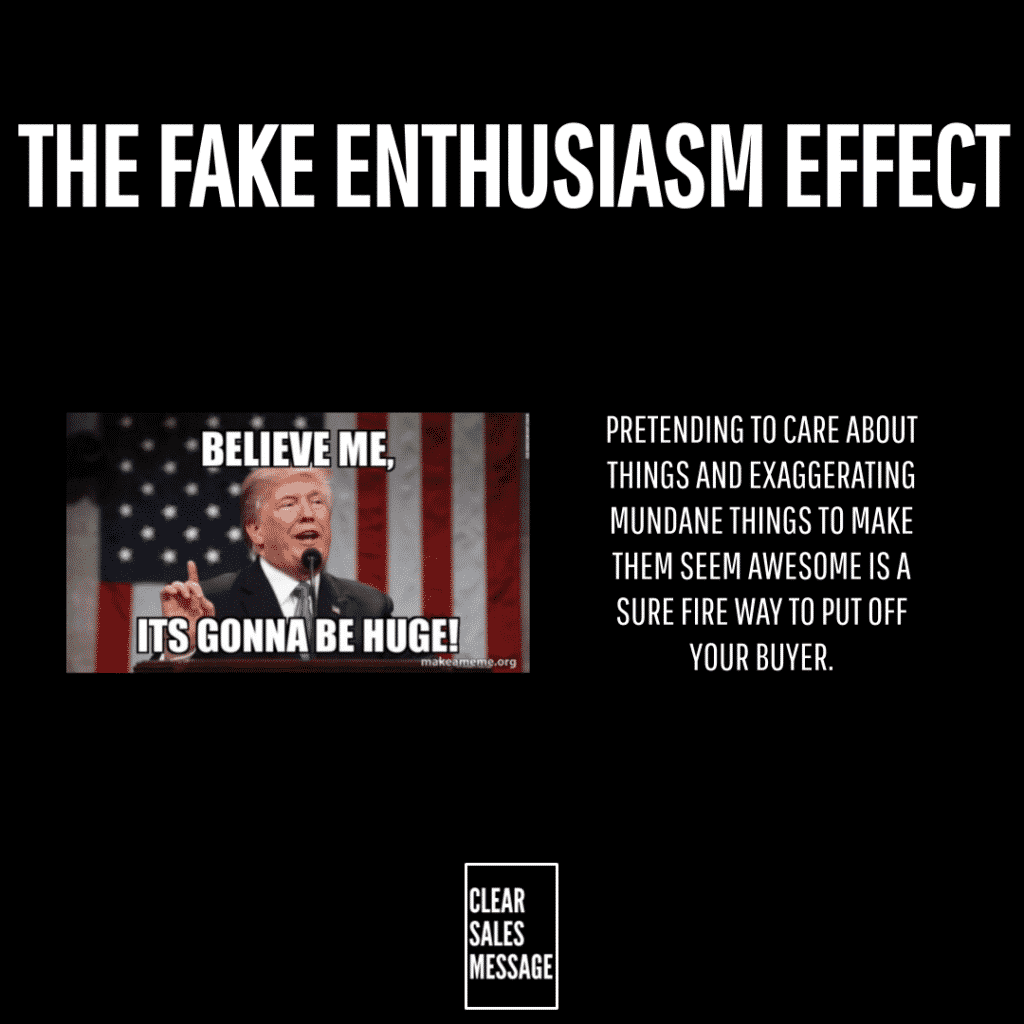
The Fake Enthusiasm Effect means pretending to care about things that mean nothing to you. It also means making something sound more exciting than it actually is, hoping it connects you to the buyer. There’s another name for this too. Lying.
Why Does It Work
If your goal is losing the sale, exaggerating your tone or using over the top words for mundane things works brilliantly. It tells your buyer one thing clearly. You only want their money.
How Can You Use It
If you genuinely want to lose the sale, pretend to be interested in things you couldn’t care less about. Exaggerate mundane details until they sound absurd.
Describe a basic feature like it’s a miracle. Call an ordinary update “revolutionary.” Buyers can tell the difference between real excitement and performance, and performance always loses.
When It Works Best
This “works” best when you want to end a conversation fast. Nothing shuts down trust quicker than a buyer sensing they’re being played.
It’s also reliable if your goal is a one time sale with no repeat business. Fake enthusiasm burns trust, so there’s rarely a second conversation after it.
When It Becomes Dangerous
The real danger here is how easily it spreads. Once a buyer catches you faking excitement about one small thing, they start doubting everything else you’ve said too.
That doubt doesn’t stay contained. It touches your product claims, your promises, and your credibility as a whole.
Common Mistakes
Overselling Small Details
Calling every minor feature “game changing” empties the phrase of meaning. Save real enthusiasm for things that actually deserve it.
Matching Energy You Don’t Actually Feel
Forcing excitement to mirror a buyer’s mood usually reads as hollow. A calm, honest response often lands better than a fake burst of energy.
The Fake Enthusiasm Effect – An Example
Say a salesperson describes a basic software update as “the single greatest change in the industry’s history.” The buyer’s eyebrow goes up before the sentence even finishes.
Compare that to simply saying what changed and why it helps. No exaggeration needed. The honest version is usually more convincing anyway, since it doesn’t ask the buyer to suspend their disbelief.
Real enthusiasm sounds calm and specific. Fake enthusiasm sounds loud and vague. Buyers can tell which one they’re hearing, almost every time.
See Also