
Practical Sales Training™ > How To Connect With Your Buyer > The Law of Inaction

The Law of Inaction
What Is It?
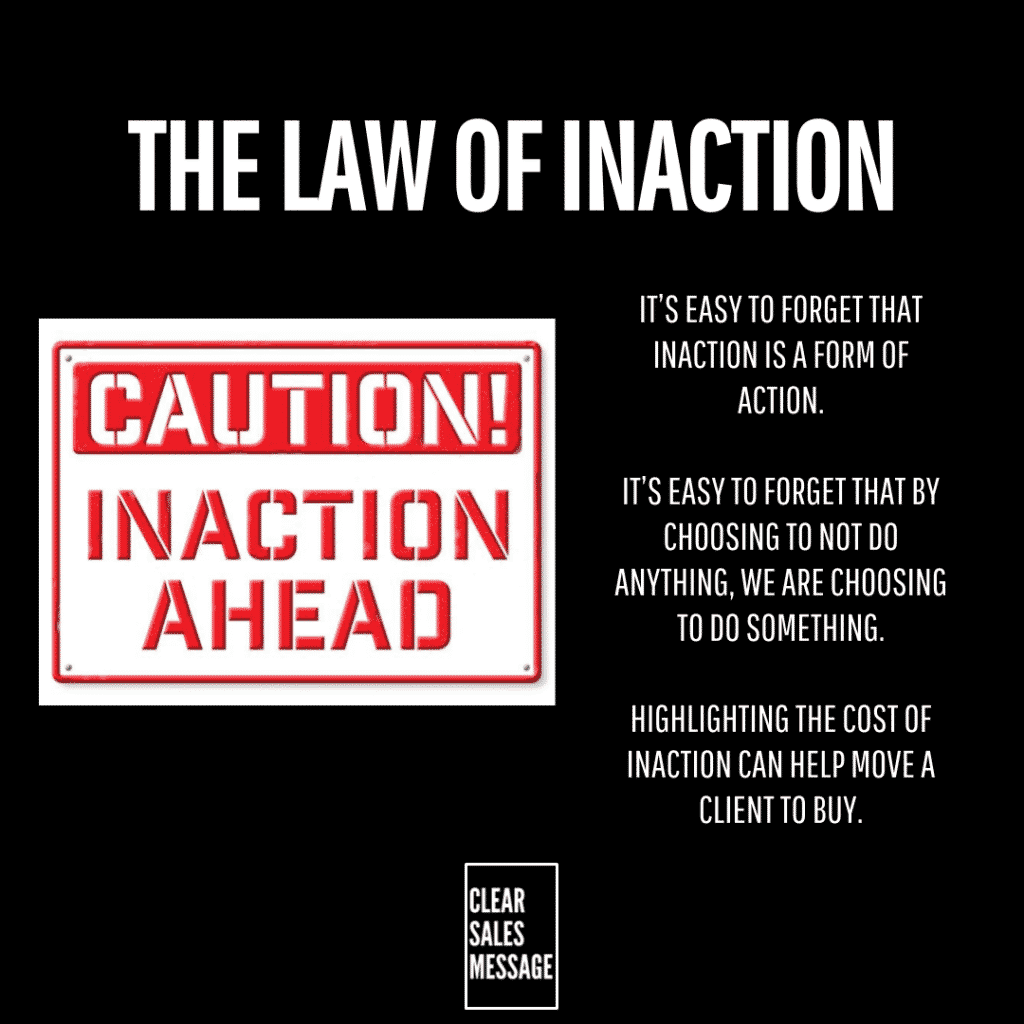
Even when someone takes no action, they’ve still made a choice. So every “not now” carries a real consequence, whether they see it or not.
Nothing is neutral. Because doing nothing still moves things somewhere, just not forward.
Why Does It Work?
It works because you can name the cost of inaction directly. So instead of leaving it hidden, you put it right in front of the buyer.
Most people don’t think of “doing nothing” as a decision. But it is one, and it comes with its own price tag.
Once you point that out, the buyer can’t unsee it. So staying still stops feeling safe, and starts feeling like its own kind of risk.
How Can You Use It?
Name The Hidden Choice
Spell out what happens if the buyer does nothing. Not as a threat, just as a fact. For example: “Not becoming a member is fine, but you’re choosing to stay exactly where you are. Is that what you actually want?”
Show It, Don’t Just Say It
Words work well. But a visual works even better. Some businesses show the cost of inaction directly inside their pricing, so the buyer sees the gap without needing it explained.
Keep It Honest
This only works if the consequence is real. So don’t invent a risk that isn’t there. Buyers can tell the difference between a genuine cost and a scare tactic.
When It Works Best
This works best when there’s a genuine, ongoing cost to staying still. Health, fitness and financial decisions all carry this naturally.
It also works well when buyers assume “no decision” means “no risk.” That’s exactly the assumption this idea exists to challenge.
When It Becomes Dangerous
The risk is turning this into pressure instead of clarity. If it feels like guilt tripping, buyers push back hard.
Exaggerating the cost causes the same problem. Because if the consequence feels fake, the whole message loses credibility fast.
Used honestly, this makes buyers think clearly. Used as manipulation, it just makes them defensive.
Common Mistakes
Making It Sound Like A Threat
A heavy handed warning feels like pressure, not truth. So keep the tone factual, not forceful.
Overstating The Risk
Inflating a small consequence into a big one damages trust fast. So stick to the real cost, not an exaggerated one.
Never Naming It At All
If you never point out the cost of doing nothing, buyers assume there isn’t one. So say it plainly, even briefly.
The Law of Inaction – An Example
The Gym Membership Line
A gym uses this line in its sales copy: “Not becoming a member and going to the gym is fine, and it’s your choice. But by choosing not to pursue health and weight loss, you’re choosing to be less healthy and potentially put on weight. Are you sure that’s what you want?”
It doesn’t push or threaten. It just names the choice that was already being made quietly.
One gym takes this even further. It shows the actual cost of inaction directly inside its pricing model, so the comparison sits right there in front of the buyer.

That’s the whole effect in one image. Doing nothing was never actually free. It just looked that way.
See also
- The Consequence Effect
- The Comparison Effect
- 150+ ways to connect with your buyer
- 100+ ways to get your buyer to take action