
Practical Sales Training™ > How To Convert > The Comparison Effect

The Comparison Effect
Buyers don’t choose in a vacuum. They’re always weighing one option against another, whether you show them that comparison or not.
So instead of leaving them to work it out alone, you can lay the comparison out for them clearly.
That clarity speeds up the decision, and often tips it in your favour.
What Is The Comparison Effect?
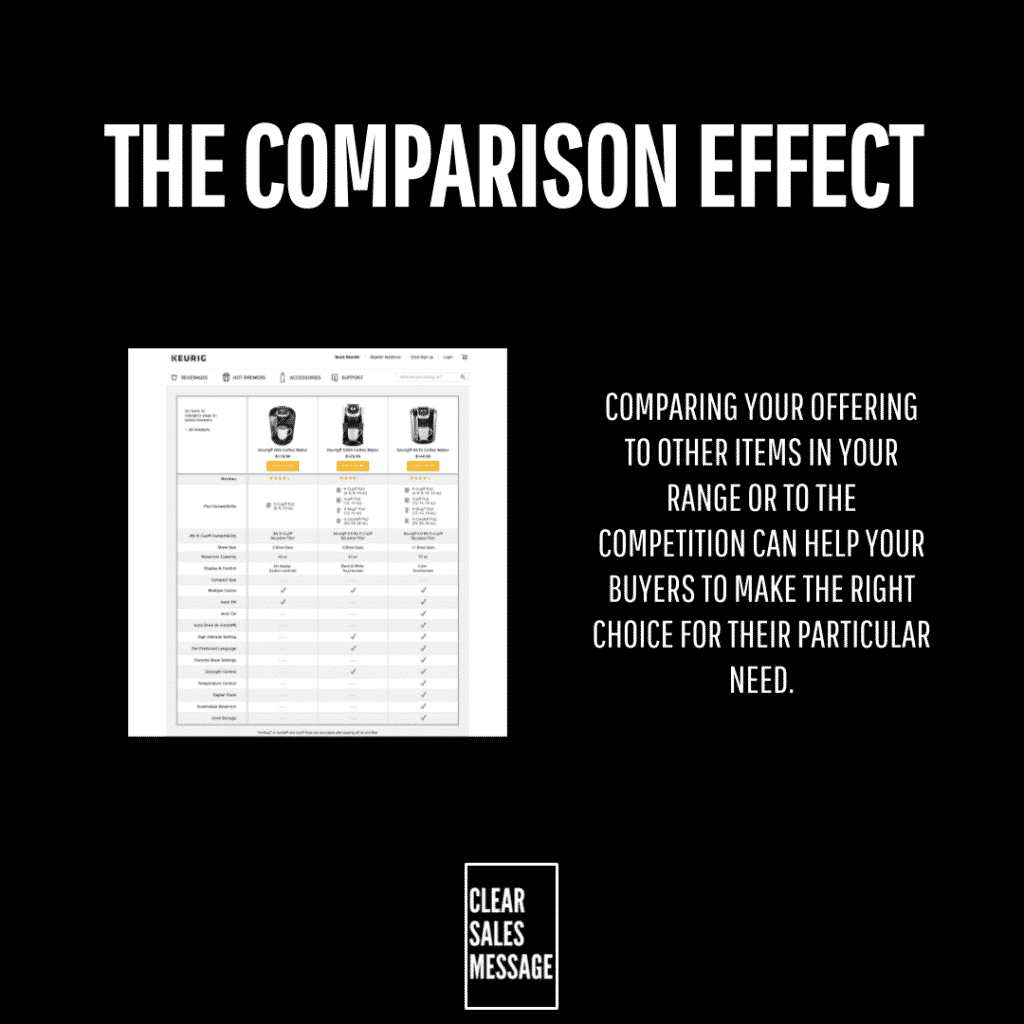
Providing clients with a comparison of your offering versus other versions of your offering, as well as the competition, can help them make a better decision. So instead of guessing, buyers get a clear picture side by side.
It removes the guesswork from a decision that buyers were always going to make anyway.
Why Does The Comparison Effect Work?
It works because when we make it as easy as possible for clients to understand and decide upon our offering, they’re more likely to make a choice at all.
By focusing on the most important elements of the offering, you demonstrate that you understand what your buyers seek. So you give them the vital information they need to make a buying decision.
How Can You Use The Comparison Effect In Sales?
Identify what actually matters to buyers
There will be certain aspects of your offering that matter most to your clients. If you don’t know what these are, your clients can surely tell you.
Build a focused shortlist
With a shortlist of the most important elements, and a clear understanding of what your clients seek, you can compare your offering to the competition and other alternatives.
Create dedicated comparison pages
A page built specifically to compare you against one named rival is far more persuasive than a general features list, because the buyer can see exactly what they’d be choosing between.
When The Comparison Effect Works Best
It works best when you genuinely compare well, since a fair comparison only helps you if the result actually favours your offering on the points that matter.
It also works well in markets where buyers are already actively comparing options, because you can meet them at exactly the moment they’re trying to decide.
When The Comparison Effect Becomes Dangerous
It becomes dangerous if the comparison feels biased or unfair, since sharp buyers can spot a rigged table and it damages trust instead of building it.
It can also backfire if a rival genuinely beats you on a point you’ve included, because that comparison then works against you rather than for you.
Common Comparison Effect Mistakes
Comparing on the wrong criteria
If the points you compare aren’t what buyers actually care about, the whole exercise falls flat. So base your shortlist on real buyer priorities.
Making it feel one-sided
A comparison that only ever favours you starts to look suspicious. So keep it credible, even if that means being honest about a rival’s strengths.
Leaving it too generic
A vague “us vs everyone else” comparison rarely lands. So name the specific alternatives buyers are actually weighing you against.
The Comparison Effect – An Example
Dedicated competitor comparison pages
This company provides a dedicated page for each of their competitors and illustrates the specific comparable elements to help their buyers make a decision.
[PLACEHOLDER: Comparison page example image – awaiting WordPress upload URL for the-comparison-effect-example-768×219-optimized.webp. Please upload and provide the resulting src and wp-image-ID, then I’ll insert:  ]
]
Each page names a specific rival directly, rather than speaking vaguely about “the competition.” So buyers can see exactly what they’d be choosing between before they ever speak to sales.
See also
- The Also bought Effect
- The Popular Effect
- The Similar Effect
- 180+ ways to improve conversion
- 100+ ways to get your buyer to take action