

Practical Sales Training™ > How To Get Attention > Negative Advantage
Negative Advantage
What Is It?
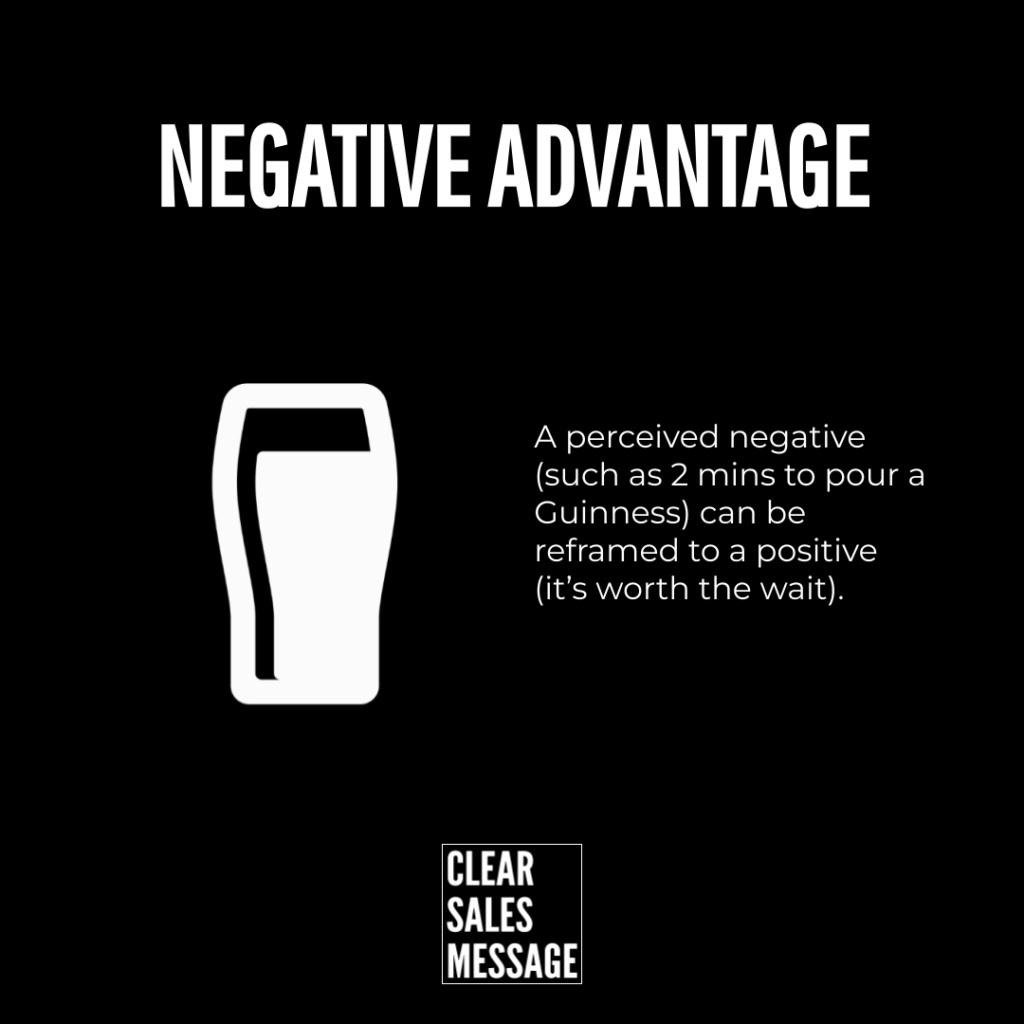
If you’ve ever waited two minutes for a pint of Guinness, you already know “good things come to those who wait.” Rather than hiding that delay, Guinness turned it into a defining feature of the product itself.
Why Does It Work?
Most brands hide or remove negative elements wherever they can. Promoting a negative trait instead, and reframing it as a positive, stands out. It’s also genuinely intriguing, since it challenges how buyers expect a pitch to work.
How Can You Use It?
This is much easier said than done. Start by listing every negative around your offering, honestly and completely. Then think about how each one could flip into a positive, viewed from a different angle.
A long wait can imply real quality behind the scenes. A high price can suggest the same thing. Even something difficult to use can become a badge of honour. Frame it as something only for people clever enough to master it.
When It Works Best
This works best when the negative ties to something buyers already value. Think craftsmanship or exclusivity. It also helps when the reframe feels surprising rather than defensive. Surprise is what makes people actually stop and listen.
When It Becomes Dangerous
This becomes risky if the reframe feels like spin rather than genuine insight. A buyer who senses you’re just excusing a flaw trusts you even less.
Common Mistakes
Reframing A Genuine Flaw
Don’t reframe something that’s genuinely broken as if it were a feature. Buyers can tell the difference between a clever angle and a desperate excuse.
Faking The Conviction
Never use this reframe without real conviction behind it. If you don’t actually believe the negative is a strength, your buyer won’t either.
Negative Advantage – An Example
“Good things come to those who wait” has been Guinness’ angle for decades. It frames the two minutes it takes to pour one as proof of quality.
See also