Practical Sales Training™ > How To Convert > Client Flow
Client Flow
Cash flow tells you what’s already landed. Client flow tells you what’s coming.
Most businesses watch the money already in the bank. Fewer watch the money still moving through the pipeline.
What Is It
Client flow means forecasting income from deals that haven’t closed yet. So instead of just tracking cash, you track the deals heading toward it.
So it gives you a longer view of your position. You see further ahead than your bank balance alone.
Why Does It Work
It works because it adds time to the picture. So you get a sense of scale and timing together.
There’s guesswork involved. But a rough plan still beats no plan at all.
Most pipelines show potential value. Since very few show when that value actually arrives, forecasting stays vague without the time element.
How Can You Use It
Know Your Client Speed
Start by understanding your own client speed. So know roughly how long a deal takes from first contact to close.
Mine sits around 12 weeks. Yours might be shorter or longer, and that’s fine.
Forecast From First Contact
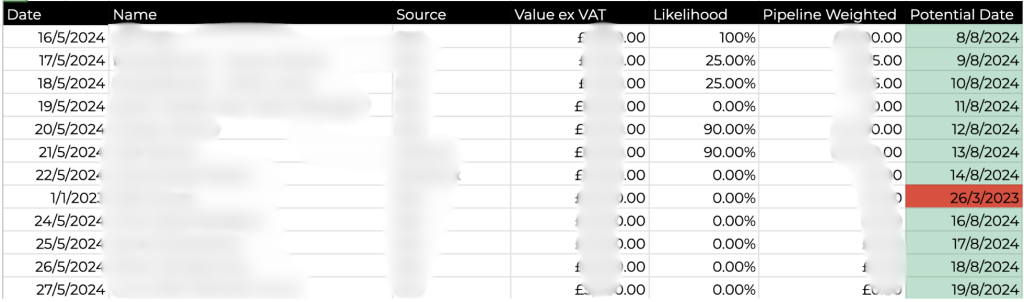
Once you know your client speed, forecast forward. So take the date you first met a prospect, then add your client speed.
So that gives you a rough landing date for each deal in your pipeline.
Add Value And Probability
Add two more numbers to sharpen the picture. So combine the deal’s value with how likely you think it is to close.
Together, those three numbers show what you might earn, and when.
When It Works Best
This works best when your client speed stays fairly consistent deal to deal. So the average actually means something useful.
It also helps when cash flow decisions depend on timing, like hiring or spending. Timing is the whole point here.
When It Becomes Dangerous
It becomes dangerous when client speed varies wildly between deals. So an average built from wildly different timeframes tells you very little.
It also fails if you treat the forecast as guaranteed income. Since a rough estimate dressed up as certainty invites overspending before deals close.
Common Mistakes
Ignoring The Time Dimension
Some businesses track pipeline value but ignore timing completely. So they know how much might land, but never when.
Treating Estimates As Certainties
Some treat estimated probability as a promise. So a deal at 50% gets planned for as if it’s already signed.
Never Updating Client Speed
Some never update their client speed as the business changes. So an old average quietly makes every forecast less accurate.
Client Flow – An Example
Seeing The Pipeline Over Time
In this example, you can see which deals should land, and when. That single addition makes planning resources and finances much simpler.
See also