
Practical Sales Training™ > How To Get Attention > Crossed Out Words

Crossed Out Words: Cross One Out, Change Everything
Read any familiar phrase and your brain finishes it before your eyes even reach the end. That’s exactly what makes a crossed out word so effective. So it breaks the pattern right at the point where you stopped paying attention.
One line through one word, and the whole sentence means something different.
What Is It
This is where you take a normal phrase, one your buyer expects. Then you cross out a word to change the meaning entirely. Not edit it quietly. Cross it out visibly, so the change itself becomes part of the message.
The technique does two jobs at once. It seizes attention, and it challenges whatever belief the original phrase was resting on.
Why Does It Work
Crossed out words are unusual, and unusual things pull attention automatically. A struck through word doesn’t behave like normal text. So your eye can’t skim past it the way it skims past everything else.
It also works because the new meaning runs counter to what you expected. Your brain built one sentence, then had to rebuild it in an instant. So that small mental jolt is what makes the message stick.
How Can You Use It
Cross Out The Word Alone
Take the word that carries the old meaning and strike it through, with nothing added in its place. The gap left behind does the work. Readers fill it in themselves, and what they imagine often lands harder than any word you could have chosen.
Cross It Out And Add A Replacement
Strike the word through, then write the real word beside it. This version spells out exactly what you mean instead of leaving it to guesswork. It trades a little mystery for a lot more clarity.
When It Works Best
This works best on a phrase your buyer already knows by heart. The more automatic the original sentence feels, the harder the crossed out version lands when it breaks that automation.
It also works best when the new meaning really matters to your buyer. That’s different from being clever just for its own sake. The device should serve the message, not perform instead of it.
When It Becomes Dangerous
It becomes dangerous once the trick outshines the point you’re actually making. If a reader remembers the crossed out word but forgets what you were selling, that’s a problem. You’ve entertained them instead of converting them.
It also risks feeling glib on serious subjects. Handled without care, crossing out a word on an emotional topic can read as clever wordplay rather than genuine concern.
Common Mistakes
Crossing Out A Word That Changes Nothing
If the sentence means roughly the same thing with or without the crossed out word, the device falls flat. The whole technique depends on a real shift in meaning, not a cosmetic one.
Burying The New Meaning Too Deep
A reader needs to grasp the new meaning in a glance, not after several seconds of squinting. If the point takes real effort to decode, most people will simply move on.
Using It On A Message That Doesn’t Deserve It
This technique earns attention precisely because it’s rare. Use it on something trivial, and you spend that rarity on a message not worth remembering.
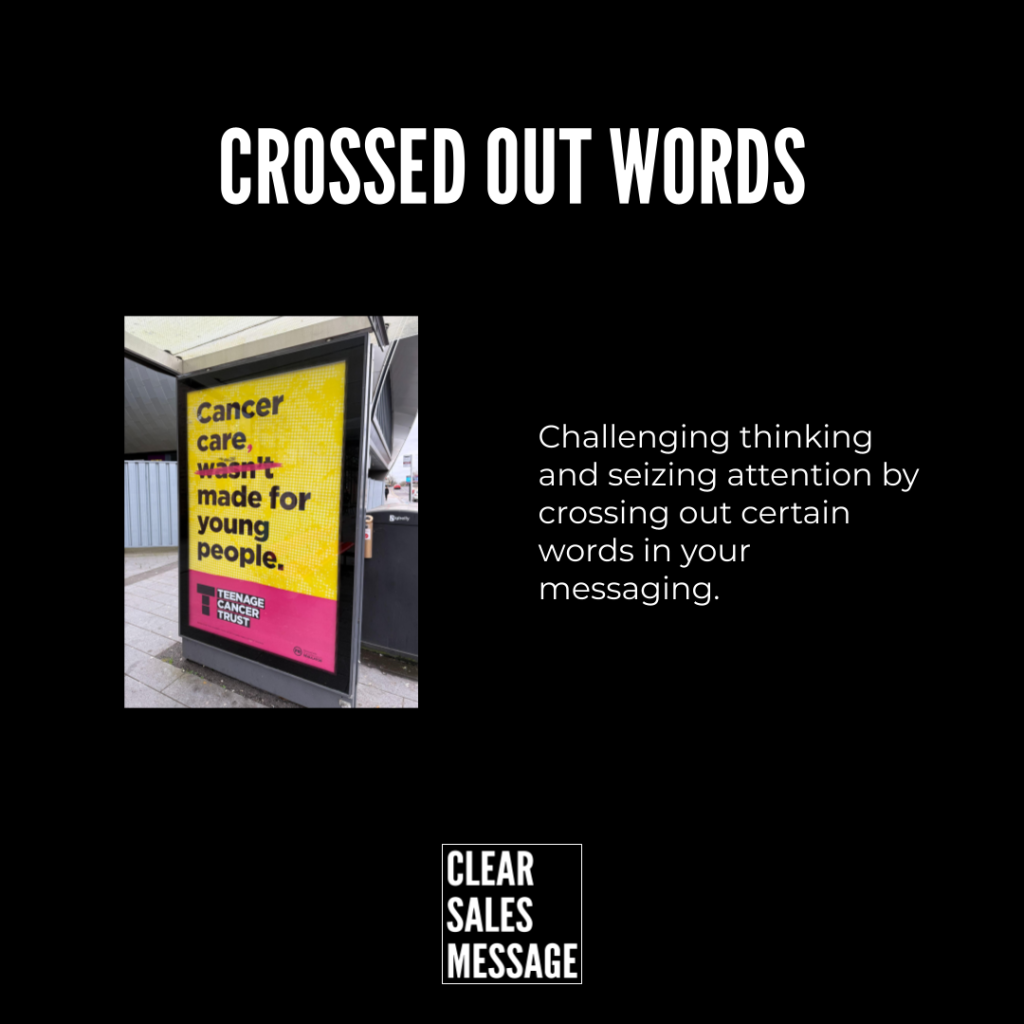
Crossed Out Words – An Example
Children’s Cancer Care
This advert tackles the emotive subject of children’s cancer care by focusing on specialisation. A single crossed out word turns a generic promise into something specific. It signals care built around one particular need.
Adding the word “specifically” would push the point even harder. It spells out exactly what sets the care apart, instead of leaving it implied.

See Also