Practical Sales Training™ > How People Work > Straw Man Argument
Straw Man Argument
What Is It
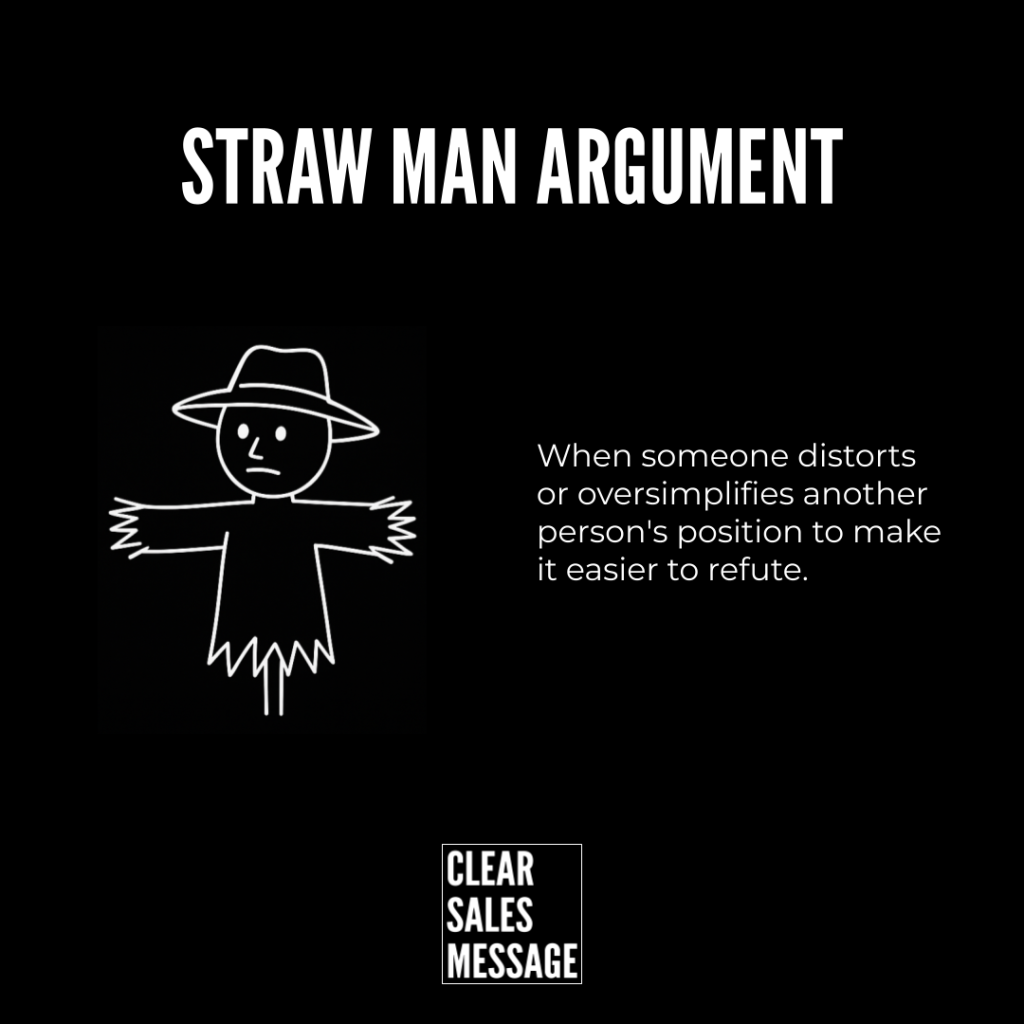
Someone makes a fair point. The other person doesn’t answer it. They answer a louder, dumber version of it instead, one that’s easy to knock down.
That’s a Straw Man Argument. It’s a logical fallacy where someone misrepresents your position to make it easier to attack. They build a distorted version instead. Then they knock that down. It feels like a win. It isn’t one.
Why Does It Work
It works because it’s emotionally persuasive, even though it’s logically empty. So it simplifies a nuanced position into something extreme and easy to dismiss.
It also shifts the focus entirely, forcing you to defend a position you never actually took. It also triggers emotion fast. A twisted claim creates outrage far faster than a calm, accurate one. To a casual observer, it can sound like a solid counterpoint, even when it’s nothing of the sort.
How Can You Use Or Avoid It
Listen Carefully, Quote Directly
Listen carefully, and respond to exactly what someone said, not what you assume they meant. Quote their actual words. So keeping the conversation honest starts with the words themselves.
Clarify Before You Argue
Ask clarifying questions before you argue. So you’re saying that, works far better than guessing at their point and attacking the guess.
Stay On Topic
Stay on topic throughout. So don’t drag in unrelated points just to make the other person look bad in front of an audience.
Use It With Caution, If At All
If you ever use the tactic yourself, know the line you’re walking. So it might frame competition poorly, or create sharp contrast in your positioning. But it’s a persuasion trick, not honest debate.
When It Works Best
This works best, if you can call it that, in fast-moving conversations where nobody has time to check the details. Social media rewards it more.
It also lands harder with audiences who already lean toward the exaggerated version. So it confirms what people already suspected, rather than convincing anyone genuinely neutral.
When It Becomes Dangerous
This becomes dangerous the moment a sharp audience actually notices what happened. So smart listeners spot a straw man fast, and they remember who used one.
It also backfires with repetition. Use it once, and someone catches you. After that, people doubt everything else you say.
Common Mistakes
Doing It By Accident
Some people straw man an argument by accident, simply because they didn’t listen carefully enough. Slow down and check first.
Getting Caught, Then Doubling Down
Others use it deliberately, then act surprised when the other person calls it out. So own it if you’re caught, rather than doubling down.
Confusing It With Real Disagreement
Some people confuse a straw man with genuine disagreement, and stop listening the moment a conversation gets uncomfortable. Disagreement isn’t distortion. The two deserve different responses.
Straw Man Argument – An Example
Attacking A Point Nobody Made
Person A: “We should have some regulations on housing to make it more affordable.”
Person B: “So you want the government to control everything and take away our freedom?”
Person B never addressed Person A’s actual point. Instead, they attacked a louder, easier version of it, one nobody actually made.
See also: