Practical Sales Training™ > Wordplay > Lexical Stress Indicators
Lexical Stress Indicators
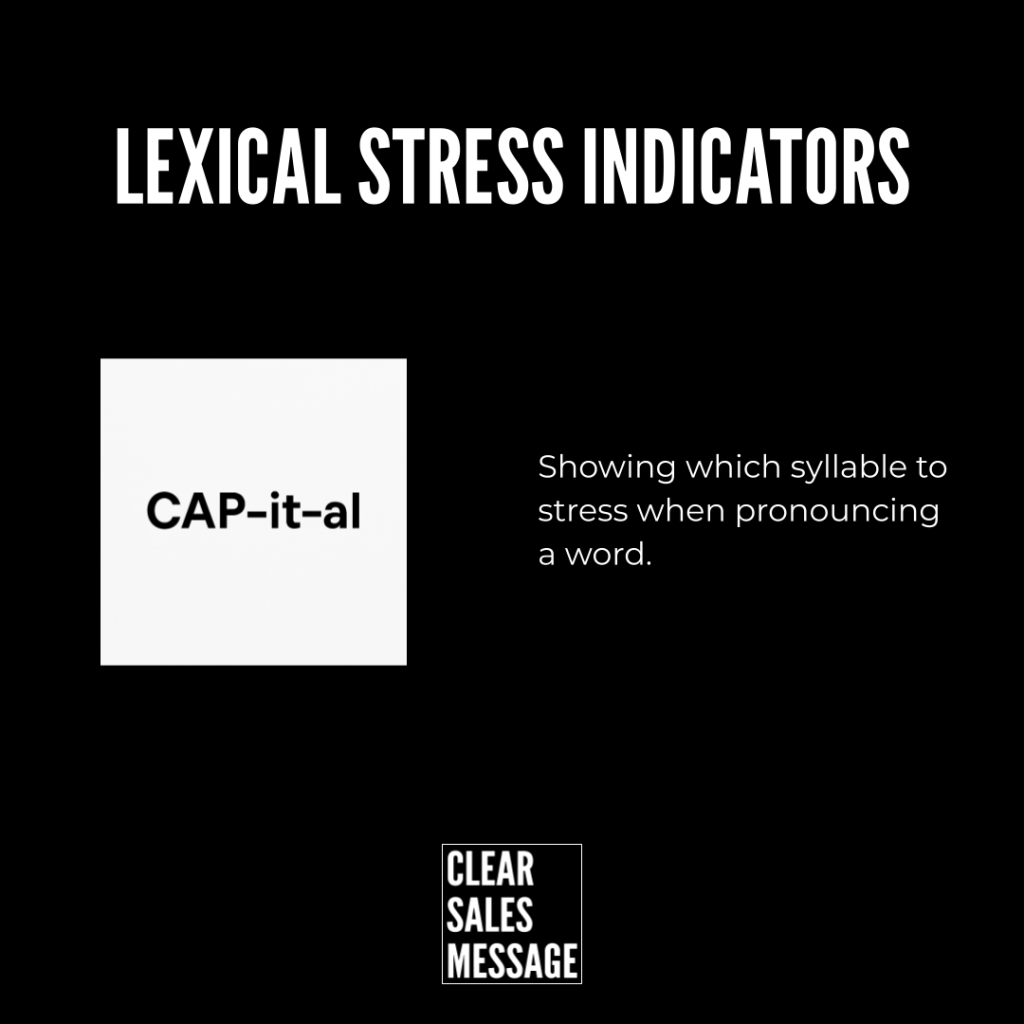
Say “CAP-it-al” and everyone understands you instantly. Say “cap-it-AL” and people pause, even if just for a beat, to work out what you meant.
That tiny shift in stress changes how clear a word feels. Lexical stress indicators show people exactly where that stress belongs.
What Is A Lexical Stress Indicator?
A lexical stress indicator shows which syllable in a word should be emphasised when spoken. In English, meaning and clarity can shift depending on where that stress lands, so these indicators help guide correct pronunciation.
Take the word “capital.” Spoken correctly, it’s CAP-it-al, with the stress on the first syllable. Move that stress, and the word suddenly sounds unfamiliar, even though every letter is exactly the same.
Why Does It Work?
Lexical stress is usually shown one of three ways. Capital letters highlight the stressed syllable, like IN-ter-est-ing. IPA stress marks appear in formal dictionaries, like /ˈɪn.tər.əs.tɪŋ/, where the mark shows stress just before the syllable. Bold or underlined text calls out the stress visually in informal guides.
Whichever method you use, the goal stays the same. You’re making it obvious which syllable should stand out, so nobody has to guess. And when nobody has to guess, they say the word correctly the first time, without hesitation.
How Can You Use Lexical Stress Indicators?
When Sharing Your Name
If your name gets mispronounced often, show people where the stress goes. “It’s NA-talie, not na-TA-lie.” One clear line, said once, saves a dozen awkward corrections later.
When Introducing A Brand Or Product Name
Use stress indicators to make pronunciation easy and repeatable. “It’s called Acora, that’s a-CO-ra, with the stress on the second syllable.” This single line often prevents weeks of inconsistent pronunciation from your own team.
In Scripts Or Presentations
Use stress indicators to help your team say key phrases confidently and consistently. A shared script with the stress marked out keeps everyone sounding aligned, not just accurate.
In Pronunciation Guides For Sales Or Support
Help clients say things right the first time, especially with unfamiliar terms or global names. A quick stress guide removes the silent hesitation that often happens before someone attempts a tricky word out loud.
When It Works Best
Lexical stress indicators work best with names and terms that genuinely shift meaning or clarity depending on stress placement. They’re especially useful in spoken formats, like calls, training sessions, and live presentations, since there’s no written spelling to fall back on.
They also work well when rolling a term out across a team, since a shared, correct pronunciation stops small inconsistencies from creeping in over time.
When It Becomes Dangerous
This becomes unnecessary, and mildly irritating, when applied to words nobody struggles with. Marking the stress on a simple, common word can feel patronising rather than helpful.
It also loses value if it’s explained too formally. A dictionary-style IPA mark might be precise, but most buyers respond better to a simple capital-letter guide than a phonetic symbol they don’t recognise.
Common Mistakes
Using Formal Notation With A Casual Audience
IPA stress marks work well in dictionaries, but they confuse most everyday audiences. Stick to capital letters or bold text unless you’re writing for a technical or academic reader.
Marking Stress On Easy Words
Save this technique for words that genuinely trip people up. Overusing it on simple, familiar words just adds clutter to your writing.
Only Explaining It Once, To One Person
If a term matters across a whole team, put the stress guide somewhere everyone can see it, like a script or shared document, rather than explaining it once in passing.
Lexical Stress Indicators – An Example
A Sales Team That Finally Said It The Same Way
A software company launched a product called Acora, and every rep on the sales team pronounced it differently within the first week. Some said a-CO-ra, others said AC-or-a, and prospects started noticing the inconsistency on calls.
The team added one line to their script: “That’s a-CO-ra, stress on the second syllable.” Every rep used the exact same phrase in every pitch after that. Within a fortnight, the whole team sounded aligned, and prospects stopped asking “wait, how do you say that again?”
See Also