Practical Sales Training™ > Selling Communication Basics > Sociolect

Sociolect
Every group has its own language. Not a different tongue, but a different way of using words. Certain phrases, certain tones, certain shorthand that insiders share and outsiders miss.
That shared language is a sociolect. In sales, understanding it matters a great deal. When you speak the way your buyer speaks, they feel understood. When you don’t, you can feel like a stranger even if your product is perfect.
Buyers don’t just buy from people who have the right answer. They buy from people who feel like one of them. Sociolect is one of the quieter skills in selling, but also one of the most powerful.
What Is a Sociolect?
A sociolect is the way a particular social group speaks. Shaped by shared background, education, culture, and experience, it covers the words, phrases, tone, and even grammar that feel natural within that circle but sound odd to outsiders.
Teenagers in one city might use slang that nobody else recognises. Medical staff speak in shorthand that only colleagues follow. Gamers online use words and references that make no sense outside that culture. Each group has its own version, and each version signals something about who belongs.
These differences aren’t random. They define the group and keep it together. So when you tap into a sociolect correctly, you’re not just matching language. You’re signalling that you’re part of the same world.
Why Does Sociolect Work?
Language is more than communication. When someone speaks the way you speak, your brain reads it as a signal of familiarity and trust. You relax, open up, and feel less like you’re being sold to.
Using the right terms in the right context also signals expertise. Buyers are far more likely to trust someone who clearly understands their world, because it shows you’ve been paying attention.
But sociolect works in reverse too. Use the wrong words in the wrong context and you can feel like an outsider instantly. Even a small mismatch in language creates distance that’s hard to recover from mid-conversation.
How Can You Use Sociolect In Sales?
Research how your buyers talk
Listen to how your target group communicates. Read their forums, watch their videos, follow their social media. The words they use, the tone they take, and the phrases they repeat are all clues. Use them in your copy and your conversations.
Match language to build rapport faster
When you mirror the way a buyer speaks, they feel understood without knowing why. It’s one of the fastest ways to build rapport in a first conversation, because it removes the sense that you’re an outsider trying to sell them something.
Use it in your marketing
Ad copy, social posts, emails, and landing pages all land better when they speak the buyer’s language. Generic copy feels aimed at everyone, so it connects with no one. Sociolect-aware copy feels personal, and personal converts better.
Use it carefully and honestly
Forced or faked sociolect is easy to spot and quickly creates distrust. Use it because you genuinely understand the group, not as a trick. Buyers can tell the difference, and getting it wrong is worse than not trying at all.
When Sociolect Works Best
Sociolect works best when you’re selling into a tight-knit or specialist group. Trades, professions, hobbyist communities, and subcultures all have strong sociolects. Get the language right and you signal insider status immediately.
First impressions in sales often come down to whether the buyer feels understood. Using their language early sets a very different tone than opening with generic sales talk, so it’s especially powerful at the start of a relationship.
Written content benefits too. Because buyers scan quickly, familiar language catches their attention in a way that formal or neutral copy simply doesn’t.
When Sociolect Becomes Dangerous
Performed sociolect is easy to spot. Buyers in tight groups are very good at identifying someone who’s adopted the language without understanding the culture. That reads as fake, and fake kills trust fast.
There’s also a risk of using outdated language. Sociolects evolve quickly, especially in youth culture and online communities. A phrase that felt current two years ago can make you look out of touch rather than in tune.
And in formal settings, over-relying on casual sociolect can undermine your credibility. There’s a balance between speaking someone’s language and maintaining the authority they need you to have.
Common Sociolect Mistakes
Faking it without understanding it
Dropping in slang or jargon you don’t really understand is obvious to anyone who does. Research the group properly before you try to speak their language, or you’ll do more damage than good.
Using outdated language
Sociolects shift constantly, especially online. What felt current a year ago can feel stale today. Keep listening to how the group speaks now, not how they spoke when you first researched them.
Applying it in the wrong context
Casual sociolect works in informal settings but can feel jarring in a formal pitch or a professional document. Read the context as carefully as you read the language, and adjust accordingly.
Ignoring it entirely
Generic, neutral language is safe but forgettable. If your buyer has a strong sociolect and your copy sounds like it could be aimed at anyone, you’re leaving a real connection opportunity on the table.
Sociolect – An Example
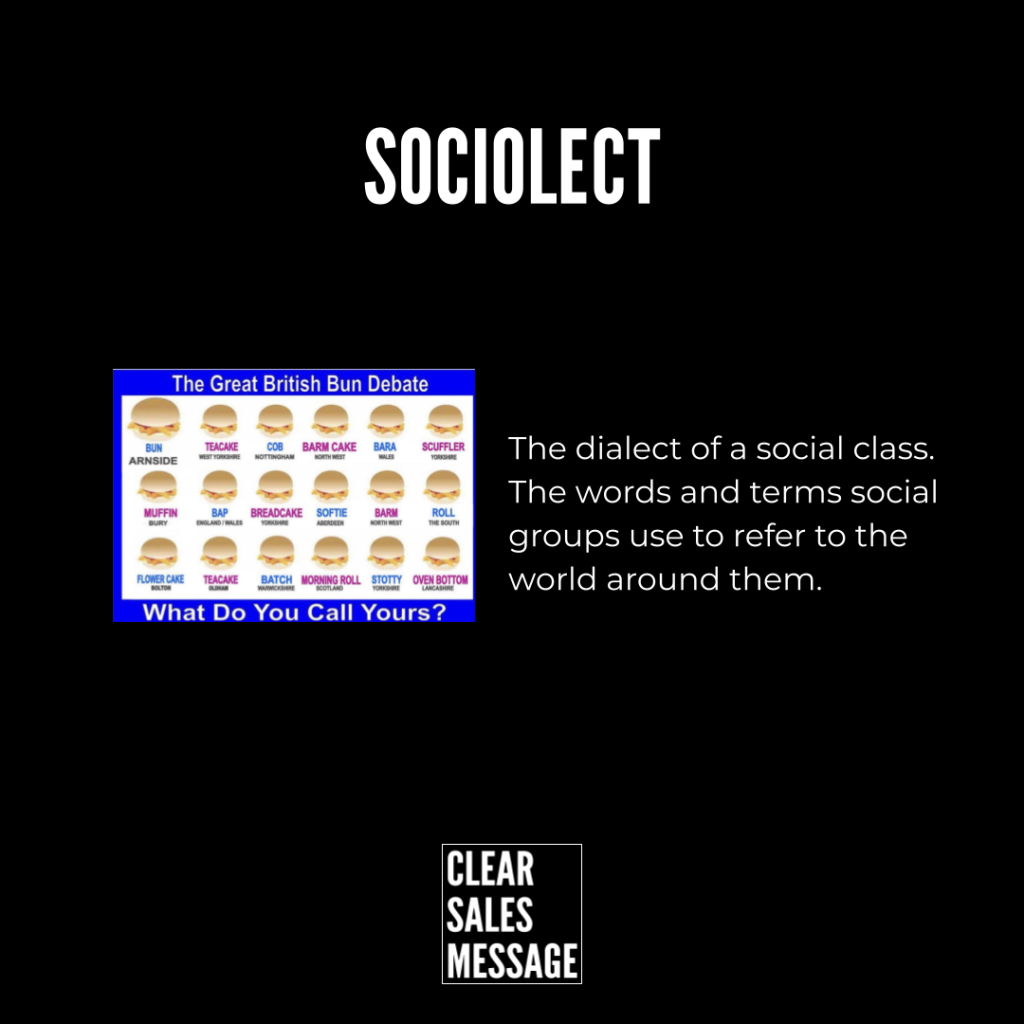
In the UK, a bread roll has a different name depending on where you’re from. In Yorkshire it’s a breadcake. In Scotland it’s a morning roll. In Lancashire it’s an oven bottom. In the North West it’s a barm.
Each name means the same thing, but use the wrong one in the wrong place and locals will notice immediately. That’s sociolect in action. The object is identical, but the word signals where you’re from, who you belong with, and whether you’re one of us or one of them.
In sales, that signal matters more than most people realise.

See also