Practical Sales Training™ > How To Lose The Sale > Overly Fancy Process

Overly Fancy Process
Every business has a process. The question is whether buyers can understand it. When a process is built for the team rather than the buyer, it creates friction at exactly the point where you need clarity.
Complexity feels safe from the inside. It looks thorough. It looks professional. But from the buyer’s side, it looks like effort. And effort is a reason to delay, or to choose someone simpler instead.
The most effective sales processes are the ones buyers can explain to a colleague in two sentences. If yours takes longer than that, it’s probably working against you.
What Is an Overly Fancy Process?
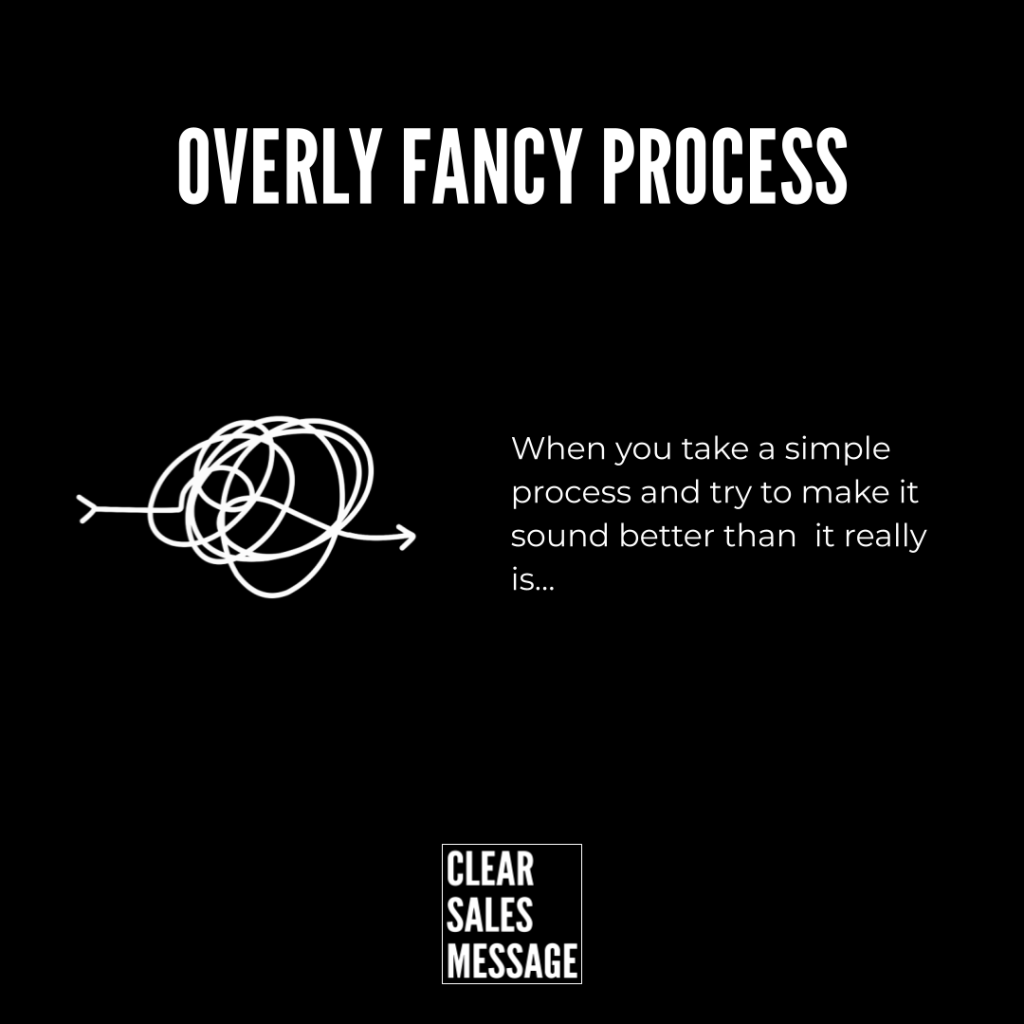
An overly fancy process is a way of working that tries to impress rather than guide. It usually includes too many steps, branded stage names, internal acronyms, and flow charts that look polished but mean nothing to the buyer.
Typical signs include more than five steps from first contact to outcome, stage names that a new buyer couldn’t explain in plain words, surprise handoffs or forms that add unnecessary effort, and process maps that look neat but read like a puzzle. Each of these signals the same thing to the buyer: this is going to be complicated.
The intention is usually good. Businesses create detailed processes to feel organised and to demonstrate rigour. But what feels like a strength internally becomes a barrier externally. Because the buyer doesn’t care about the architecture of your process. They care about what happens next and how long it takes.
Why Does an Overly Fancy Process Lose the Sale?
Complexity slows decisions and kills confidence. Buyers want certainty, speed, and a clear next step. When they get a branded six-stage pathway with names they’ve never heard before, they feel uncertain. And uncertain buyers delay. When they delay, they often drift toward a simpler choice.
The commercial impact is significant. Longer sales cycles mean more chasing and lower close rates. Team confusion creates mixed messages and avoidable rework. Poor handovers between sales and delivery erode the client experience. And lower perceived value follows when buyers feel lost in a process they don’t understand.
There’s also a trust dimension. A process that the buyer can’t repeat back is a process they can’t explain to their colleagues, their manager, or their board. So the deal stalls not because of price or fit, but because the buyer can’t confidently describe what they’re signing up for. That’s a preventable problem.
How Can You Fix an Overly Fancy Process?
Make the process obvious, short, and buyer-centred. Use everyday words. Show outcomes and timings. Remove anything that doesn’t move the sale forward. Here’s the simple process recipe.
Keep Three to Five Steps
From first contact to outcome, three to five steps is the sweet spot. Fewer than three can feel too informal. More than five starts to feel like a project. Because buyers hold the whole process in mind when they’re deciding whether to commit, a shorter process is easier to say yes to.
Name Each Step With a Clear Verb and Outcome
Step names like “Talk,” “Plan,” “Start,” and “Grow” do more work than “Discoveryfy” or “Alignment Phase.” Each name should tell the buyer what happens and what they get. So replace branded stage names with plain verbs that a buyer can repeat to their team without explanation.
Remove Internal Jargon
Internal language that makes sense to your team often means nothing to buyers. Acronyms, product names, and methodology labels all create distance rather than clarity. Audit every stage name and ask: would a buyer who has never heard of us understand this immediately? If not, rewrite it in plain English.
State Times and What You Need From the Buyer
Buyers want to know how long each step takes and what they need to provide. Without that information, the process feels open-ended. With it, the buyer can plan and commit. As a result, decisions come faster and the buyer feels more in control of the timeline rather than at the mercy of it.
Show Proof at Key Decision Points
Place a relevant case study or testimonial at the moment in the process where the buyer is most likely to hesitate. Proof at the right moment reduces doubt faster than any amount of explanation. Because the buyer can see that others have been through the same process and come out well, the risk of saying yes feels smaller.
Put the Whole Process on One Page
If your process takes more than one page to explain, it’s too complicated. Aim for something a buyer can read in under a minute. A one-page process summary that lives on your website, in your proposals, and in your sales conversations gives buyers a consistent and clear picture of what working with you looks like.
When an Overly Fancy Process Does the Most Damage
It does the most damage at the beginning of the relationship, when the buyer is forming their first impression of what working with you will be like. A confusing process at the proposal or onboarding stage signals that the engagement itself will be confusing. Many buyers walk away at this point rather than raise the concern directly.
It also causes significant harm in competitive situations. When a buyer is comparing two similar offers, the one with the simpler, clearer process often wins. Because complexity is a risk signal, a buyer who can’t follow your process will gravitate toward a supplier whose process they can.
Similarly, it damages internal selling. Most B2B purchases involve more than one decision maker. The person you’re speaking to needs to sell your offer internally to their team, manager, or board. If they can’t explain your process clearly, they can’t make that case. So the deal stalls not because of a lack of interest but because of a lack of clarity.
Common Overly Fancy Process Mistakes
Building the Process for Internal Pride
A process with a branded name and six trademarked stages can feel like an achievement from the inside. But buyers don’t care about the architecture. They care about what happens next. So design the process for the buyer’s understanding, not for the team’s sense of rigour.
Confusing Thoroughness With Complexity
A thorough process doesn’t have to be a complicated one. Thoroughness means covering everything important. Complexity means making it hard to follow. The goal is a process that’s both thorough and simple. Because if the buyer can’t follow it, the thoroughness behind it doesn’t help them feel confident.
Never Testing It With a Real Buyer
Most businesses design their process internally and never ask a buyer to read it cold. So ask someone who has never seen your business to read your process document and tell you what they understand. Their version of your process is what the market hears. If it doesn’t match what you intended, the process needs simplifying before it costs you another deal.
Adding Steps to Show Value
Some businesses add steps to make their service look more comprehensive. However, each extra step adds friction and extends the timeline. Value comes from outcomes, not from the number of stages it takes to reach them. So cut every step that doesn’t directly serve the buyer, and make the remaining steps feel fast and purposeful.
Overly Fancy Process – An Example
A marketing agency called their six-step approach the Brand Elevation Pathway. The stages were Discoveryfy, Calibration Workshop, Alignment Phase, Solutioneering, Activation Sprint, and Optimisation Loop. It looked polished on their website. But buyers couldn’t repeat it back, didn’t know how long it would take, and felt it was all smoke and mirrors. Deals slowed or fell apart entirely.
They stripped the process back to four plain steps. Talk: a free 30-minute call to understand your needs. Plan: a tailored proposal within three working days. Start: onboarding and first campaign live within two weeks. Grow: monthly optimisation and reporting. The process became short, easy to explain, and clear about timeframes. Buyers understood what would happen and what they would get. Conversion improved.
Same business. Same service. Simpler process. Better results. That’s what fixing an overly fancy process actually looks like.
See also