

Practical Sales Training™ > How To Connect With Your Buyer > The Identity Effect
The Identity Effect
What Is It?
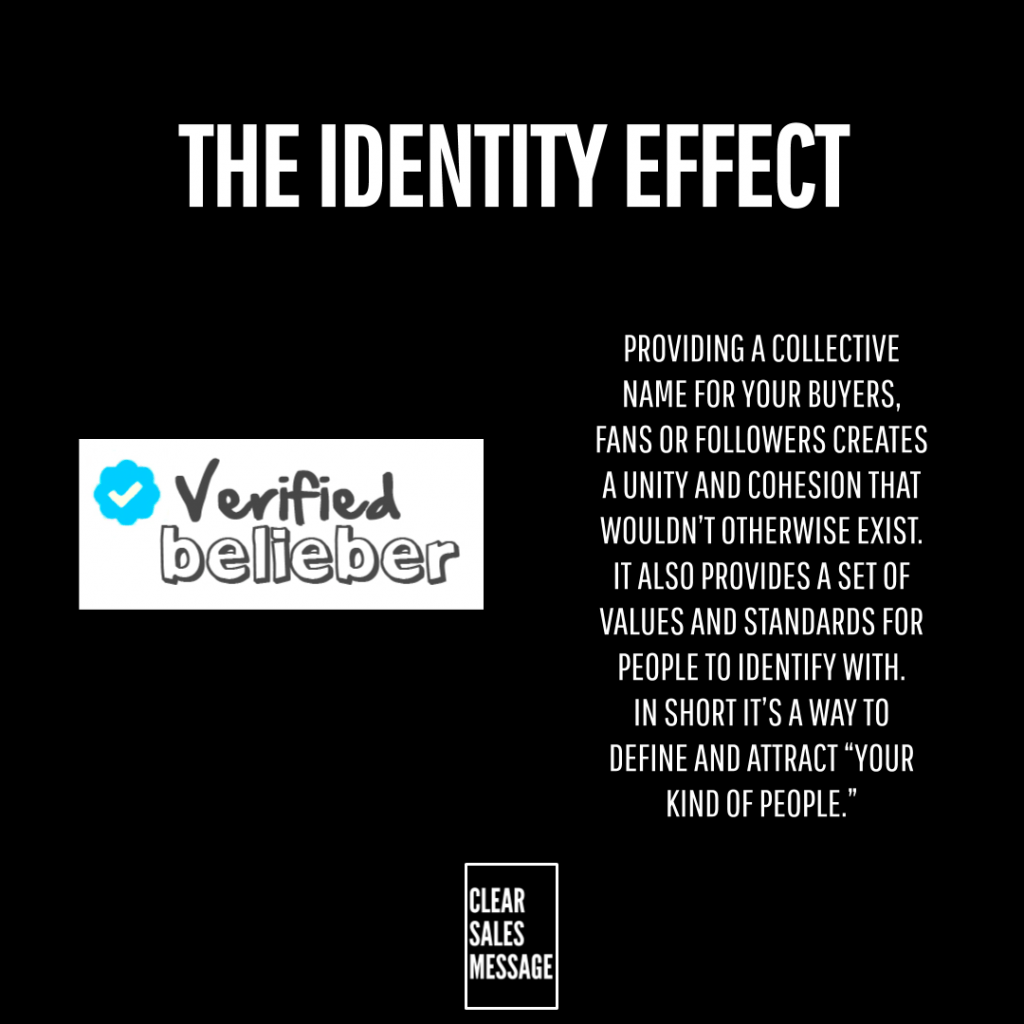
The Identity Effect groups your buyers together and gives them a name. Think “Beliebers” or “Swifties.” A quick search turns up plenty more examples.
It sounds like fan culture. But the same idea works far beyond pop stars.
Why Does It Work?
Humans naturally look to belong to a group. So when buyers share a name, they recognise each other instantly. That recognition builds a sense of community that wouldn’t exist otherwise.
Naming also signals value. We only name things that matter enough to deserve one. So if your buyers have a name, it tells them their place in your world is significant, not incidental.
This is branding too, just aimed at people instead of products. Think of GAP or Nike or Apple. Each name carries a feeling. Calling your buyers a “KatyCat” works the same way as choosing Mac over PC. It’s identity, not just preference.
How Can You Use It?
Look At The Outcome You Deliver
Think about the result your buyers get and how it makes them feel. A strong name usually comes from that feeling, not from your product name alone.
Keep It Simple And Repeatable
A name only works if people actually say it. So keep it short, easy to spell and easy to say out loud. If it takes explaining, it won’t spread on its own.
Let Buyers Use It Themselves
You can’t force adoption. So introduce the name, then let your buyers pick it up in comments, hashtags and conversations. Once they’re using it unprompted, it’s working.
As for the people who follow Clear Sales Message, I’ve decided what to call them. They’re Messengers.
When It Works Best
This works best when your buyers already feel some emotional connection to what you offer. Fitness communities, courses and personal brands all fit naturally here.
It also works well when buyers interact with each other, not just with you. A name spreads fastest in comments, groups and shared spaces, so community driven businesses get the most from this.
When It Becomes Dangerous
The risk is forcing a name onto buyers who feel no real connection yet. If the identity doesn’t match how people already feel, it comes across as gimmicky instead of genuine.
Not every business suits this either. A one time purchase with no ongoing relationship rarely needs a tribe name attached to it.
Used naturally, this builds loyalty fast. Forced too early, it just feels like marketing dressed up as belonging.
Common Mistakes
Choosing A Name Too Early
A name works best once buyers already feel connected. Introduce it too soon, and it has nothing real to attach to.
Picking Something Clever Over Clear
A witty name that’s hard to say won’t spread. So choose clarity over cleverness every time.
Forcing Adoption
You can introduce a name, but you can’t demand people use it. So let it earn its place naturally, rather than pushing it everywhere at once.
The Identity Effect – An Example
A fitness coach runs an online program for busy parents and calls her community “The Strong Squad.” Her clients pick up the name fast. They use it in comments, hashtags and even email subject lines, saying things like “Proud to be part of the Strong Squad” and “Another win for the Squad today.”
The name creates a real sense of belonging. It gives her clients shared pride and shared purpose. Instead of feeling like individuals doing workouts alone, they feel like part of something bigger.
That shift changes how people show up. A member of a squad trains differently to someone doing a solo workout. So the identity doesn’t just build loyalty, it changes behaviour too.
See also

