Practical Sales Training™ > How To Get Attention > Compact Names
Compact Names
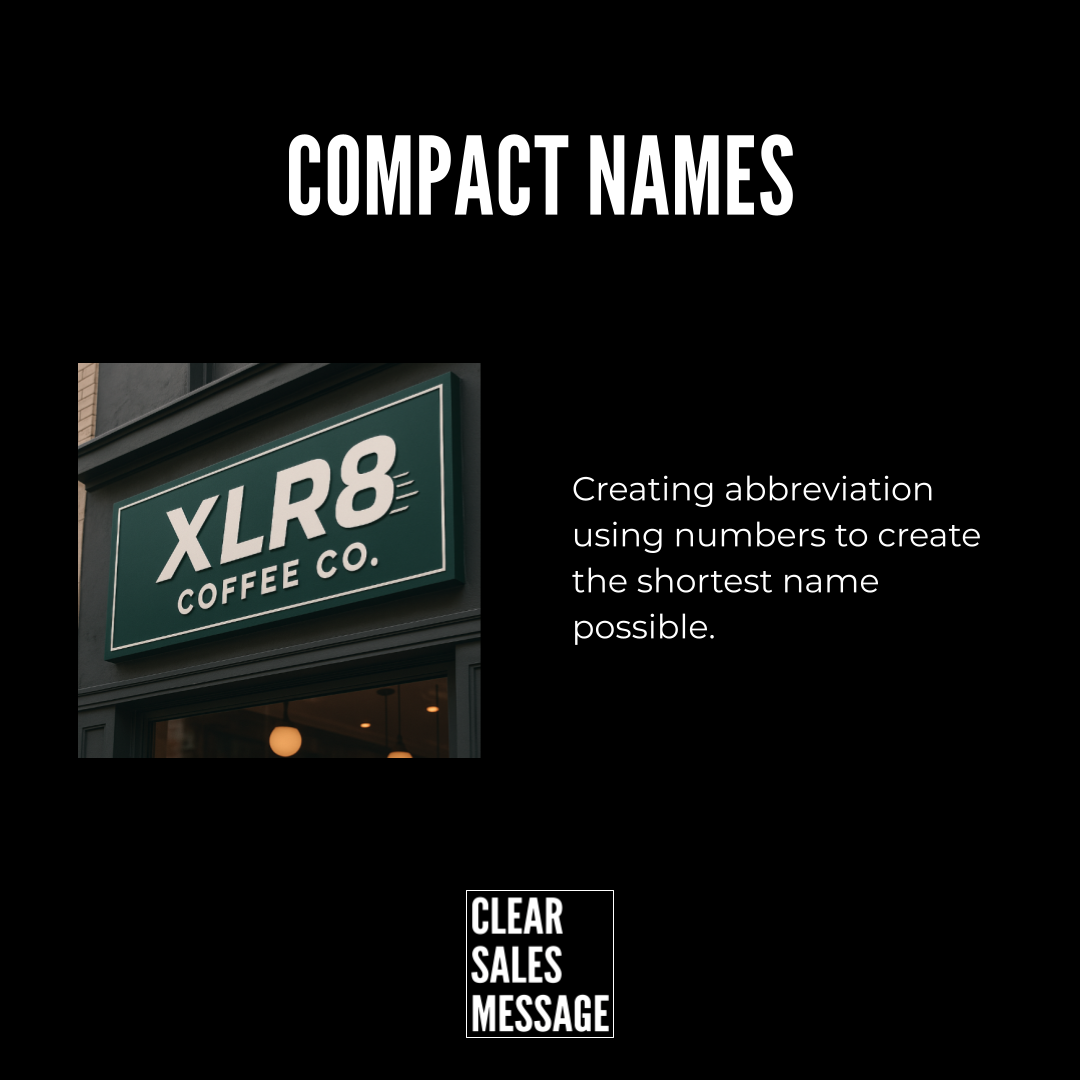
Most words follow a predictable shape, so the eye skims right past them. Compact Names break that shape on purpose. Instead of writing “Accelerate,” you write “XLR8,” and suddenly the word looks completely different.
That difference is the whole point. A Compact Name is short, sharp and visually distinct, so it stands out the moment someone sees it. It uses letters, numbers or abbreviations to communicate an idea fast, often faster than the full word ever could.
Because it breaks the normal reading pattern, it catches the eye before the brain has even processed what it means. That’s a powerful effect, but only when it’s used with care.
What Is a Compact Name?
A Compact Name is a shortened or compressed version of a word or phrase. It instantly grabs attention because it looks different. It uses a mix of letters, numbers or abbreviations to communicate an idea quickly.
These names work because they break the normal reading pattern. A regular word flows past unnoticed. A Compact Name interrupts that flow instead, so the reader has to pause and decode it.
That small interruption is exactly what makes Compact Names so effective in branding. They’re not just shorter words. They’re words designed to be noticed first and read second.
Why Does the Compact Name Technique Work?
1. The brain notices pattern breaks
Our brains are wired to notice things that don’t fit the pattern. When a name looks slightly unusual, like “XLR8” instead of “Accelerate,” it interrupts the scroll and sparks curiosity. So the reader wants to decode it, rather than skimming past without a second glance.
2. Decoding creates engagement
That small moment of mental engagement makes the name more memorable. The reader has to do a tiny bit of work to understand it. Because of that effort, the name sticks in a way a fully spelled-out word never would. It also gives the brand a sense of energy or innovation.
3. Compression creates contrast
In a world full of similar-sounding brands, compression adds contrast, and contrast creates attention. When every competitor uses the full, predictable spelling, a compressed name stands out. It looks more modern and more confident by comparison.
4. It signals speed and innovation
A shortened, sharpened name often feels faster than the full word it replaces. The brain associates compression with efficiency. So a Compact Name can quietly suggest the product itself is fast, modern or cutting-edge, before a single feature has even been described.
How Can You Use Compact Names In Sales?
Use Compact Naming when you want your brand, product or campaign to feel fast, modern or tech-forward. It works best in industries where innovation or efficiency matters, such as software, performance products or youth-focused brands.
1. Use it for product or campaign names
A Compact Name works well as the headline for a product launch or campaign. So it immediately signals that something different is happening. Save it for moments where you genuinely want to stand out. Don’t apply it to every piece of copy you write.
2. Match the technique to your audience
Compact Names land best with audiences who already expect a fast, informal tone, such as younger buyers or tech-savvy markets. However, they can feel out of place in more traditional or formal industries. So always consider whether your audience will read it as confident or as try-hard.
3. Use it sparingly
The goal isn’t to make the name unreadable. It’s to make it unmissable. So use Compact Names selectively, in places where attention matters most, rather than compressing every word in your messaging.
4. Test it for clarity
A good test is simple. If someone can say it easily and understand the meaning after a quick glance, that’s the right balance. You’ve found the line between clarity and creativity. If it needs an explanation every time, it’s too compressed to work well.
When Compact Names Work Best
Compact Names work best for product names, campaign titles and short headlines where standing out matters more than sounding formal. They’re especially effective in software, fitness, gaming and youth culture, where a fast, modern tone is already expected.
They also work well in social media and advertising. Attention is scarce there, and a single glance often decides whether someone keeps reading. Because Compact Names interrupt the normal reading pattern, they earn that crucial extra second of attention in a crowded feed.
When Compact Names Become Dangerous
Compact Names become a problem when they sacrifice clarity for novelty. If a name is so compressed that nobody can pronounce it or understand it at a glance, that’s a problem. The attention it earns turns into confusion rather than interest.
They can also feel dated quickly. A style that looks fresh today can feel like an old marketing trend within a few years. So use the technique with intention, rather than relying on it as your only way to stand out.
Common Compact Name Mistakes
1. Over-compressing the word
If you strip out too many letters, the word becomes impossible to read or pronounce. Always test the compressed version out loud, because what looks clever on screen can sound confusing when spoken.
2. Using it in the wrong context
A Compact Name can feel exciting in a tech startup pitch. But that same name can feel unprofessional in a formal proposal or legal document. So always match the style to the setting, not just to the audience you’re hoping to impress.
3. Choosing a compression nobody recognises
Some letter substitutions are widely understood, like “GR8” for “Great.” Others are too obscure for most readers to decode. Stick to compressions your audience will recognise instantly, rather than ones that need explaining.
4. Using it everywhere instead of strategically
Compact Names lose their power when every word in your messaging is compressed. The technique works because it’s unexpected. So save it for the names and headlines that matter most, rather than using it across the board.
Compact Names – An Example
Here are some hypothetical examples. Number substitution is the most common form, since it often replaces “ate” in everyday words.
Number substitutions (phonetic compression)
- GR8 – Great
- L8R – Later
- M8 – Mate
- INV8 – Innovate
- CRE8 – Create
- ELEV8 – Elevate
- ACTV8 – Activate
- GENR8 – Generate
- EDUC8 – Educate
- MOTV8 – Motivate
Letter drops or blends (visual compression)
- FLX – Flex
- DRVN – Driven
- INFLU8 – Influence
- VZN – Vision
- CR8TV – Creative
- NXTGEN – Next Generation
- PWRD – Powered
- THRYVE – Thrive
- SPRT – Spirit or Sport
- BLND – Blend
Hybrid or invented forms (brand-style compression)
- QIK – Quick
- TRND – Trend
- FX – Effects
- SYNC’d – Synced
- UPGRD – Upgrade
- AMPLFY – Amplify
- XPND – Expand
See also