Practical Sales Training™ > How To Lose The Sale > The Fake Unlimited Effect

The Fake Unlimited Effect
“Unlimited” is one of the most powerful words in sales. It removes fear, kills hesitation, and makes buyers feel safe. So it gets used a lot.
But when the reality does not match the promise, that word does serious damage. The buyer who felt safe now feels tricked. And a buyer who feels tricked does not come back.
The Fake Unlimited Effect is one of the easiest ways to win a sale and lose a customer at the same time.
What Is the Fake Unlimited Effect?
The Fake Unlimited Effect happens when a product or service is promoted as “unlimited” but has a hidden or practical limit that restricts the experience. The word is used in the marketing, but the small print tells a different story.
You see it in mobile plans that promise unlimited data but throttle speed after a set amount of usage. Support packages offer unlimited help but only during office hours. Design subscriptions process just one request at a time, despite promising unlimited work.
On the surface, “unlimited” suggests freedom. But when the buyer hits the wall they were told did not exist, that freedom turns into frustration fast.
Why Does the Fake Unlimited Effect Lose the Sale?
“Unlimited” works because it removes a specific fear. Buyers hate surprise charges, hidden caps, and restrictions they did not know about. So when you remove all of that with one word, it becomes much easier for them to say yes.
But that same emotional promise becomes the source of the problem. When the buyer finds the hidden limit, the trust they gave you breaks. They do not just feel disappointed – they feel misled, and that is a much harder feeling to recover from.
The Fake Unlimited Effect wins in the short term because it triggers optimism. Long term, it replaces that optimism with doubt. And doubt spreads – a buyer who feels tricked tells people.
How Does the Fake Unlimited Effect Play Out In Sales?
The speed throttle
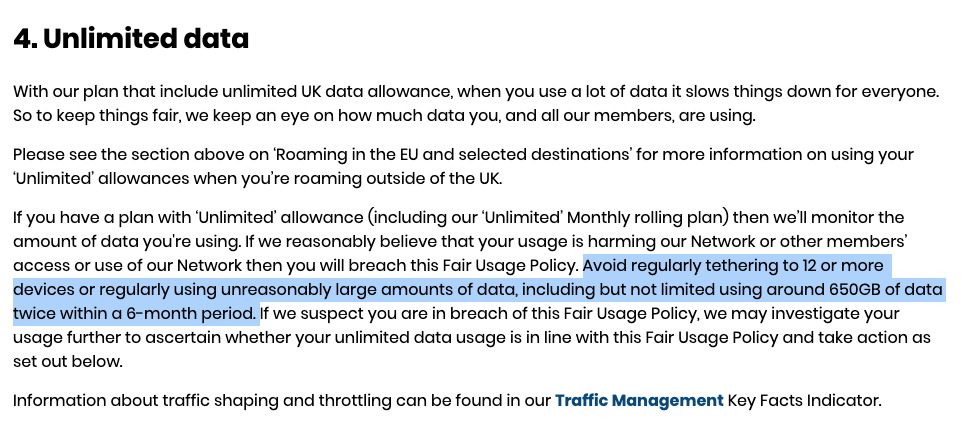
Mobile providers are the most common example. “Unlimited data” sounds generous, but fair usage clauses mean speed drops after a certain point. The buyer did not sign up for slow data. So the gap between promise and reality feels like a lie, even if it is technically legal.
The queue problem
Design and development subscriptions often promise unlimited requests but only work on one task at a time. A buyer with ten projects queued quickly realises that “unlimited” means “eventually, in order.” That is not what they pictured when they signed up.
The availability gap
Unlimited support sounds reassuring until you need help at 7pm on a Friday and find the inbox closed until Monday. In theory, the support is unlimited. In practice, it has very clear limits – and the buyer who needed help over the weekend now feels let down at the worst possible moment.
When the Fake Unlimited Effect Does the Most Damage
It does the most damage when the buyer has already committed. They have paid, told colleagues, and built expectations around the promise. So when the limit appears, the disappointment is bigger because the investment was real.
Word of mouth markets suffer most. A single buyer who feels tricked can leave a review, post on social, or warn their network. As a result, the short-term win from the “unlimited” claim costs far more than it ever made.
Repeat business is the biggest casualty of all. Buyers who feel misled once rarely give a second chance – they move on, and they take their referrals with them.
When the Fake Unlimited Effect Becomes Tempting
It becomes tempting when a competitor uses it and seems to win business because of it. The logic goes: if they are saying unlimited and it is working, why not do the same?
But the damage is always delayed. The sale happens today. Trust breaks in a week, a month, or a year. So the short-term comparison looks fine, but the long-term cost stays invisible until it is too late.
Pressure makes it worse. When conversion rates are low and the team needs numbers, “unlimited” feels like an easy fix. It is not – it just borrows from future trust to pay for today’s results.
Common Fake Unlimited Effect Mistakes
Hiding limits in small print
If the limit exists, the buyer will find it. Burying it in a terms document does not make it disappear – it just means the discovery happens after they have paid, which makes it feel worse. Honesty upfront costs far less than a complaint after the fact.
Assuming buyers will not notice
Most buyers will notice. They use the product, hit the wall, and immediately go back to check what they were promised. Any gap between the marketing and the reality will be found – it is not a question of if, but when.
Not using what is genuinely unlimited
Most businesses have something that really is unlimited – access, revisions, calls, or time within reason. Leading with that honest version still gives you the power of a generous claim without the backlash. Be clear about what has no limit, and honest about what does.
The Fake Unlimited Effect – An Example
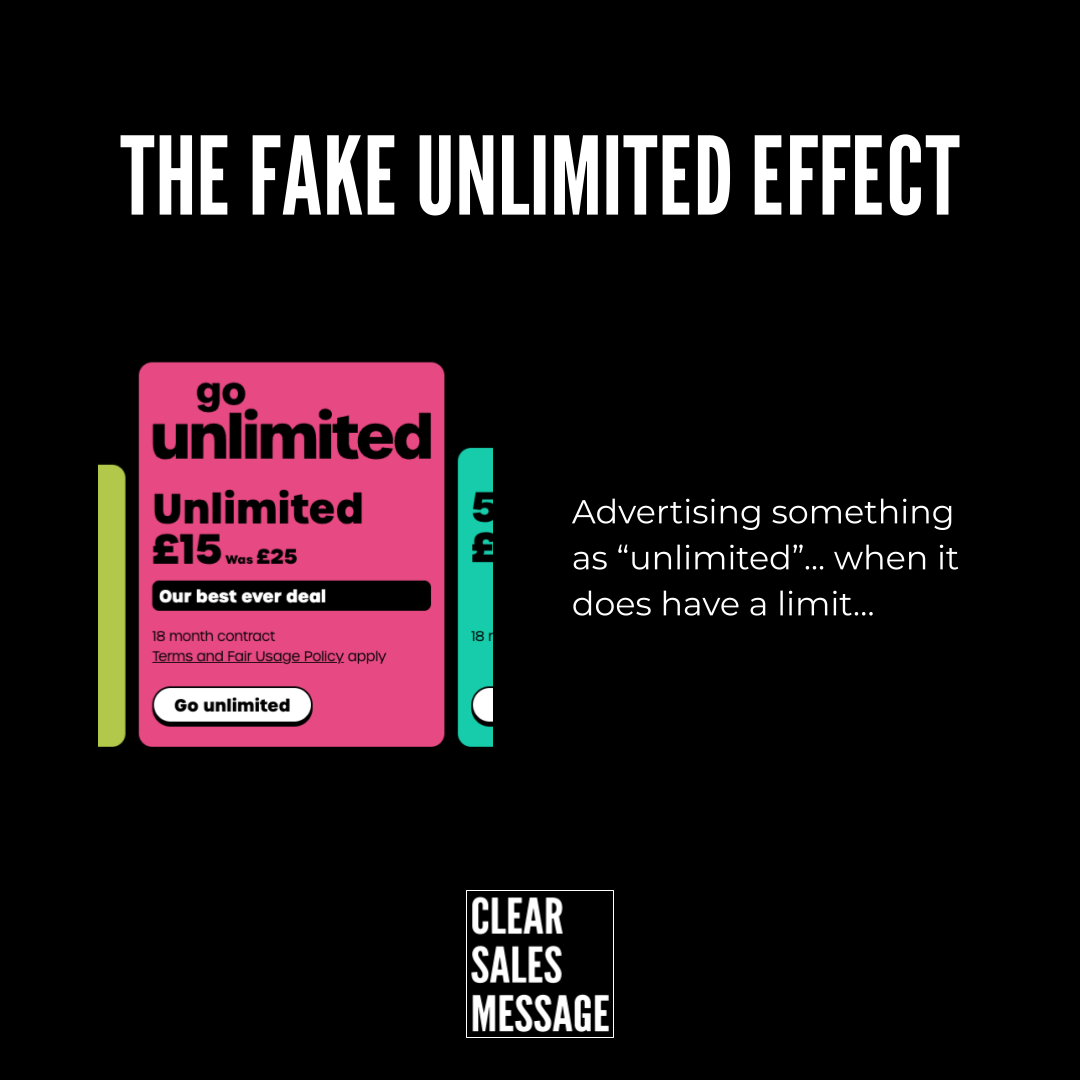
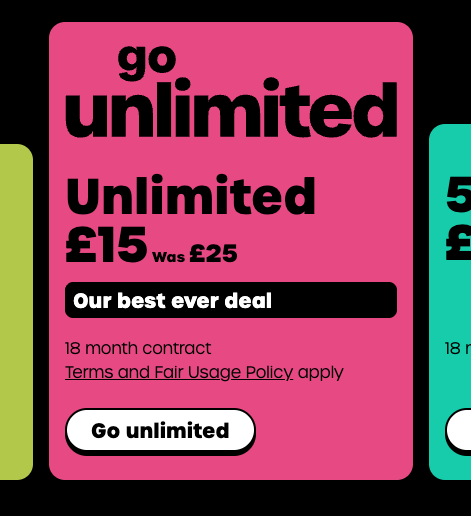
Many mobile phone providers promote “unlimited” plans and then include fair usage clauses in the small print. Those clauses confirm there is, in fact, a limit. The two examples below show just how common this practice is.
See Also