Practical Sales Training™ > How To Lose The Sale > Clickbait

Clickbait
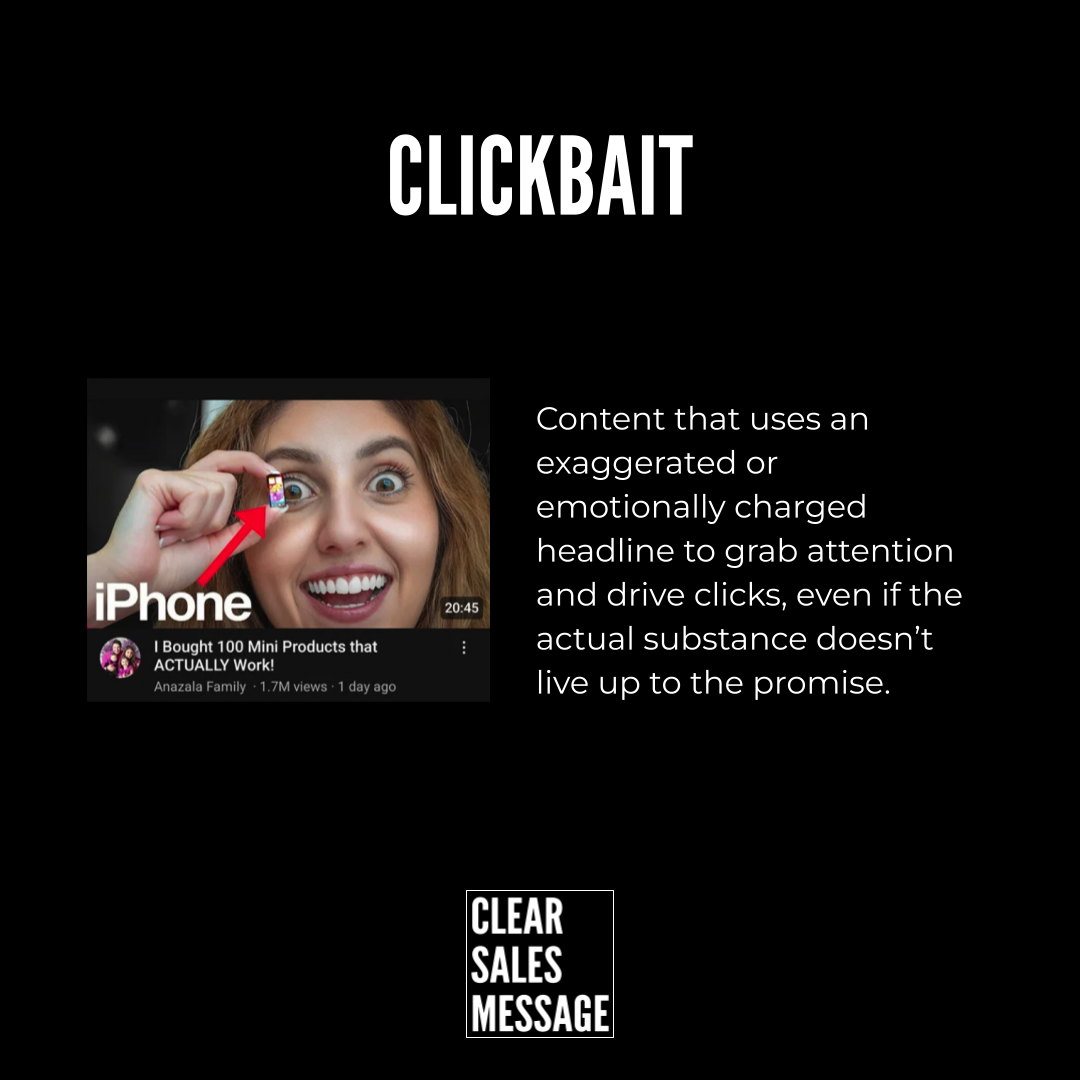
Clickbait is designed to stop the scroll. It grabs attention fast using explosive headlines, emotional triggers and exaggerated promises. The problem is that the content rarely matches the hype.
In the short term, it works. People click. But the moment they realise the headline oversold the content, trust drops. And in sales, trust is everything.
Understanding clickbait matters because the same mechanics that make it so effective can also be used honestly. The goal isn’t to mislead. It’s to grab attention and then actually deliver something worth the click.
What Is Clickbait?
Clickbait is content that uses over-the-top headlines, emotional wording, shock value, impossible promises and curiosity gaps that feel urgent or outrageous. Its only job is to get the click. Not to educate, not to help and not to deliver real value.
Common examples include headlines like “You WON’T BELIEVE what happened,” “I tried this ONE trick and everything changed” and “This product is ILLEGAL but I bought it anyway.” These headlines work because they create an open loop the brain feels compelled to close.
Clickbait wins the click but rarely builds trust over time. So while it looks like a growth tactic, it often becomes a trust problem instead.
Why Does Clickbait Work?
1. It triggers curiosity
The human brain hates open loops. Clickbait creates a question the viewer feels compelled to resolve, such as “What’s the secret?” or “Is that really true?” This curiosity pull overrides logic, which is why people click even when they suspect the content won’t live up to the headline.
2. It hijacks emotion
Strong emotional triggers outperform logic every time. Clickbait taps into surprise, outrage, fear, excitement, novelty and drama. High emotion leads to high click-through rates. However, that same emotion turns into disappointment when the content doesn’t match the promise.
3. It promises a shortcut
Clickbait sells the idea of instant results, zero effort, hidden methods and secret strategies. People click because they want the easy win. But because the shortcut rarely exists, the content under-delivers and the reader feels cheated.
4. It often under-delivers
The content rarely matches the headline. As a result, it creates disappointment, distrust, lower retention and less loyalty. Clickbait wins the click but loses the relationship. In a sales context, that trade-off almost never makes sense.
How Can You Use Clickbait In Sales?
The key is simple. Use the attention mechanics of clickbait without the manipulation. Strong hooks are valuable. Lies are not.
1. Create curiosity without lying
You can open loops honestly. For example: “The mistake most businesses don’t realise they’re making,” “Why most cold outreach fails before it even starts” and “The unexpected reason buyers don’t respond.” These create genuine curiosity because they point to something real. They also build credibility when the content actually delivers.
2. Use emotional triggers responsibly
You can still tap into emotion without misleading anyone. Relief, surprise, hope and the frustration your buyer already feels are all fair game. For example: “The reason your proposals go ignored,” “This one shift can double your replies” and “Stop doing this. It’s costing you sales.” These are strong and truthful, which means they attract the right people rather than annoyed ones.
3. Promise value, not miracles
Avoid fake shortcuts. Instead, promise outcomes you can actually deliver. For example: “A simple tweak that makes your message clearer,” “How to follow up without sounding desperate” and “Three ways to get buyers to respond faster.” These still attract clicks but also build trust because the promise is honest.
4. Make your content match the headline
This is where most creators fail. If your headline is bold, your content must be bold. If your headline is specific, your content must deliver specifics. Trust comes from alignment between what you promise and what you deliver. So write the content first, then write the headline to match it.
5. Use the framing to your advantage in sales
Clickbait mechanics can also support sales messaging directly. Use curiosity to open conversations, emotional framing to highlight buyer pain, bold but honest statements to stand out and hooks that speak to what buyers actually care about. Attention comes first. Value must follow immediately after.
When Clickbait Works Best
Clickbait mechanics work best when the audience is cold and attention is scarce. On social media, in email subject lines or in ad headlines, a strong hook is often the only thing standing between your message and the scroll. Used honestly, it gets your content seen by people who would otherwise miss it entirely.
It also works well when the frustration or curiosity you’re pointing to is something your buyer already feels. In that case, the headline doesn’t create false emotion. Instead, it simply names something real, which is why it lands so well.
When Clickbait Becomes Dangerous
Clickbait becomes dangerous the moment your headline overpromises and your content underdelivers. That gap destroys trust faster than almost anything else in sales and marketing. Buyers who feel misled don’t just leave. They tell others.
It’s also dangerous in relationship-based selling. If a prospect clicks on something misleading before they even speak to you, their first impression is that you exaggerate. That’s a hard hole to climb out of before you’ve had a single conversation.
Common Clickbait Mistakes
1. Writing the headline before the content
Many people write a punchy headline first and then try to make the content fit. This almost always leads to a gap between promise and delivery. Write the content first so the headline reflects what’s actually there.
2. Using shock for shock’s sake
Shock grabs attention once. But if there’s no real substance behind it, the reader feels used. Shock is only useful when it’s earned by genuinely surprising content that follows.
3. Applying clickbait to the wrong audience
Sensational headlines irritate experienced buyers, particularly in B2B. They’ve seen it all before. So what works on a general social feed can feel cheap and unprofessional to a senior decision-maker. Always calibrate your tone to your audience.
4. Confusing clicks with conversion
High click rates feel good but mean nothing if the people clicking are disappointed and disengaged. The real measure is what happens after the click. Therefore, always optimise for the outcome, not just the open.
Clickbait – An Example
Clean Bait vs. Clickbait
A sales trainer posts two versions of the same email subject line. The first says: “I can’t believe this still works in 2025.” It gets a high open rate. However, the email inside is generic advice about follow-up. Readers feel misled and unsubscribe.
The second version says: “The follow-up line that gets replies even after two weeks of silence.” It also gets a strong open rate. But this time the content delivers a specific, usable line. Readers share it and reply to ask for more. The same attention mechanics, used honestly, produce a completely different result.
See also