Practical Sales Training™ > How To Convert > Inaction Penalty
Inaction Penalty
Book a click and collect order, then never pick it up, and some shops will now charge you for it. Not for saying no. Just for never showing up.
That’s an Inaction Penalty. It doesn’t punish a decision. It just removes the free pass that doing nothing usually gets.
This page covers what an Inaction Penalty is, why it works without feeling like pressure, and how to use one fairly in your own sales process.
What Is An Inaction Penalty?
An Inaction Penalty is a small, clearly defined consequence that only kicks in when a buyer does nothing after showing real intent.
A “no” doesn’t trigger it, and it isn’t there to push a decision either. The penalty only exists for the gap between interest and action.
When someone reserves, books, or agrees in principle but never follows through, the Inaction Penalty explains what happens next. So the choice itself doesn’t carry the cost. The absence of one does.
That distinction matters, because it keeps the decision fully in the buyer’s hands.
Why Does An Inaction Penalty Work?
Most buying journeys stall because waiting feels harmless. So an Inaction Penalty quietly removes that comfort.
By setting a neutral boundary around time, access, or priority, it adds a real consequence to delay, without adding any pressure. The outcome stays predictable, reasonable, and automatic.
If the buyer acts, nothing happens. If they don’t, the penalty kicks in exactly as stated.
Because it reads like process rather than persuasion, it feels normal, almost administrative. And that’s exactly why it works, turning inaction from a safe default into a conscious choice.
How Can You Use An Inaction Penalty In Sales?
Apply It Once Interest Already Exists
Inaction Penalties work best once a buyer has already reserved a place, requested a proposal, asked for next steps, or agreed in principle to move forward. At that point, you simply explain what happens if the booking, confirmation, or follow through doesn’t happen by a set time.
Skip The Chasing Entirely
There’s no chasing, no urgency language, and no awkward follow-ups needed. So used well, an Inaction Penalty protects momentum, cuts stalled deals, and helps buyers act without ever feeling pushed.
It doesn’t force anyone’s hand. It just removes the option to delay for free.
When An Inaction Penalty Works Best
It works best when a buyer has already taken a clear, intentional step, like a booking or a reservation, rather than a vague expression of casual interest. So the stronger the original intent, the fairer the penalty feels.
It also works especially well when limited resources are genuinely at stake, like appointment slots or stock held aside, because the cost of inaction then reflects a real loss to someone else, not just an arbitrary rule.
When An Inaction Penalty Becomes Dangerous
Trouble starts the moment a business applies it to someone who never showed genuine intent in the first place, since punishing casual browsing rather than a real commitment feels unfair and damages trust fast.
It also risks looking punitive if the penalty outweighs the actual inconvenience, because a small missed pickup met with a harsh fee reads as greedy rather than reasonable.
Common Inaction Penalty Mistakes
Applying It Without Clear Intent First
Charging someone who never made a genuine commitment feels like a trap rather than a fair consequence. Only apply a penalty after a real, intentional step.
Hiding The Rule Until It’s Too Late
Springing a penalty on someone who never knew it existed turns a fair system into a nasty surprise. State the consequence clearly before the buyer commits to anything.
Setting A Penalty Too Harsh For The Situation
An oversized fee for a minor inconvenience feels punitive rather than fair. Match the size of the penalty to the actual cost the inaction creates.
Inaction Penalty – An Example
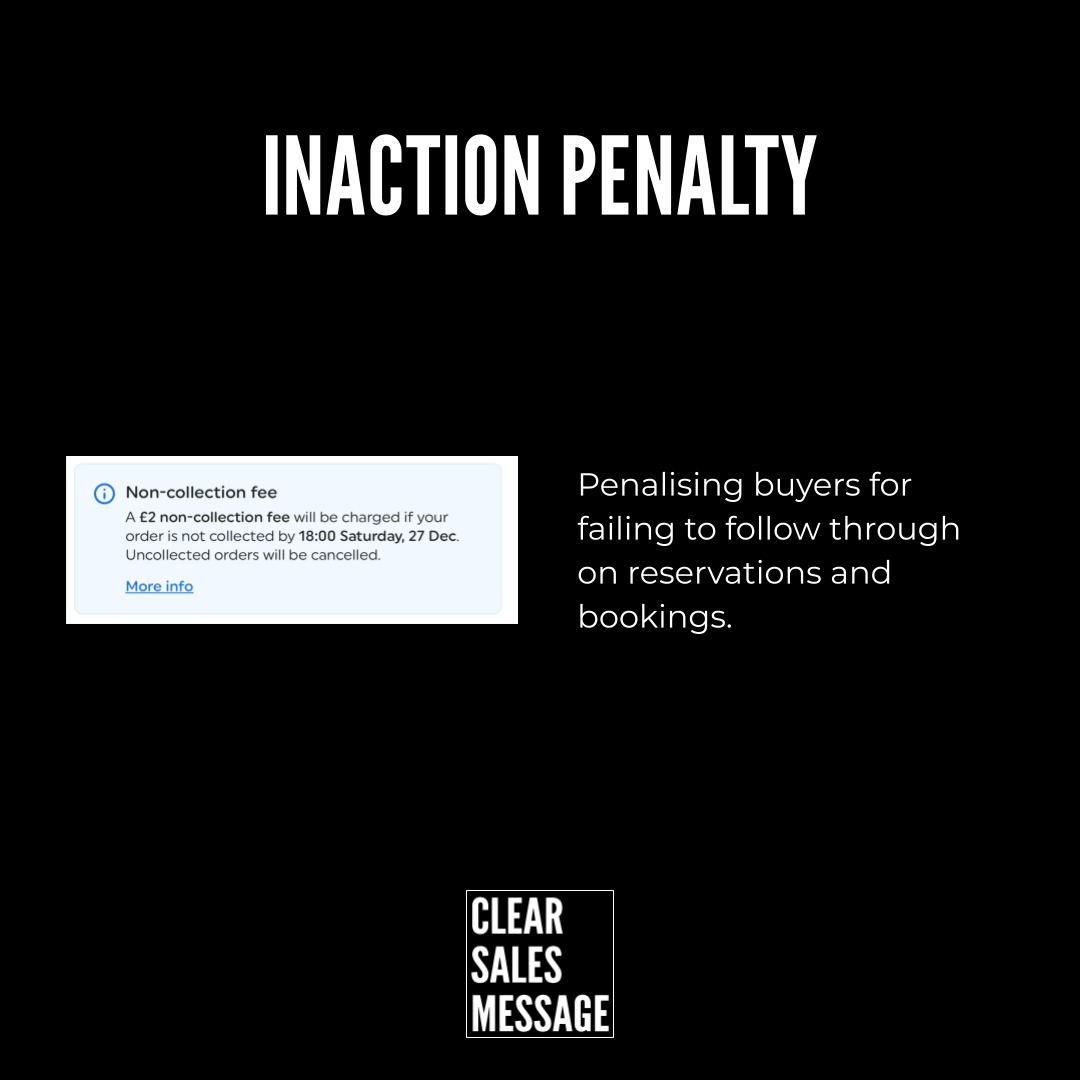
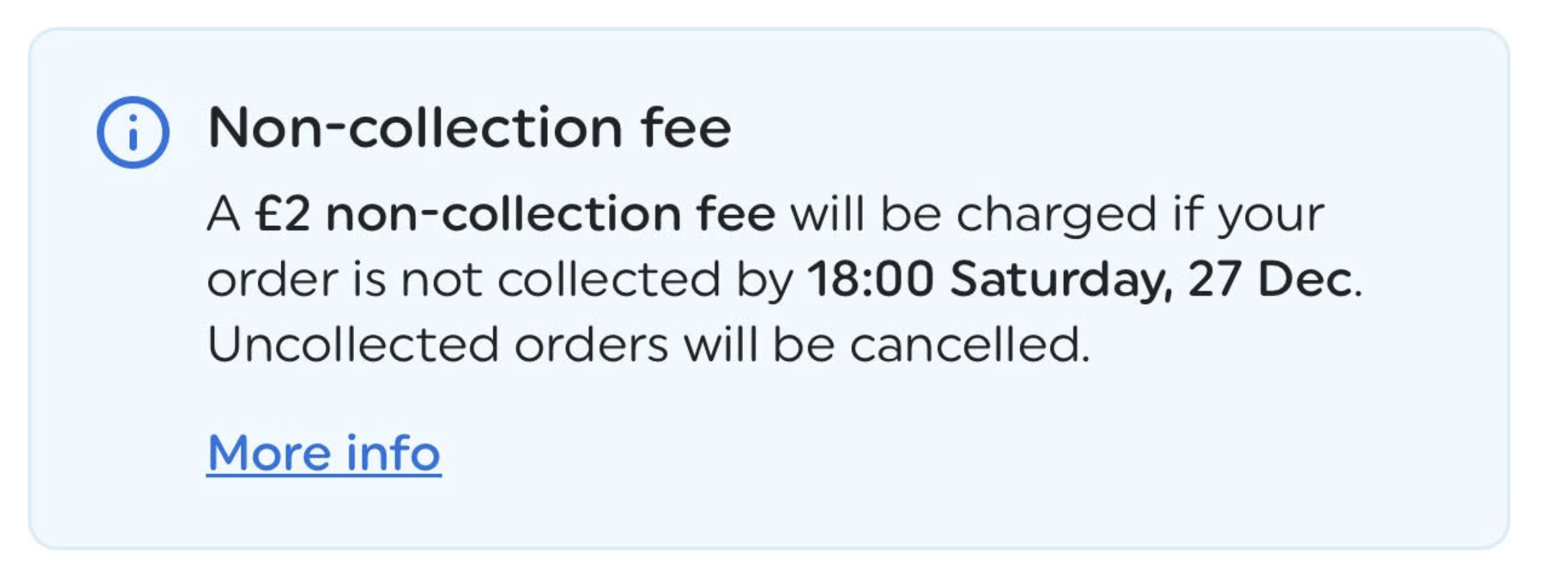
One toy shop made it clear that failing to collect a click and collect order carries a charge. Not a discount lost. An actual fee, just for never showing up.
That single rule changes the maths instantly. Forgetting to collect an order stops being a free, harmless slip and starts being a choice with a real cost attached to it.
That’s an Inaction Penalty doing exactly what it’s meant to do. The shop never pressured anyone to buy. It simply made sure that doing nothing wasn’t free anymore.
See also