Practical Sales Training™ > How To Convert > Client Map

Client Map
“We work with clients across the country.” That’s a claim, so it needs belief. A map showing dots spread across the country is proof instead, and proof reassures in a way words never quite manage.
That’s a client map. It doesn’t sell anything directly, because it doesn’t need to. It just makes your existing scale visible, and visibility does the rest.
This page covers what a client map is, why it works so well as quiet reassurance, and how to use one properly.
What Is A Client Map?
A client map is a visual picture of where your clients are based, shown at an approximate level rather than precise addresses.
Its purpose isn’t logistics. Instead, it’s reassurance. By showing the spread of your clients across a map, you make the scale of your work visible and real. So what might otherwise feel abstract suddenly feels established and proven.
Why Does A Client Map Work?
People understand scale better visually than verbally. Saying you work with clients across a region or country asks for belief. But showing it removes the doubt entirely.
A client map works because it packs several trust signals into a single glance. For example, distribution implies demand, density implies experience, and reach implies credibility beyond just one town, network, or referral circle.
Importantly, the map doesn’t need to be exact, because precision isn’t the point. The brain isn’t checking coordinates. Instead, it’s quietly asking a simpler question: are other people like me already doing this?
So when the answer looks like yes, hesitation drops.
How Can You Use A Client Map In Sales?
Make Choosing You Feel Normal
A client map helps prospects feel they’re joining something established, rather than taking a chance on something unproven. So this works especially well when selling services, retainers, or higher value work, because trust matters more than features in those situations.
Signal Resilience, Not Just Reach
A client map also lowers any sense that you depend on one single location or market. As a result, it signals breadth, which quietly calms concerns about longevity and stability too.
Keep It Simple And Honest
The most effective client maps stay simple and honest. They show presence without exaggeration, and reach without overclaiming. So when done well, they don’t shout for attention. Instead, they quietly reinforce confidence.
A client map doesn’t persuade through argument. It reassures through visibility instead.
When A Client Map Works Best
It works best once you genuinely have a spread of clients worth showing, rather than a small handful clustered in one area. So the wider and more varied the spread, the more convincing the map becomes.
It also works especially well for service businesses competing against local-only rivals, because a map of national or regional reach instantly sets you apart from someone working out of one postcode.
When A Client Map Becomes Dangerous
It backfires the moment it exaggerates your real reach. A map showing far more spread than you actually have invites awkward questions, for example the moment a buyer asks for specifics.
It can also look thin if used too early, before you genuinely have enough clients to show meaningful spread. So a handful of scattered pins can look sparse rather than impressive.
Common Client Map Mistakes
Overstating Real Reach
Showing more locations than you genuinely serve risks an awkward conversation, because a buyer may ask for detail you can’t back up. So keep the map honest, even if it looks slightly smaller as a result.
Using It Too Early
A sparse map with only a few scattered points can undercut the very confidence it’s meant to build. So wait until there’s a genuine spread worth showing.
Burying It Where Nobody Looks
A client map tucked away on a rarely visited page does little good. Instead, place it somewhere a hesitant buyer will actually see it, like a homepage or a pricing page.
Client Map – An Example
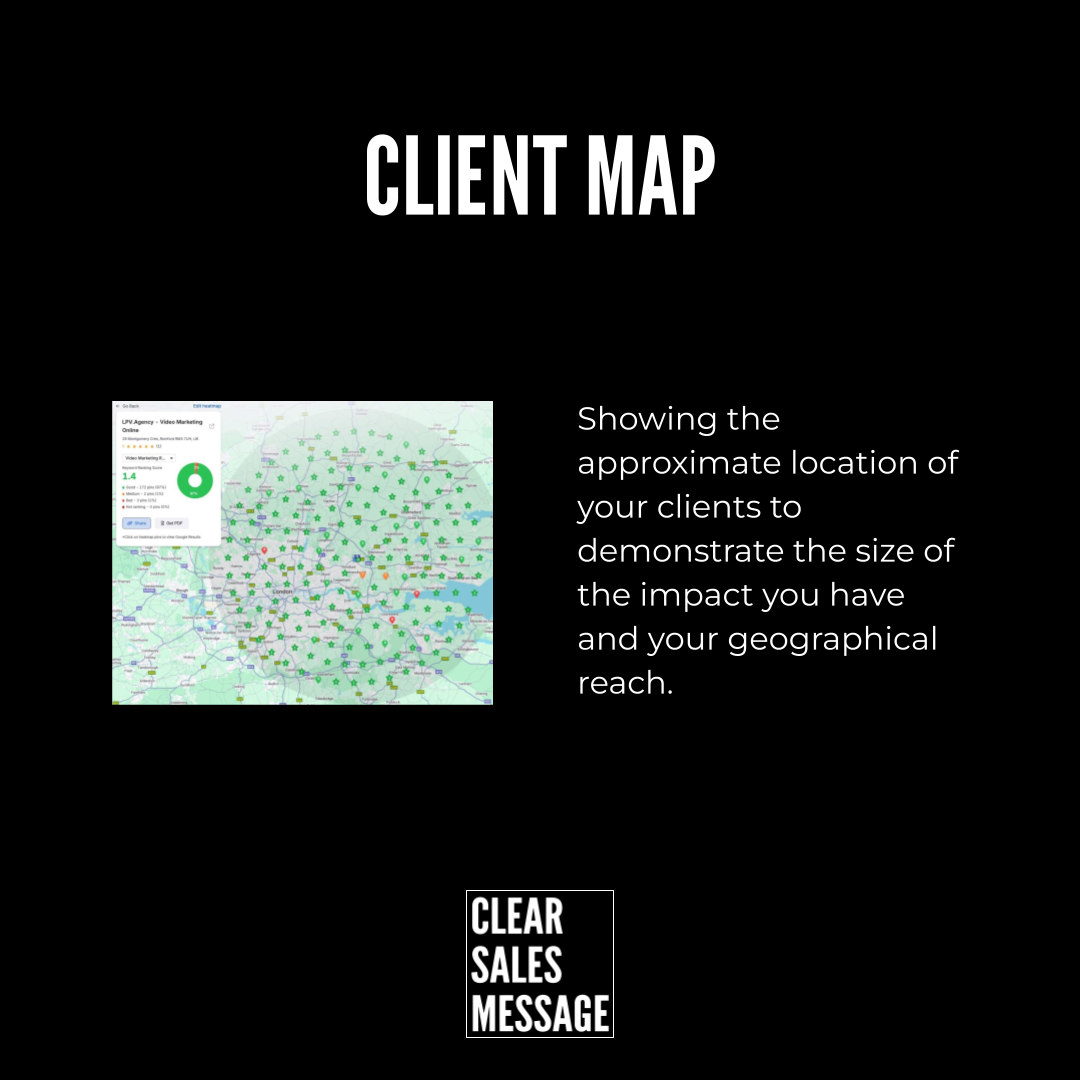
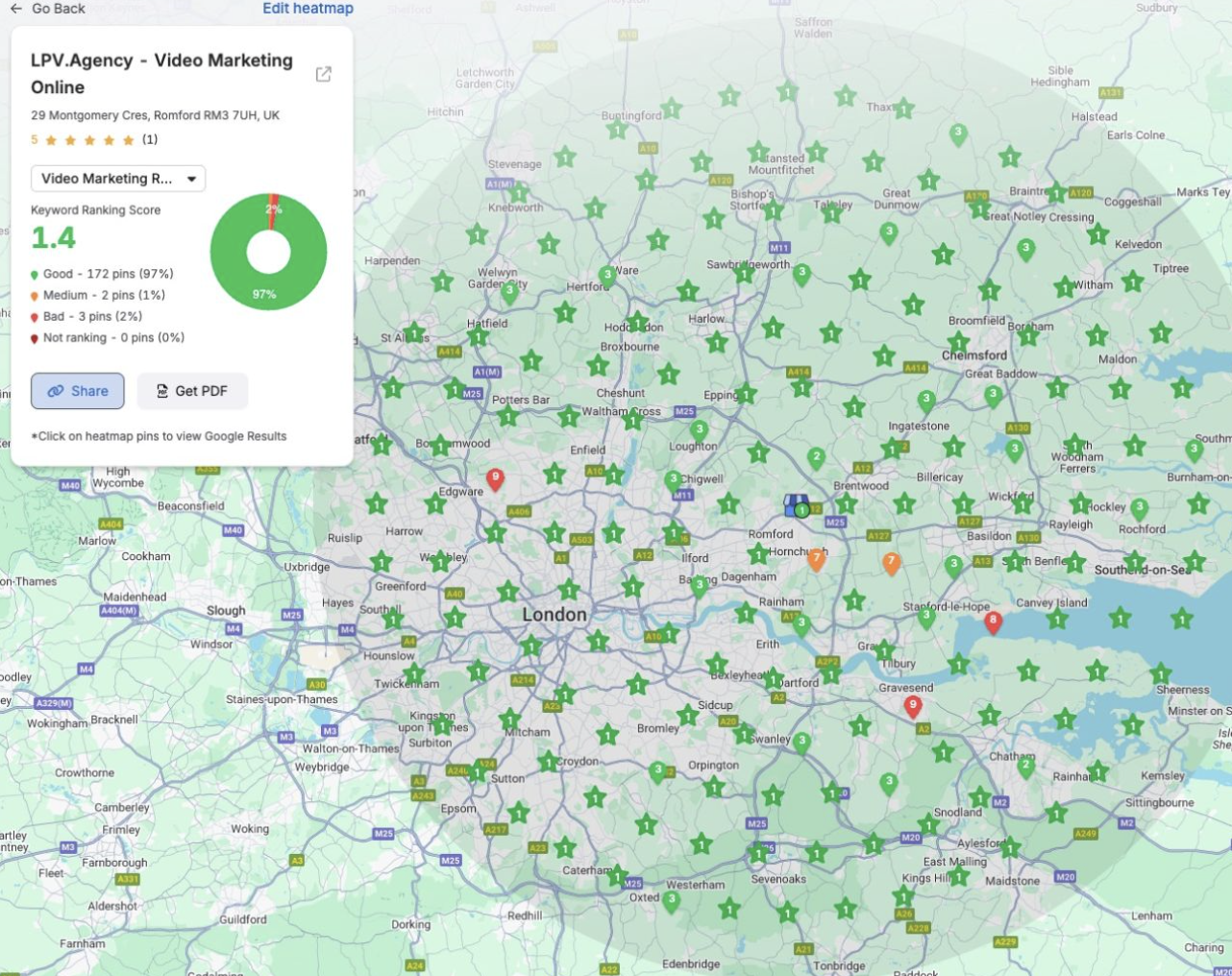
One company built a custom Google Map showing roughly where all of its clients are located across the country. There are no exact addresses, just enough detail to show genuine spread.
A visitor scanning that map doesn’t need a sales pitch to understand the scale of the business, because the dots speak for themselves. In fact, they cover far more ground than a single paragraph of text ever could.
That’s a client map doing exactly what it’s meant to do. It doesn’t argue that the business is established. Instead, it simply shows it, and lets the buyer draw their own conclusion.
See also
180+ ways to improve conversion