Practical Sales Training™ > How To Get Attention > Close Branding

Close Branding
Walk down a supermarket aisle, and almost every chocolate caterpillar cake looks roughly the same. That’s not laziness. It’s close branding doing its job.
Close branding borrows familiarity, not identity, so it nudges a buyer’s brain to spot something fast, before they even think about why.
This page covers what close branding is, why it grabs attention so quickly, and where similar tips into copied.
What Is Close Branding?
Close branding means designing a name, look, or structure that feels familiar, because it sits close to something people already know.
It uses similarity to grab attention and speed up understanding. For example, that might be a layout, a naming pattern, or a category cue. Each one helps people place what they’re seeing, before they even think about it.
So when done well, close branding borrows familiarity, not identity.
Why Does Close Branding Work?
The brain is wired to spot patterns. So when something looks or sounds close to what we already know, it takes less effort to process. That drop in effort creates attention.
Close branding works in three ways. It uses signals people already link to a category. It also matches the shapes or colours people expect. And it follows naming patterns people already understand.
The key here is closeness, not copying. If something feels familiar, people look. But if it feels copied, trust breaks fast, and legal problems often follow. So the attention comes from recognition, not deceit.
How Can You Use Close Branding In Sales?
Signal The Right Category
Design your brand so people know what kind of thing it is, fast. So familiar layouts cut down on explaining, because the buyer’s brain has already done some of the work for you.
Use A Naming Pattern People Already Know
Use patterns people already understand. So this makes your offer feel clear and easy to grasp, even before they read a full description of it.
Close branding works best when used on purpose, and used fairly. The goal is recognition. It’s never confusion with something that already exists.
When Close Branding Works Best
It works best in crowded, established categories, because buyers already hold a clear picture of what the product should look or sound like. So a new brand can borrow that picture, and skip months of explaining itself from scratch.
It also works well when a genuinely different product sits underneath a familiar surface. The similarity earns the glance, but the substance still has to earn the sale.
When Close Branding Becomes Dangerous
It turns risky the moment “similar” tips into “copied.” A name, logo, or design close enough to confuse a buyer invites legal trouble, not just comparison.
It also damages a brand long term, because customers who feel tricked into thinking they bought the original rarely forgive it. So that confusion turns a clever shortcut into a real trust problem, the moment someone notices.
Common Close Branding Mistakes
Crossing From Similar Into Identical
Matching a rival’s look so closely that buyers can’t tell them apart invites legal risk, not just comparison. So keep enough distance that recognition never tips into confusion.
Borrowing Familiarity With Nothing Underneath
A product that looks instantly familiar but disappoints once bought turns a sharp first impression into a lasting complaint. So make sure the substance matches the shortcut you took.
Ignoring How Buyers Might Feel Misled
Even when something stays legally fine, a buyer who feels tricked rarely comes back. So aim for honest recognition, instead of accidental confusion.
Close Branding – An Example
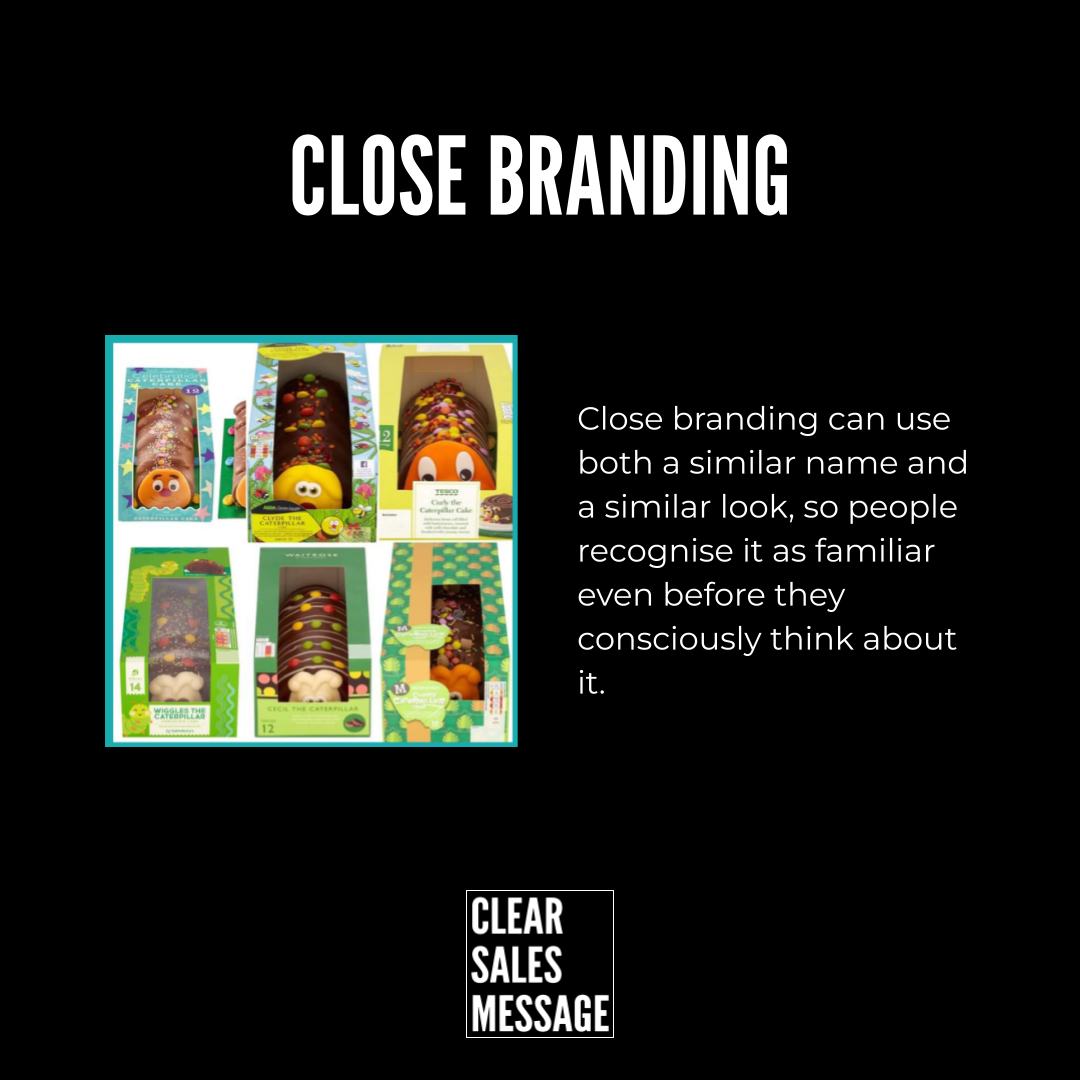
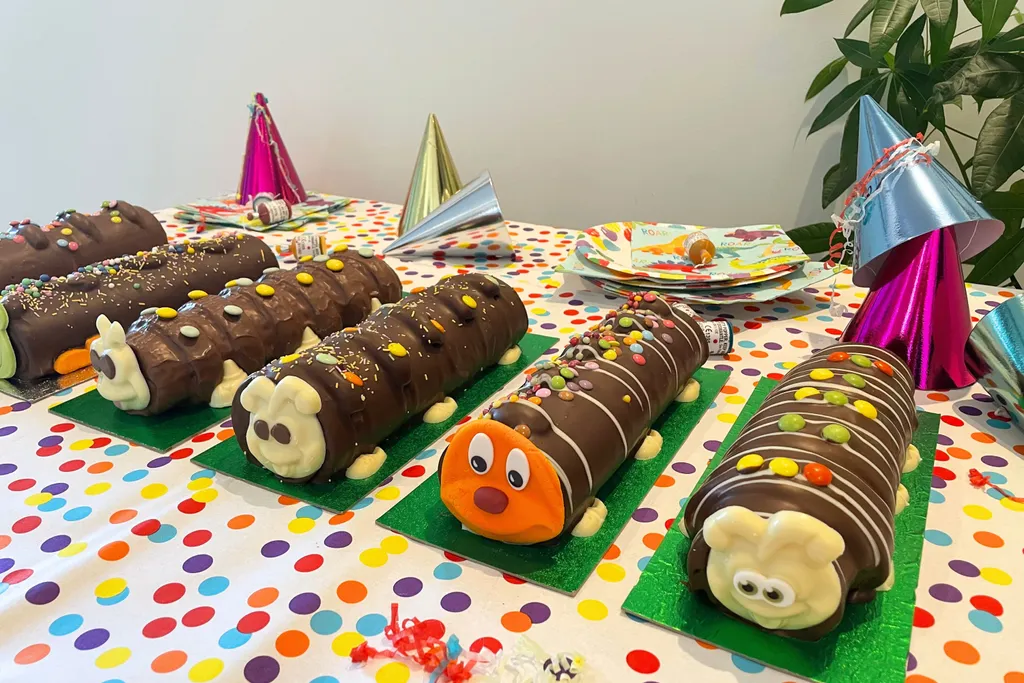
In the UK, supermarket “caterpillar cakes” became a well known example of this. Several chains sell their own version of a chocolate caterpillar cake, and each one looks a lot like the others on the shelf.
Shoppers spot the shape and style fast, even from a brand they’ve never bought before, because the format itself has become familiar across the whole category. So that pulls attention quickly, without any single brand needing to explain what it’s selling.
That’s close branding playing out in a real supermarket aisle. The familiarity earns the glance. But what happens after that, in taste, price, and quality, is where each brand has to earn the actual sale.
See also