Practical Sales Training™ > How to connect with your buyer > Intent Signals

Intent Signals
Most outreach fails because of timing, not quality. You can write a great email to someone who simply is not thinking about your topic yet. No matter how well you explain what you do, it will not land.
Intent signals fix that. They show you who is already in motion – so you can reach out when it makes sense, not just when it suits your pipeline.
This is not about being clever or technical. It is about paying attention to what buyers are already doing and showing up at the right moment.
What Are Intent Signals?
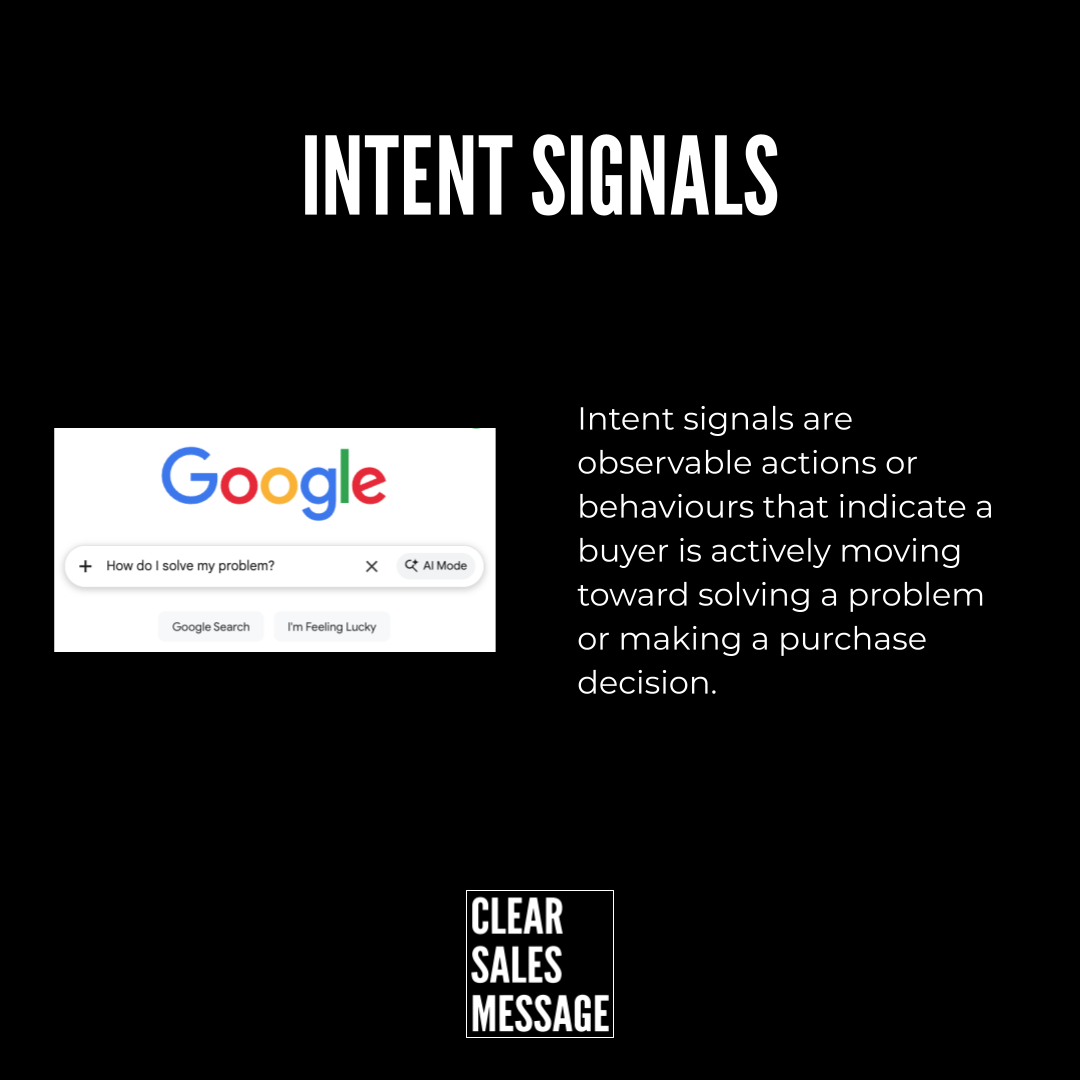
Intent signals are actions that suggest a person or business is moving toward a buying decision. They are not just signs of vague interest. They show that something has changed and the person is now looking for a solution.
These signals show up in many forms. Someone researching options online, starting a new role, hiring for a certain skill, engaging with industry content, or asking peers for supplier names – all of these suggest movement, not just curiosity.
The key difference is activity. Passive interest looks like reading a blog post once. Intent looks like comparing three suppliers, booking a demo, or posting a question in a LinkedIn group. One is browsing. The other is buying.
Why Do Intent Signals Work?
Buyers move through stages. First they become aware of a problem. Then they start looking for ways to solve it. Most outreach hits people at stage one – when they are not yet ready. Intent signals tell you when someone has reached stage two.
When you contact someone who is already in evaluation mode, your message feels relevant instead of random. You are not introducing a new idea. You are responding to something already happening in their world. That is a very different conversation to have.
Timing also reduces friction. A buyer who is already looking does not need convincing that the problem matters. They have done that work themselves. So instead of selling the need, you can focus on why your solution fits.
Research backs this up. Google has shown that decision-stage searches – the ones using solution-focused language – have grown sharply, which means online behaviour is now a strong and measurable signal of buying readiness. Source: Google Think with Google
How Can You Use Intent Signals In Sales?
Watch for behavioural changes
Look for moments that suggest something has shifted. New hires, funding news, leadership changes, technology upgrades, or a spike in content about a topic can all point to emerging need. These moments often come before a buying decision – so catching them early puts you ahead of most competitors.
Connect your outreach to the signal
Referencing what you noticed shows the buyer you are paying attention. Your message feels considered rather than cold. For example, instead of saying “we help businesses like yours with X”, you can say “I noticed you recently hired a head of operations – a lot of teams in that position are dealing with Y right now.” That is far more likely to land.
The goal is not surveillance. It is alignment – showing that your timing makes sense.
Focus your effort where it counts
Intent signals help you stop treating all prospects the same. Instead of spreading effort evenly across a list, you can direct your time toward those already showing momentum. This improves both the quality of your conversations and the efficiency of your prospecting.
Act quickly
Intent has a short lifespan. The window between a signal appearing and the buyer choosing a supplier can close fast. Acting while the behaviour is recent keeps you in the conversation before someone else steps in.
Use signals to shape the conversation
Signals give you a reason to reach out but also a way to start well. Your opening questions and suggestions can relate directly to the situation the signal implies. That makes your first conversation feel relevant from the start – not like a cold pitch that happens to mention their name.
When Intent Signals Work Best
Intent signals work best in markets where buyers take time to decide. B2B sales, professional services, and considered purchases all involve a longer evaluation window. So there is more time between the first signal and the final decision – which means more opportunity to show up at the right moment.
They also work well when your buyers are visible. If your target market is active on LinkedIn, publishes job ads, writes content, or attends events, you have plenty of signals to work with. The more your buyers do in public, the easier it is to spot when they are moving.
Similarly, intent signals are most powerful when your outreach is genuinely relevant. If you can connect what you do to exactly what the signal suggests, the message lands. If the link is weak or forced, it can actually make things worse.
When Intent Signals Become Dangerous
Misreading a signal is worse than missing it. If you reach out based on a weak or irrelevant cue, the buyer notices. It comes across as either careless or intrusive – neither is a good start.
Overreliance on signals is also a risk. They tell you when to reach out, but they do not tell you what to say. Poor messaging still fails even when the timing is right. So signals work best as a trigger, not as a substitute for a strong sales message.
Finally, some buyers dislike the feeling of being watched. How you frame the reference matters. Saying “I saw you just raised a Series A” is blunt. Saying “I work with a lot of teams going through rapid growth – is that something you are navigating right now?” feels warmer and less like surveillance.
Common Intent Signal Mistakes
Treating weak signals as strong ones
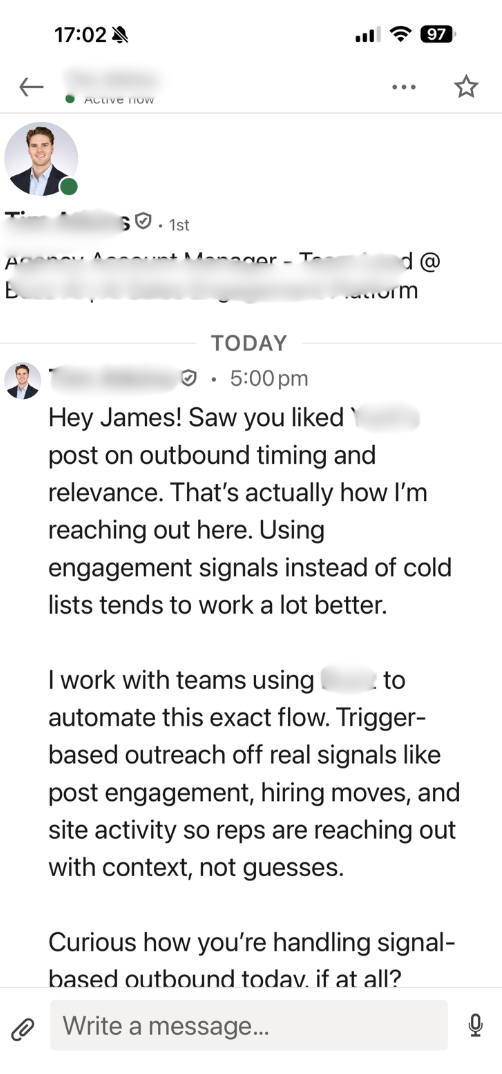
Someone liking a post is not an intent signal. Someone joining a group is not a signal. A signal shows active movement – not passive activity. Be selective about what you act on, because poor signals lead to poorly timed outreach.
Referencing the signal too directly
You can use a signal to time your outreach without spelling it out in the message. Mentioning that you noticed someone downloaded a white paper or visited your pricing page can feel intrusive. However, reaching out with a message that is clearly relevant to their current situation – without explaining how you know – feels sharp and well-timed instead.
Waiting too long to act
A signal that is two months old is nearly useless. By that point the buyer may have already chosen someone, shelved the project, or moved on entirely. Act fast, because timing is the whole point.
Ignoring the message quality
Good timing gets you opened. Bad copy gets you ignored. Many salespeople focus so much on finding signals that they forget to make the message itself worth reading. Both matter.
Intent Signals – An Example
A software company sells project management tools to growing teams. Instead of cold-calling a list, their sales team monitors LinkedIn for companies that have just posted three or more operations or project roles in the same month.
That hiring pattern is a clear signal. A team growing that fast is likely hitting coordination problems. So the sales team reaches out with a message tied to that exact situation – not a generic pitch, but a note that says: “We work with a lot of teams scaling their ops headcount. The coordination challenges at that stage are pretty common. Worth a quick chat to see if we can help?”
The message lands because it reflects something the buyer is already living. The timing is right. The relevance is clear. And the buyer does not feel cold-called – they feel understood.
See Also