

Practical Sales Training™ > How to connect with your buyer > The Trigger Point
The Trigger Point
What Is It
The Trigger Point is the circumstance that drives your client to need your offering. Not who they are, but the moment that makes them ready.
Most businesses can describe their ideal client in detail. Far fewer can describe the exact moment that client becomes ready to buy.
That moment is often more useful to know than the description itself.
Why Does It Work
It works because most businesses understand their avatar, the ideal client they’re seeking, but very few understand when they need their ideal client. It makes sense that you speak to the right person at the right time, to maximise your chance of making the sale.
By identifying the trigger point, you ensure you’re speaking with the client at the exact moment they need your offering.
Timing changes everything about how a message lands. The same offer, sent a week too early or too late, gets ignored entirely.
How Can You Use It
Look for the pattern before the purchase
Look at your current and past clients, and try to identify the circumstances they experienced just before making a purchase. Look for patterns and commonalities to create a blueprint of characteristics that helps you identify future clients at precisely the right moment.
Recognise the different shapes a trigger can take
Trigger points can be a definitive date in the calendar, such as the 31st of January, an event such as a birth, death, or marriage. It can be a lack of, or an abundance of, something, or finally, a trigger can be an emotion.
Ask the question your buyer is already thinking
A good trigger point often shows up as a question a buyer is already asking themselves. Speak directly to that question, and you arrive exactly when they’re ready to listen.
Examples Of Trigger Points
- A feeling or emotion – Feeling scared / wanting to feel proud
- A specific behaviour – If you pick your fingernails…
- A specific saying or thought – If you don’t think you can sell…
- Not enough of something – Need a hair transplant (not enough hair!)
- Too much of something – Need a haircut (too much hair!)
- A date – Christmas, 31st Jan for tax returns.
- An event – birth / marriage / death / new business
When It Works Best
This works best when the trigger is genuinely specific and identifiable, rather than a vague life stage that’s hard to pin down or time.
It also works best when you can actually reach people at that moment, through the right channel, at the right time, rather than only after the fact.
When It Becomes Dangerous
It backfires if you mistake a coincidence for a genuine pattern. Acting on a weak trigger wastes effort on moments that were never really predictive.
It also becomes risky if the messaging feels intrusive, especially around sensitive triggers like bereavement or health, where timing needs real care, not just speed.
Overgeneralising the trigger causes its own problem too, since a pattern that only fits a handful of past clients may not hold for future ones.
Common Mistakes
Confusing a demographic trait with a genuine trigger
Knowing who your buyer is isn’t the same as knowing when they need you. Look specifically for the moment, not just the profile.
Ignoring sensitive triggers
Bereavement, illness, or major life upheaval need a gentler approach than a straightforward sales trigger. Handle these with real care.
Assuming one trigger fits every client
Different clients often arrive through different triggers. Look for more than one pattern rather than forcing everyone through the same story.
The Trigger Point – An Example
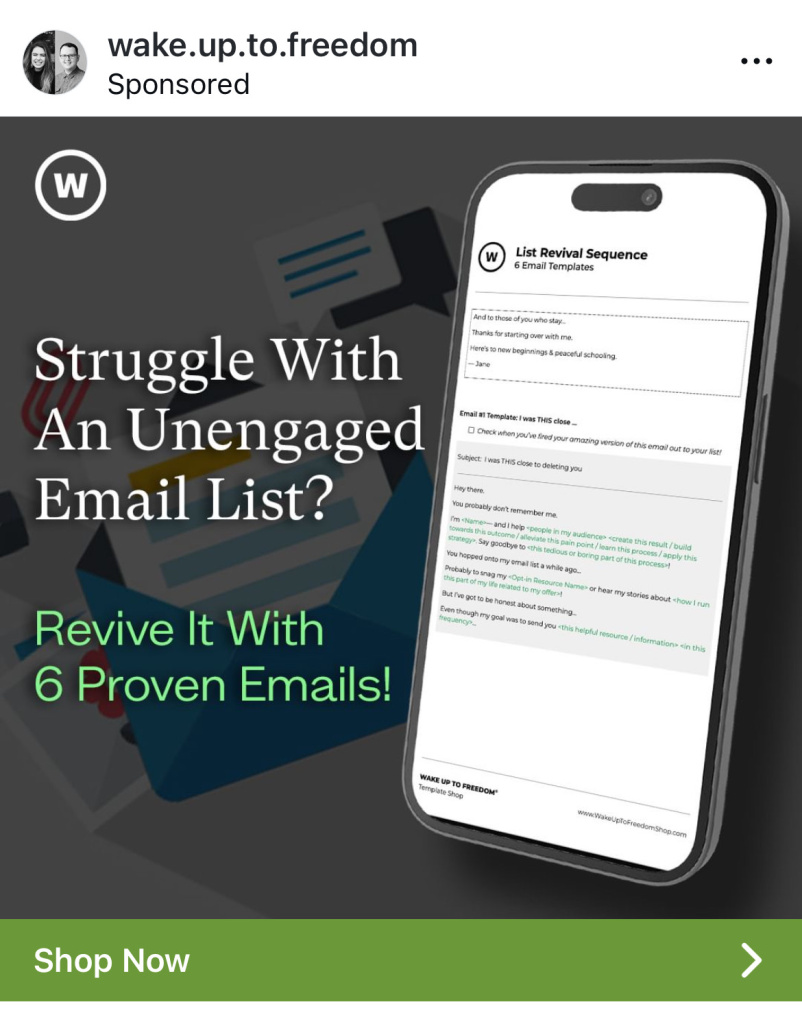
An Email List Revival Ad
This advert highlights an ideal trigger point, having an unengaged email list. What question could you ask your potential buyer that would run along similar lines?
See also