Practical Sales Training™ > How To Get Attention > Social Listening
Social Listening
One of the biggest mistakes businesses make is guessing what buyers think instead of actually listening to them. But today, buyers say a huge amount publicly. On LinkedIn, Reddit, TikTok, forums, reviews, and in online communities. The information is out there. Most businesses just are not paying attention to it.
Social listening is the habit of tuning into those conversations. Because buyers constantly reveal what frustrates them, what they fear, and how they talk about their problems. And that information is far more useful than anything an internal team could come up with in a strategy session.
In short, buyers tell you exactly how to sell to them. So the businesses that listen – and use what they hear – tend to communicate far more clearly than the ones that do not.
What Is Social Listening?
Social listening is the process of paying close attention to public conversations your buyers are having – not just mentions of your brand, but the wider discussions around the problems you solve.
It includes reading reviews, following forums, watching how buyers talk in comment sections, and noting the words and phrases that come up again and again. The goal is not to spy. It is to understand. Because when you know how buyers describe their own problems, you can reflect that language back in your messaging – and suddenly your words feel familiar rather than foreign.
However, most businesses skip this step. Instead, they write their messaging from the inside out – using their own language, their own framing, and their own assumptions about what buyers care about. As a result, the message lands flat. Not because the offer is bad, but because the words feel disconnected from how buyers actually think.
Why Does Social Listening Matter?
Buyers do not search using your internal terms. They search using their own words. So if your message uses language that feels corporate or technical, buyers will not recognise themselves in it. And if they do not recognise themselves, they move on.
There is also a trust effect. When your message sounds like the way a buyer already thinks, it feels familiar. That familiarity builds confidence fast – because the buyer feels like you understand their world rather than talking at them from your own.
In fact, the fastest way to improve your sales message is often not to rewrite it from scratch. Instead, go and read what your buyers are saying right now – and start using their words. Because the best copy is usually borrowed directly from the people you are trying to reach.
How Does Social Listening Affect Sales Communication?
Most businesses drift into internal language over time. They get surrounded by industry terms, technical jargon, and corporate phrases. So slowly, without noticing, they stop hearing how real buyers talk. And that gap between internal language and buyer language is where messages go to die.
Buyers do not buy what they do not understand. But they also will not tell you they are confused – they will just disengage quietly and look elsewhere. So the cost of jargon-heavy messaging is often invisible. Deals that never progressed. Buyers who never replied.
Buyers Reveal The Real Problem
One of the most valuable things about social listening is that buyers often describe problems more clearly than businesses do. For example, a company might describe its offer as “AI-enabled workflow optimisation.” But online, buyers are saying “we are drowning in admin.” The second version is shorter, sharper, and easier to connect with. That difference matters – because the message that feels true converts better than the message that sounds impressive.
Social Listening Improves Message Accuracy
Strong sales messages sound familiar because they reflect language buyers already use. That familiarity increases recognition, builds clarity, and creates trust. So when you listen carefully to how buyers talk and then mirror that language back, your message stops feeling like marketing. Instead, it starts feeling like someone finally gets it.
What Should You Listen For?
Good social listening goes beyond tracking mentions. It means looking for patterns in how buyers think and feel. Specifically, you want to notice recurring frustrations, emotionally charged words, common objections, and the phrases buyers use when they describe the problem your offer solves.
However, the most useful thing to listen for is the language of pain. Because the words buyers use when they are frustrated or stuck are the same words they respond to when they see them in your message. So find those words and use them – because they already carry weight with the people you are trying to reach.
How Can You Use Social Listening In Sales?
You do not need specialist tools to start. There are simple, free ways to listen that most businesses overlook.
Read reviews in your market
Reviews on Google, Trustpilot, Amazon, or app stores are goldmines of buyer language. Look at the one and two-star reviews of rivals – because those tell you exactly what buyers hate and fear. Then look at the five-star reviews to see what outcomes they celebrate. Both are useful. Together, they give you a clear picture of what actually drives decisions in your market.
Spend time in forums and communities
Reddit threads, Facebook groups, LinkedIn comments, and industry forums are full of buyers talking honestly about their problems. So find the spaces where your buyers gather and read without jumping in. The goal at first is just to listen. Note the words that come up often, the frustrations that run deep, and the questions that never seem to get a good answer.
Set up Google Alerts
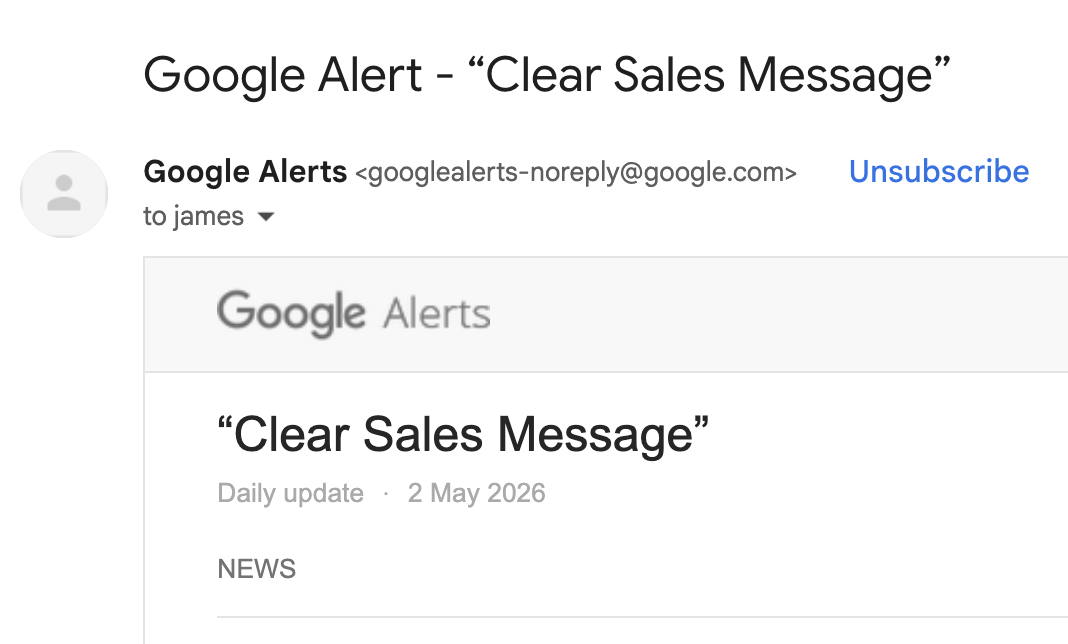
Google Alerts is a free tool that notifies you whenever a keyword you choose appears online. Set it up for your brand name, your competitors, and the key phrases your buyers use. For example, the image below shows how it works in practice – as soon as something appears in the news, you know about it straight away rather than finding out later.
Use what you hear in your messaging
Once you have collected real buyer language, start weaving it into your copy, your proposals, and your sales conversations. Do not rewrite everything at once. Instead, swap out internal jargon for the phrases buyers actually use. Then watch what happens to engagement. Because in most cases, the response improves quickly – simply because the message now sounds like the buyer’s world rather than yours.
When Social Listening Works Best
Social listening is most valuable when you are improving your positioning, rewriting your website, creating content, or launching a new offer. In those moments, buyer language can reveal angles and ideas you would never find by thinking internally. And sometimes the best headline you will ever write is one you read in a forum comment.
It also works well when you are entering a new market or speaking to a new type of buyer. Because the assumptions you carry from your existing market may not apply. So listening first – before you write a single word of messaging – saves a lot of time and avoids a lot of wrong turns.
Similarly, social listening is powerful when your current message is not converting as well as it should. Before you redesign, reposition, or change your pricing, go and spend an hour reading what buyers say. The answer to why things are not working is often hiding in plain sight.
When Social Listening Becomes Dangerous
The risk comes when you listen too narrowly. If you only track mentions of your brand, you miss the wider conversations that reveal how buyers actually think about the problem you solve. So cast the net wider than your own name.
It can also go wrong when you copy buyer language too literally. There is a difference between using the tone and spirit of how buyers talk and simply pasting their words into your marketing. The goal is to sound like you understand their world – not to echo it back awkwardly.
Also, social listening can create a false picture if you only pay attention to the loudest voices. The people who post publicly are not always typical buyers. Therefore, use what you hear as a guide and a source of language – but test it against real sales conversations too.
Common Social Listening Mistakes
Only listening inside your industry bubble
Spending too much time around competitors, consultants, and internal teams causes slow drift away from how real buyers communicate. The language gets more abstract and more corporate over time. But buyers do not live in that world. So the further your message drifts from plain speech, the harder it becomes for buyers to connect with it.
Ignoring emotionally charged language
Many businesses focus only on factual statements and ignore the emotional words buyers use. But words like “frustrated,” “overwhelmed,” “confused,” or “wasting time” reveal where the real buying pressure sits. Those are the words that carry weight. So when you see them come up often, they belong in your message – because they already resonate with the people you want to reach.
Listening once and never going back
Buyer language shifts over time. New frustrations emerge, new terms catch on, and what resonated two years ago may feel dated today. So social listening is not a one-off task. Instead, build it into a regular habit – even just an hour a month spent reading what buyers are saying. That small investment keeps your message sharp and your understanding current.
Gathering insights but not using them
Some businesses do the listening but never update their messaging as a result. The insights sit in a document somewhere and nothing changes. However, the whole value of social listening comes from application. So when you find a phrase that captures how buyers really feel, use it. Put it in your headline, your proposal, your intro. Because that is where it will do its best work.
Social Listening – An Example
A software company sells a tool that helps small businesses manage their finances. Their current headline reads: “Integrated financial management for growing SMEs.” It is accurate. But it is not converting well.
So they spend an hour on Reddit and Google reviews reading what their target buyers actually say. They find the same phrases coming up again and again: “I have no idea where my money goes,” “I dread doing my accounts,” and “I just want to know if I can afford to hire someone.”
As a result, they rewrite their headline to: “Finally know where your money goes.” No jargon. No technical terms. Just the words their buyers were already using. Enquiries go up – not because the product changed, but because the message finally sounded like something a real buyer would say. That is the power of social listening done well.
See also:
- 100+ ways to seize buyer attention
- Social Media Customer Service
- One Social Handle
- Domain Name Handle