Practical Sales Training™ > How To Get Attention > The “Just Sold” Post

The “Just Sold” Post
What Is It
A Just Sold Post shows off a sale in public. Someone buys, signs up, or takes the action you care about. So you turn that moment into a post straight away. Maybe it names the buyer. Or maybe it just states the price. Real estate agents used a paper version for decades. They’d stick a red “Sold” strip across the “For Sale” sign. The online version does the same job, but faster. A bot can catch a live purchase and post it in seconds. No person even needs to touch it.
You’ve probably seen the crypto and NFT version. A bot fires off a tweet the second something sells, showing the price and the item. Gamers see it too, in shop pop-ups. “Sarah just bought the Pro Pass.” Ecommerce brands run it as a small banner. “12 people bought this in the last hour.” Same trick, different outfit.
Why Does It Work
People copy other people. It’s how humans stay safe in groups. If a stranger buys something, your brain treats that as a signal worth trusting. A Just Sold Post borrows that trust and hands it to your next buyer. It works even when they know the post is marketing. The sale is still real, and that’s what counts.
There’s a second layer too. A live sale creates urgency. It tells the reader that other people are moving now, not just browsing. That pushes hesitant buyers off the fence faster than any discount usually can.
How Can You Use It
Automate The Trigger
Connect your checkout, sign up form, or booking tool to a simple automation. The second someone converts, it posts. You don’t have to remember, and you don’t have to be online. This matters most for founders who sell around the clock but sleep like everyone else.
Strip Out Anything Private
Post the fact of the sale. So don’t post the buyer’s identity unless they’ve agreed to it. “Someone in Leeds just booked a call” works just as well as a name. It still proves demand, and it keeps trust intact.
Batch It When Volume Is Low
If you only sell a few times a week, one post per sale looks thin fast. Roll sales into a weekly recap instead. “14 people joined this week” reads stronger than a single lonely post on a quiet Tuesday.
Match The Post To The Platform
A tweet can be blunt. But a shop pop-up needs to disappear in a second or two. An email footer can carry more detail. Still, the reader already chose to be there. Write the same fact three different ways, not one message copied everywhere.
When It Works Best
It works best when sales genuinely happen often enough to post about. Fast moving products, live events, and limited stock all suit it well. It also works well early in a launch. That’s when you badly need proof someone else believes in the offer.
When It Becomes Dangerous
It turns risky the moment it’s faked, or even just exaggerated. Buyers today check things. In fact, a copywriter’s screenshot gets fact checked in the replies. Once someone catches a fake sale, they stop trusting every number on the page, not just that one. It’s also risky when sales are rare. As a result, a post every few weeks quietly tells everyone the business is slow.
Common Mistakes
Posting Every Sale Without A Filter
Not every sale deserves a spotlight. For example, a £4 sale posted next to a £4,000 sale drags the bigger one down. Set a floor. Post only above it. That way, each post still feels like real news.
Letting The Bot Run With No Oversight
Automated posts can misfire during refunds, test transactions, or a pricing glitch. Check the feed weekly. Even one embarrassing auto post about a £0.01 test sale undoes weeks of credibility.
Using The Same Wording Every Time
A feed full of identical posts starts to read like spam, even when every sale is real. Rotate the phrasing and the format. Readers notice repetition faster than you’d think.
The “Just Sold” Post – An Example
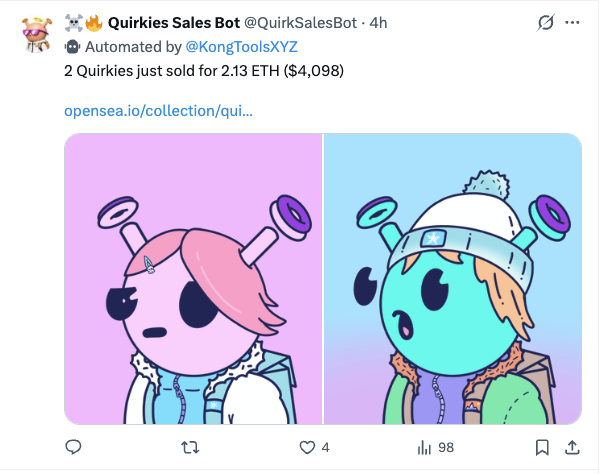
An Automated Sale Post In The Wild
Digital collectible sellers run this trick almost entirely on autopilot now. A bot watches the marketplace. The moment two items sell, it posts the price straight to social media. Still, no founder had to sit at a screen refreshing the dashboard. The sale became proof of demand within seconds. It sat right there for the next browser to see, before they’d even finished scrolling past.
See Also