Practical Sales Training™ > How People Work > Status Quo Bias
Status Quo Bias
You’ve probably lost a deal to a competitor at some point. But I’d bet you’ve lost far more to something else. The buyer liked your offer, agreed it was better and then did nothing.
That’s status quo bias at work. Your biggest rival is often the way things are now. So sell against doing nothing, as well as against other suppliers.
What Is Status Quo Bias?
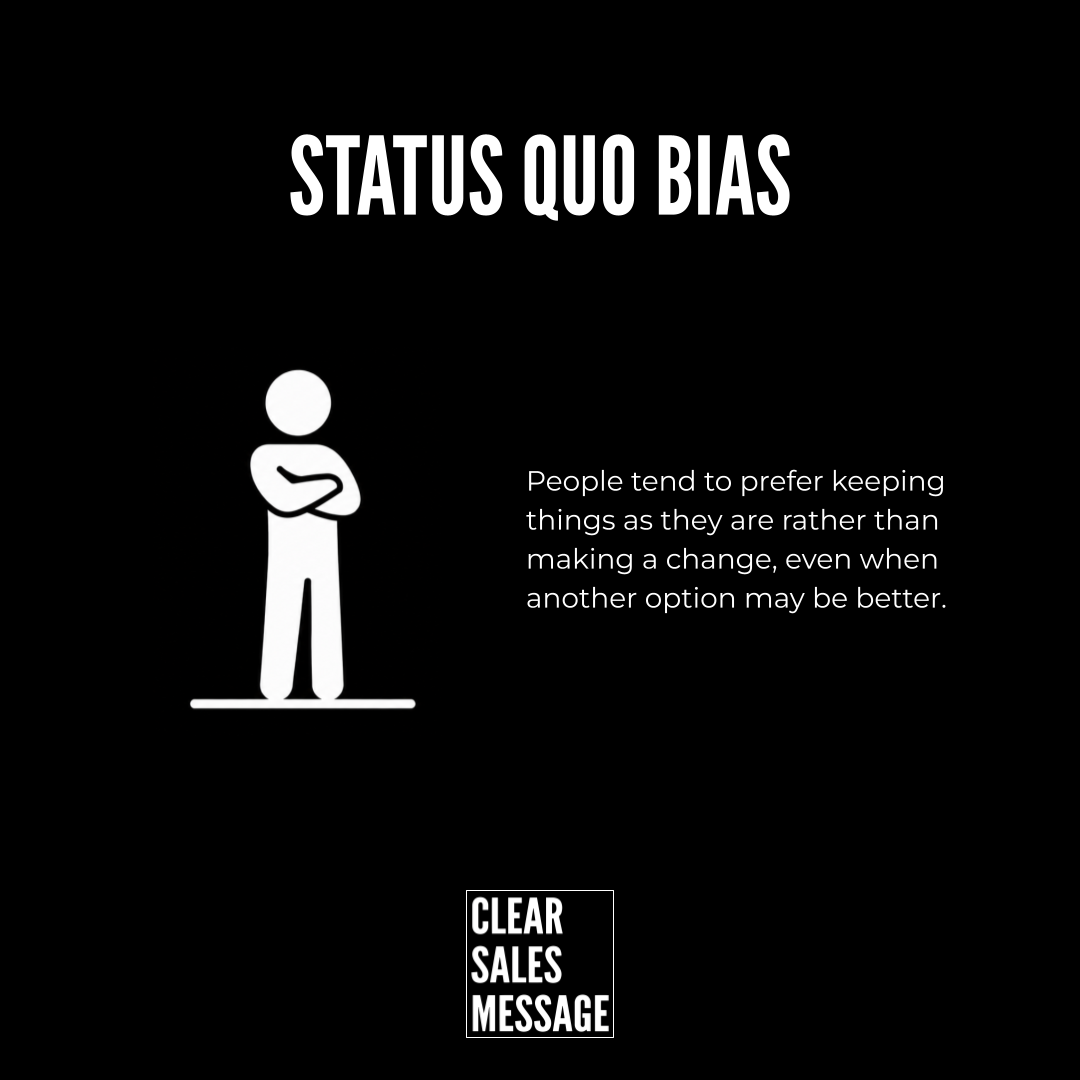
Status quo bias means people tend to prefer keeping things as they are. They lean that way even when another option may be better.
It shows up everywhere. People stay on the same phone plan, bank or energy deal for years. Similarly, businesses keep using old software that everyone moans about. The current choice feels safe, simply because it’s familiar.
And in sales, it’s the quiet reason behind “let’s revisit this next quarter.” In fact, that line usually means the buyer has chosen the status quo.
Why Does Status Quo Bias Happen?
Change feels risky. If a buyer switches and it goes wrong, they get the blame. But if they stay put and things stay bad, nobody notices. So doing nothing feels like the safer bet.
Losses also feel bigger than gains. Giving up what they know hurts more than the promise of something better pleases. As a result, the buyer weighs the downside of change far more heavily.
And change takes effort. There are forms to fill in, people to train and habits to break. So even a clearly better option has to beat the hassle of switching.
How Can You Use Status Quo Bias?
Put a Price on Doing Nothing
Buyers see the cost of your offer clearly. But they rarely see the cost of staying put. So show them. Work out what the current problem costs each month in time, money or lost sales. Then doing nothing stops looking free.
Make Switching Feel Small
The bigger the change feels, the harder buyers resist. So break it down. Offer to handle the setup, move their data or run a short pilot. When the first step looks easy, buyers are far more willing to take it.
Lower the Personal Risk
Your buyer worries about looking bad if it fails. So give them cover. A guarantee, a trial or proof from similar companies helps. That way, choosing you feels like the safe call.
Use It to Keep Your Own Clients
The same bias works in your favour once someone buys. Existing clients tend to stay put too. So make renewing the easy default. Then keep them happy enough that leaving never crosses their mind.
When Does Status Quo Bias Matter Most?
Status quo bias matters most when you’re asking buyers to replace something. If they already have a supplier, a system or a habit, you’re up against it.
It also bites hardest with big, visible decisions. The more people a change affects, the more the buyer fears getting it wrong. So expect more resistance from larger firms.
Finally, it shows up when the current problem feels bearable. If things are annoying but not painful, most buyers will put up with them. That’s why you need to make the cost of waiting clear.
When Does Status Quo Bias Become Dangerous?
Status quo bias gets dangerous when you ignore it. Many sellers pitch hard against competitors and never mention the cost of doing nothing. Then they lose to inaction and can’t work out why.
It also backfires if you try to scare buyers into moving. Over-the-top warnings feel like pressure. As a result, buyers often dig in even harder.
And be careful with your own clients. If you rely on them staying out of habit, you might stop earning their loyalty. Then a rival can tip them over.
What Are the Common Mistakes With Status Quo Bias?
Selling Features Instead of Change
Buyers compare you to staying put, as well as to rivals. So explain why changing now beats waiting, before you talk about features.
Making the Switch Sound Hard
Long lists of setup steps scare buyers off. Instead, show the first easy step. Save the detail for later.
Accepting “Not Right Now” Too Fast
“Not right now” often means “I’d rather not change.” So ask what would need to be true for them to move. Their answer tells you what to fix.
Forgetting the Cost of Waiting
If you never show what delay costs, buyers assume it costs nothing. So put a number on it, even a rough one.
Status Quo Bias – An Example
People staying with their existing energy supplier despite cheaper deals being available.
In 2016, the CMA found that 70% of customers of the six largest energy firms were on expensive default tariffs. Switching could save over £300 a year. GOV.UK
This illustrates status quo bias when someone thinks: “I could change, but I’d rather leave things as they are.” Familiarity can outweigh the attraction of a better deal.
Think about what that means for you. These people had a clear saving on the table. Yet most still didn’t move. So if £300 a year can’t beat the status quo, a vague promise certainly won’t. Make waiting feel costly. And make the switch easy.
See Also