Practical Sales Training™ > How People Work > Processing Fluency
Processing Fluency
Two proposals land on a buyer’s desk. Both offer much the same thing at much the same price. One is clear and short. The other takes three reads to follow. So which one feels safer?
The clear one wins almost every time. And the buyer won’t even know why. That’s processing fluency doing its quiet work. It’s also why I think most deals die in explanation, long before anyone talks price.
What Is Processing Fluency?
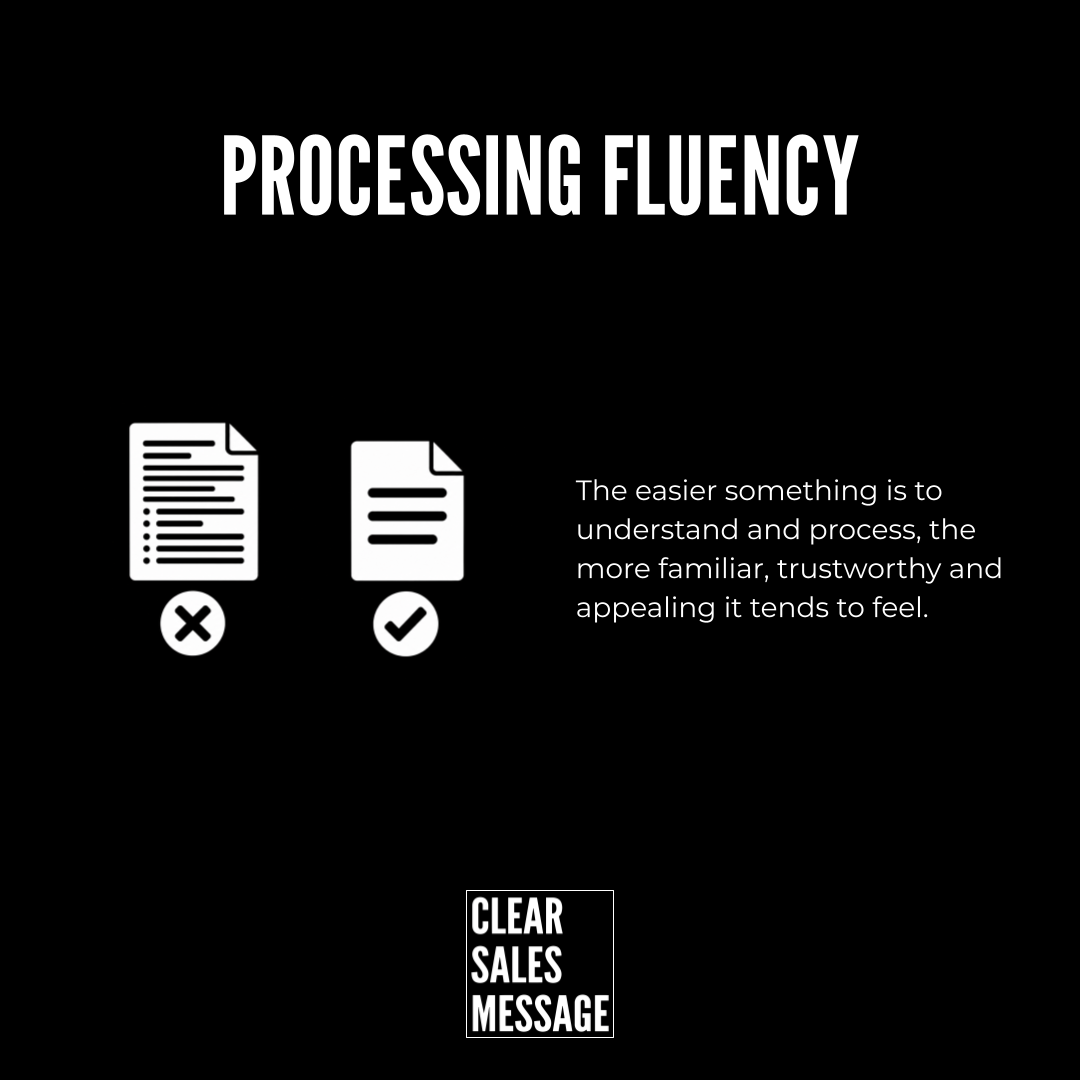
Processing fluency is how easy something feels for your brain to take in. When words, layout and ideas flow, the message feels right. It seems more familiar and more true. In fact, it even seems more likeable.
The flip side matters just as much. When your buyer has to work hard to follow you, that effort feels like a warning. So they doubt you. They doubt your offer and price too. Yet the product might be great. The pain of reading about it is what they judge.
Why Does Processing Fluency Work?
Your brain uses effort as a shortcut. If something feels easy, it must be known. And if it’s known, it’s probably safe. That shortcut kept our ancestors alive, so it runs fast and without asking.
That’s also why a rhyme can feel more true than the same idea said plainly. Studies keep finding this. The rhyme adds no proof at all. Still, it slides in with less effort, so it gets more trust.
Buyers feel this too. Most of them are busy and short on time. As a result, they judge your message by how it feels to read, well before they judge what it says.
How Can You Use Processing Fluency?
Say It The Way Your Buyer Says It
Your buyer has words for their problem already. So use them. If they say “we’re losing leads,” say that too. Your own terms might be smarter. However, their words need zero effort to process, so they land first time.
Use The Same Words Everywhere
Pick one name for each idea and stick to it. Your site, deck, emails and calls should all match. Each time a buyer meets the same phrase, it gets easier to process. So it feels more familiar, and familiar feels safe.
Make Your Message Easy To Repeat
Your champion has to sell you to people you’ll never meet. If they can’t say it in one breath, the deal wobbles. So give them one clear line they can repeat word for word. That’s fluency working for you in rooms you’re not in.
Make The Next Step Obvious
Fluency covers what you ask for too. A clear, single next step feels easy to say yes to. But three options and a vague “let me know” feel like work. And people put work off.
When Does Processing Fluency Work Best?
It works best at first contact. People judge a cold email, a home page or a first call in seconds. So the easier you are to follow, the longer people stay.
It also matters most when your product is complex. The harder the thing, the more your buyer needs it made simple. Then there’s the buying group. When five people must agree, the clearest story is the one that travels between them.
When Does Processing Fluency Become Dangerous?
Fluency makes things feel true. That cuts both ways. A smooth claim can slip past a buyer’s guard even when it’s wrong. So if you use it to gloss over real risks, you’re setting up a nasty shock for later.
It can also go too far. Strip out every detail and an expert buyer may think you don’t get their world. Too slick feels like a trick too. So keep it simple, while still showing you know the hard parts.
Common Mistakes With Processing Fluency
Mistaking Clever For Clear
Wordplay and big claims can feel smart in the meeting where you wrote them. But a buyer reading fast won’t stop to decode them. So if they need a second read, rewrite them.
Dumbing Down Instead Of Making Simple
Simple means easy to follow. Dumb means missing the point. You can explain a complex product in short, plain words and keep every key idea. In fact, that’s the hard part.
Changing Your Words From Place To Place
Your site says one thing. Then your deck says another. Meanwhile, your sales team says a third. Each change makes the buyer work to link them up. As a result, you lose the trust that the same words would have built.
Designing For Looks Over Reading
Light grey text, tiny fonts and busy pages can look stylish. Yet every bit of strain lands on your message. So test your pages by reading them on a phone, in a hurry, like your buyer does.
Processing Fluency – An Example
GOV.UK
GOV.UK’s website is a recognisable example.
It uses plain English, clear headings and consistent layouts to make complicated tasks easier to understand. Its design principles explicitly say: “Do the hard work to make it simple.” GOV.UK
That illustrates processing fluency: when information is easy to absorb, the task can feel more manageable.
Think about what people go there to do. Tax returns, passports and benefits are stressful jobs. So the site takes the strain on its side and leaves less for the reader. As a result, hard tasks feel doable.
Your buyer is in the same spot. They’re trying to make a big call with half their attention. So do the hard work on your side, and give them a message that feels easy to say yes to.
[IMAGE PLACEHOLDER: GOV.UK Government Design Principles screenshot. Local file: image.png, 1876 x 1394. Upload to WordPress, then replace this line with the img tag (aligncenter size-full wp-image-XXXXX).]
See Also