Practical Sales Training™ > How People Work > Mental Accounting
Mental Accounting
A buyer tells you there’s no budget. Then, a week later, they spend twice your price on something else. So were they lying? Probably not. Your offer just landed in the wrong pot.
What Is Mental Accounting?
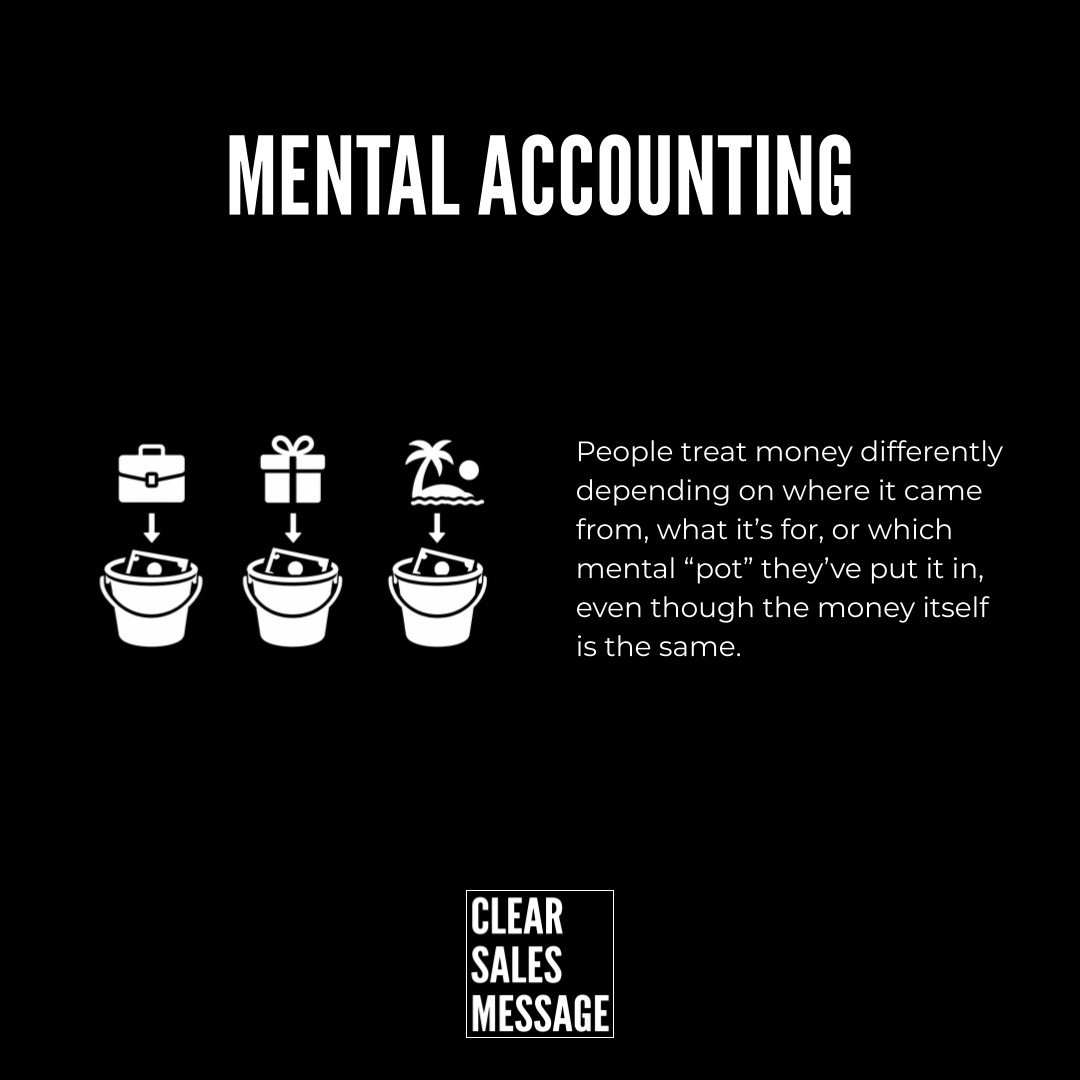
Mental accounting is our habit of sorting money into separate pots in our heads. Rent money, fun money, bonus money. Each pot follows its own rules. So £100 from one pot can feel free to spend, while £100 from another feels locked away.
Money is money, of course. Yet nobody treats it that way. Economist Richard Thaler named it, and showed how often it shapes choices. It shows up at home and at work. In fact, it runs right through company budgets.
Why Does Mental Accounting Work?
Pots make life simpler. Instead of judging every spend against everything you own, you just check one pot. That saves a lot of thinking. As a result, the brain sticks with pots, even when they lead to odd choices.
Pots also give people control. If the holiday money sits apart, it’s harder to blow on the weekly shop. So the rules feel useful, and people defend them.
Businesses do the same thing, only on paper. Marketing has a budget. Training has a budget. Each one has an owner who guards it. So buyers always judge your price against the pot it has to come from.
How Can You Use Mental Accounting?
Find Out Which Pot You’re Coming From
Before you talk price, ask where the money for this usually comes from. That one question tells you who owns the pot. It also tells you how full it is. So you stop pitching to someone who can’t spend.
Move Your Offer Into A Fuller Pot
The same product can sit in more than one pot. A sales course might be “training,” which is often tight. But framed as a fix for lost revenue, it can come from the sales budget instead. Change the pot. The price shrinks.
Frame The Cost As Part Of Something Bigger
A £3,000 add-on feels huge on its own. Yet next to a £60,000 project, it feels like a rounding error. People judge spend against the pot it sits in. So bundle smaller costs into the bigger decision where it’s fair to do so.
Use The Timing Of Fresh Money
New money feels lighter to spend. Think of a new budget year, a funding round, or money left over at year end. That cash feels easier to use. So find out when their pots refill, and plan your timing around it.
When Does Mental Accounting Work Best?
It works best in companies with clear budget lines. When every team guards its own pot, knowing the right one decides the deal. That’s often true in mid-sized firms, where budgets exist but run tight.
It also helps when your offer crosses team lines. A product that helps both sales and marketing could come from either pot. So you get to pick the fuller one.
When Does Mental Accounting Become Dangerous?
It turns ugly when you use pots to hide the true cost. Splitting one big price into lots of small ones can feel smaller. Still, the total shows up on the bill. And when the finance team adds it up, your trust goes with it.
It can also trap you. If you always pitch to the training pot, you may never reach the people with real money. So keep looking past the first pot.
Common Mistakes With Mental Accounting
Taking “No Budget” At Face Value
“No budget” often means no room in the pot you’ve landed in. So ask which pot it would need to come from. You might find a fuller one just next door.
Pitching To The Wrong Pot Owner
Your contact may love your offer. But if they don’t own the pot, they can’t pay for it. As a result, the deal stalls while they go begging to someone else. So find the pot owner early.
Comparing Your Price To The Wrong Thing
Sellers often compare their price to a rival’s price. Yet buyers compare it to what’s left in the pot. So show how your cost fits the pot, as well as how it beats the market.
Forgetting The Pot Resets
A “no” in month eleven can turn into a “yes” in month one. Budgets refill. Many sellers walk away and never come back. Instead, note when the pot refills, and call then.
Mental Accounting – An Example
Monzo Pots
Monzo’s “Pots” feature. It lets customers separate money into labelled pots for things like bills, groceries and holidays. Separate Your Money However You Like
That makes mental accounting visible: £100 labelled “holiday money” can feel available for treats, while £100 labelled “bills” feels untouchable, even though both have the same monetary value.
Monzo simply gave an old habit a tidy home. And customers like it, because pots make money feel under control.
Your buyer runs pots too. They just live in a budget sheet. So before you name a price, find out which pot it lands in. Then make sure it’s one with room to spend.

See Also