Practical Sales Training™ > How People Work > Identifiable Victim Effect
Identifiable Victim Effect
You tell a buyer that thousands of firms lose leads every month. They nod and move on. Then you tell them about Sarah, a sales manager who lost her best deal to a slow reply. Now they lean in. That’s the identifiable victim effect.
What Is The Identifiable Victim Effect?
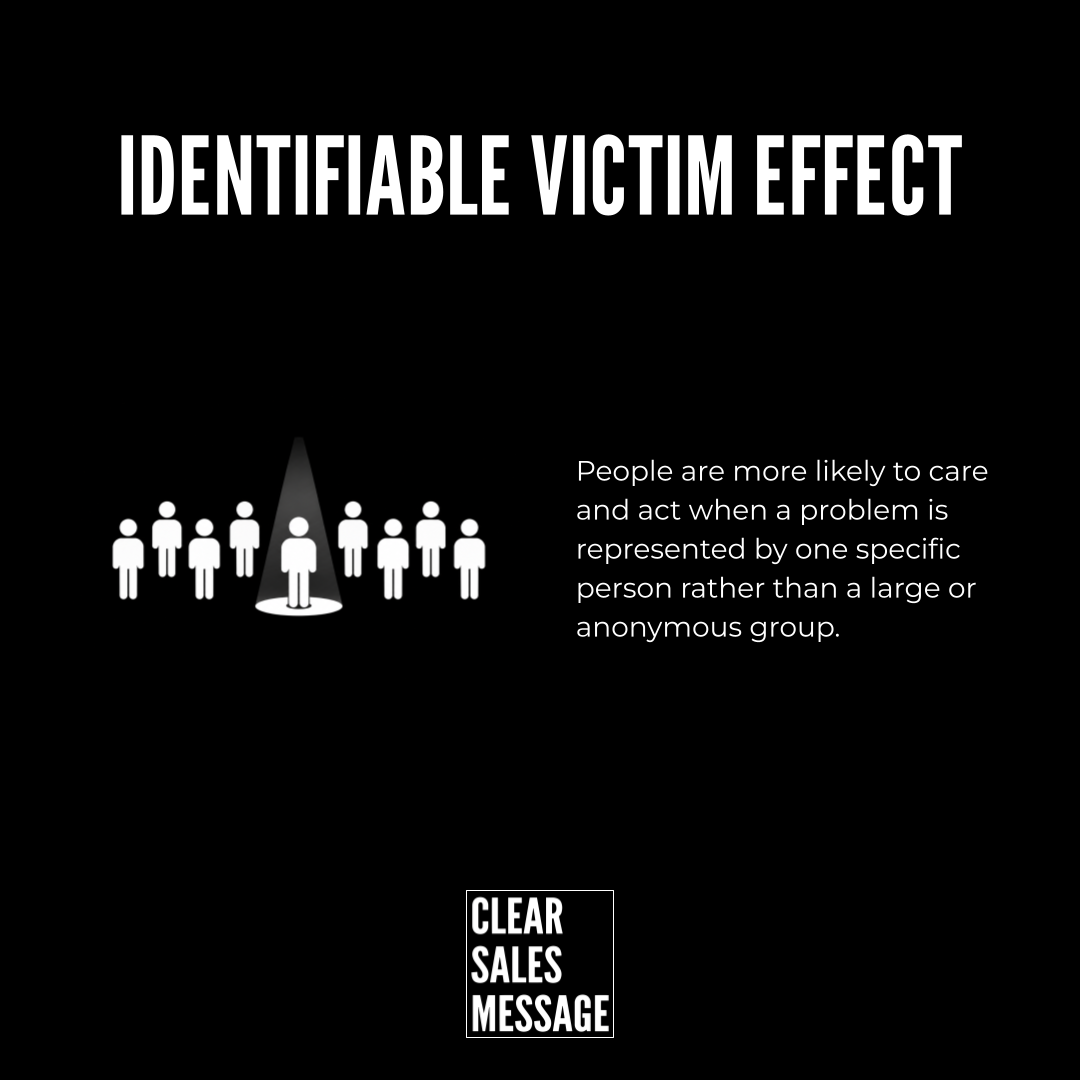
It’s our habit of caring more about one named person than a large faceless group. One face pulls on us. A big number barely moves us. So a single story often beats a page of stats.
It sounds back to front. After all, more people should mean more reason to care. Yet the mind works the other way. In fact, the bigger the number, the harder it is to feel anything at all.
Why Does The Identifiable Victim Effect Work?
We naturally care about people we can picture. A name, a face and a story give the mind something to hold. Numbers give it nothing. So our feelings switch on for one and stay off for many.
Studies keep finding this. In one well known test, people gave more to help one named girl than to help millions described in figures. Adding the figures even cut giving.
One person also feels fixable. You can help Sarah. But you can’t fix a whole market. As a result, a single case makes action feel worth it.
How Can You Use The Identifiable Victim Effect?
Lead With One Customer, Then Add The Numbers
Open with one person and their problem. Let the buyer feel it first. Then bring in the wider picture to show it happens to lots of firms. The story earns the care, so the numbers can earn the trust.
Give The Problem A Name Inside Their Business
“Your team wastes hours on admin” is easy to ignore. Instead, ask about one person on their team. Who chases the late invoices? What does their Friday look like? Once the buyer pictures a real colleague, the problem stops being abstract.
Write Case Studies About People
Most case studies read like reports about companies. But buyers don’t relate to companies. They relate to the person who had the problem. So name the role, show the pressure they were under, and tell what changed for them.
Keep The Story Small
One person beats a team of five. Each extra face spreads the feeling thinner. So pick one person and stay with them. Then the buyer has someone clear to care about.
When Does The Identifiable Victim Effect Work Best?
It works best when the problem feels distant or dull. Lost revenue, wasted time and compliance risk rarely stir feelings on their own. However, one person paying the price for them does.
It also helps when you’re selling to people who must sell it on. A champion who can retell one short story will carry your case further than one who has to recite charts. It’s strong early on too.
When Does The Identifiable Victim Effect Become Dangerous?
It turns ugly when you make the story up. Buyers who find out your “Sarah” never existed will doubt everything else too. So use real people, with their consent, or make clear it’s an example.
It can also mislead. One dramatic case might be rare. If you use it to make a small risk feel huge, you’re scaring people instead of helping them. That costs trust later.
Be careful with real pain as well. Using someone’s hard moment to sell needs respect. Handle it badly and it feels like you’re cashing in.
Common Mistakes With The Identifiable Victim Effect
Leading With The Statistic
Sellers love a big number. It feels like proof. Yet it often lands with a shrug. So save the number for later, once the buyer already cares.
Using A Vague Persona
“Busy marketing leaders” is a group, so it gets the group reaction. A real person needs detail. Give them a role, a moment and a cost. Then they start to feel real.
Burying The Person In The Middle
Many decks hide the customer story on slide twelve. By then, the buyer has already switched off. Instead, put the person up front, where they shape how everything else lands.
Piling On Too Many Stories
One story moves people. Ten stories start to feel like a crowd again. As a result, the effect fades. So pick your strongest one and let it do the work.
Identifiable Victim Effect – An Example
Great Ormond Street Hospital Charity
Great Ormond Street Hospital Charity’s appeal featuring Maya, a child waiting for a heart transplant.
The charity tells Maya’s personal story, then asks readers to support other seriously ill children spending Christmas in hospital. GOSH Charity
This illustrates the approach: one named child gives people a specific person to care about, making the wider cause more tangible.
Notice the order. The appeal starts with one child, then widens out to the many. So readers care first and see the scale second.
Your sales story can follow the same path. Start with one person your buyer can picture. Then show how many others share the same problem.

See Also