Practical Sales Training™ > How To Convert > Jakob’s Law
Jakob’s Law
Your buyer lands on your website for the first time. They’ve never seen it before. Yet within seconds, they expect the menu at the top and the contact button on the right. Move those and they feel lost. And lost buyers leave.
What Is Jakob’s Law?
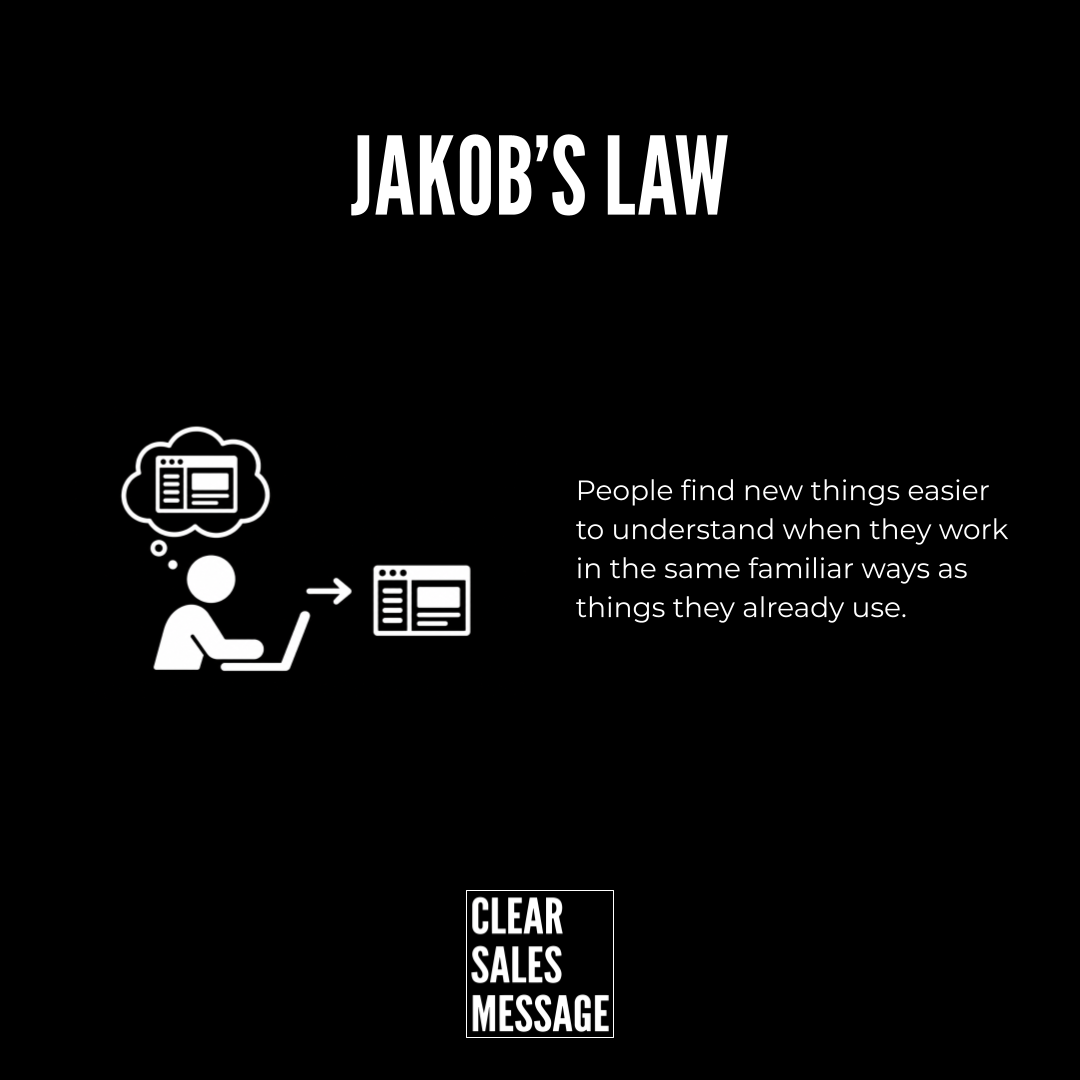
Jakob’s Law says people spend most of their time on other websites. So they expect yours to work the same way. Jakob Nielsen, a well known web design expert, gave it its name. And it reaches far beyond websites.
Your buyer brings habits from every site, form and deck they’ve ever used. So when your process matches those habits, it feels easy. When it breaks them, it feels like work. In fact, even a small surprise can cost you the sale.
Why Does Jakob’s Law Work?
Learning takes effort. And effort feels like risk when you’re about to spend money. So people lean on what they already know.
Familiar patterns let the brain run on autopilot. Your buyer can stop thinking about where to click. Then their mind goes to what you offer. As a result, your message gets their full attention.
Familiar also feels safe. If your site or proposal looks like ones they trust, you borrow some of that trust. A strange layout feels risky.
How Can You Use Jakob’s Law?
Put Things Where Buyers Expect Them
Logo top left. Menu along the top. Contact button easy to spot. Prices on a page called Pricing. These habits feel boring to you. However, your buyer relies on them to find their way.
Use The Words They Already Know
Plain labels like “Pricing” and “Book a call” need no thought. Fancy ones like “Investment” or “Begin your journey” make people stop and guess. So stick with words they’ve seen a thousand times.
Follow The Shape Of Proposals They’ve Seen
Buyers read lots of proposals. Most follow a shape they know: problem, plan, price, next step. So use that same order. Then your buyer can skip to what matters instead of hunting for it.
Save Your Creativity For The Message
Stand out with what you say and how well you solve the problem. Keep the layout and steps familiar. That way, your buyer spends their effort on your idea. And your idea is where you want them looking.
When Does Jakob’s Law Work Best?
It works best at moments of action. Sign-up forms, checkouts and booking pages all need to feel instant. Any confusion there costs you the conversion.
It also matters with first-time visitors. They have no history with you, so they lean hard on habits from elsewhere. And it’s vital for busy buyers. Someone squeezing you in between meetings won’t stop to learn your way of doing things.
When Does Jakob’s Law Become Dangerous?
It turns into a trap when you copy everything. If your site and message match every rival, you blend in. Then the buyer can’t tell you apart, so they pick on price.
It can also copy bad habits. Some common patterns are common because nobody fixed them. Long forms and vague menus fall into that bucket. So follow the habits that help your buyer, and quietly drop the ones that slow them down.
Common Mistakes With Jakob’s Law
Getting Creative With The Basics
A hidden menu or a sideways scroll might win a design award. Yet buyers just want to find the price. So keep the basics boring and put your energy elsewhere.
Renaming Things To Sound Different
Fancy names feel like branding. To your buyer, though, they feel like a puzzle. Each new term adds a moment of doubt. As a result, they read slower and trust less.
Copying The Look But Missing The Habit
Some sellers copy how a big brand looks. But Jakob’s Law is about how things work. A page can look modern and still hide the next step. So test whether a buyer can act quickly, beyond whether it looks nice.
Forgetting Your Sales Process Counts Too
Jakob’s Law covers more than websites. Your calls, emails and contracts follow habits too. If your buying process feels odd, the buyer slows down. Then deals drift.
Jakob’s Law – An Example
Online Shopping Baskets
Online shopping baskets. Different retailers follow the same familiar sequence: choose a product, add it to your basket, then checkout.
You can shop on a website you’ve never visited because you already understand the process from other shops. That’s Jakob’s Law: familiar conventions mean less to learn.
Imagine a shop that swapped the basket for something clever and new. You’d hesitate, even for a moment. And in that moment, plenty of buyers would close the tab.
Your sales process works the same way. So make every step feel like one your buyer has taken before. Then the only new thing they have to think about is your offer.
See Also