Practical Sales Training™ > How To Convert > Alternative Choice Close
Alternative Choice Close
Picture a waiter asking, “Would you like dessert?” Plenty of people say no without thinking. Now picture them asking, “Would you like the cheesecake or the sticky toffee pudding?” Suddenly, you’re weighing up puddings.
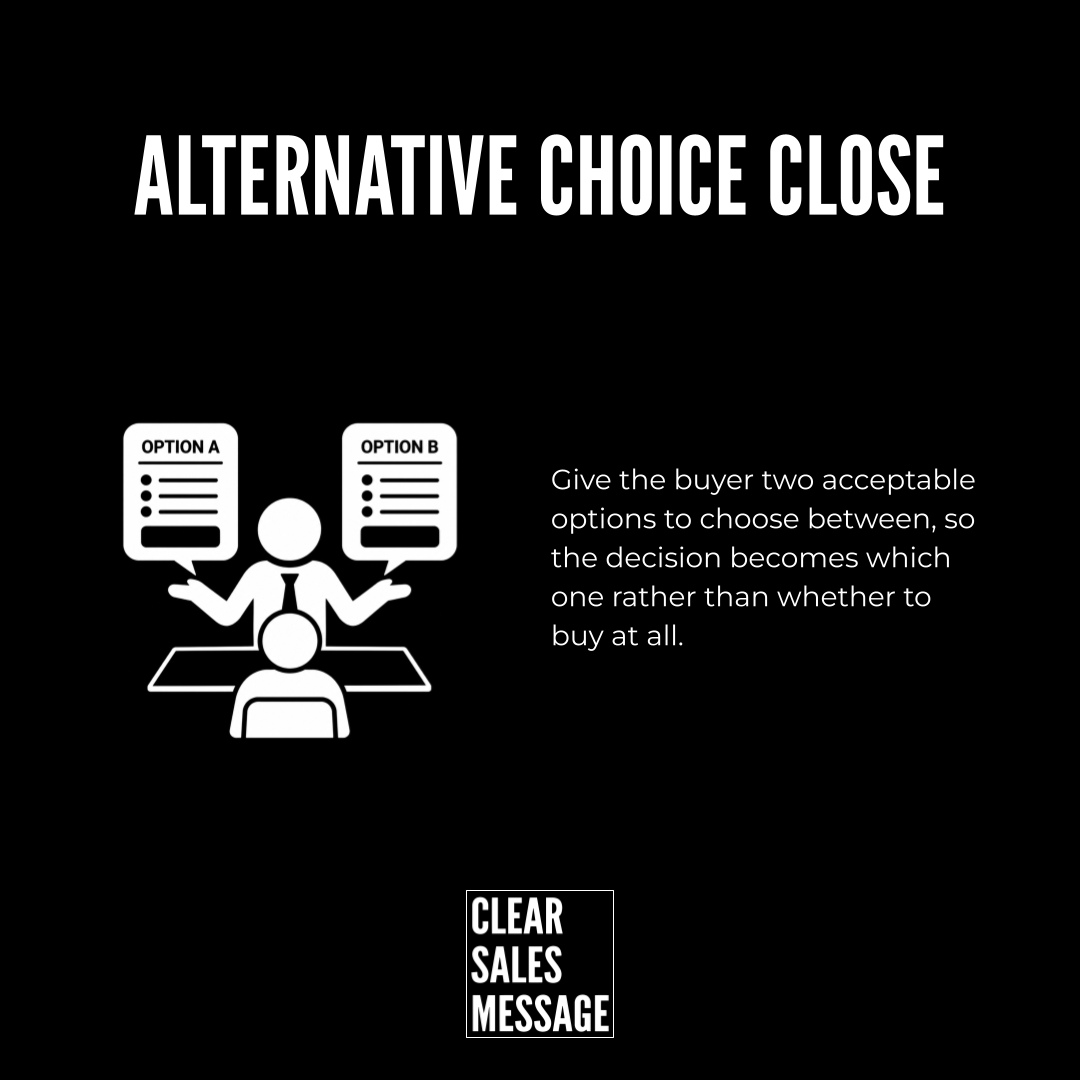
That’s the Alternative Choice Close. You offer two options, and both of them are a yes. So the buyer’s mind moves from whether to buy to which one they’d like.
What Is The Alternative Choice Close?
The Alternative Choice Close is a closing question with two answers you’re happy with. It might be about the product, the timing or how they pay. For example, “Would you prefer the annual plan or the monthly one?”
Think of it as a tighter way of offering choices. Rather than a menu of packages, you give exactly two. That keeps the decision quick and simple.
It works in B2B as well. “Shall we start with your sales team or your support team?” moves the talk straight to planning.
Why Does The Alternative Choice Close Work?
It works because two options are easy to compare. The buyer can skip weighing up a long list. So they can decide on the spot.
It also reframes the decision. A yes-or-no question gives the buyer an easy way out. But a choice between two yeses puts the focus on the details.
Then there’s control. People like to make their own picks. As a result, choosing between two options feels like their decision, even though you set the menu.
Finally, it keeps momentum. A quick choice moves the sale forward. In fact, each small decision makes the next one easier.
How Can You Use The Alternative Choice Close?
Here’s how to use it well.
Make Both Options Real
Each option should be something the buyer might honestly want. So pick two that suit their needs. If one is clearly a dud, the trick shows.
Ask At The Right Time
Use it once the buyer has shown interest. Questions about price, timing or set-up are good signs. Before that, a choice feels like pressure.
Keep The Question Short
Name the two options and stop. For example, “Black or silver?” or “This month or next?” Short questions get quick answers.
Listen For A Third Answer
Sometimes the buyer says, “Neither.” That’s useful. So ask what’s holding them back instead of offering two new options straight away.
Use It In Emails Too
End a follow-up email with a two-way question. For example, “Would a call on Tuesday or Wednesday suit you better?” As a result, replying feels easy.
When Does The Alternative Choice Close Work Best?
It works best near the end of a sale. The buyer likes the offer and only the details remain.
It also shines with buyers who struggle to decide. Two clear options cut the thinking down to size. So they feel relieved.
And it suits quick, simple buys. When the stakes are low, a fast choice feels natural.
When Does The Alternative Choice Close Become Dangerous?
It gets dangerous when you use it too early. If the buyer hasn’t decided they want it, a forced choice feels like a trap. As a result, they push back.
It also backfires when it sounds scripted. Many buyers know the “red or blue?” line. So use natural words that fit the conversation.
Watch out for ignoring a real no too. If the buyer clearly wants neither option, pushing harder damages trust. Instead, step back and ask questions.
What Are The Common Mistakes With The Alternative Choice Close?
Most mistakes come from using it as a trick instead of a help. Here are the ones I see most.
Offering A Fake Choice
Pairing a great option with a silly one fools nobody. Instead, offer two options a buyer could really pick.
Using It Too Often
One two-way question feels helpful. Five in a row feels like a sales script. So use it at the key moment only.
Ignoring The Buyer’s Needs
Offering options that don’t fit their situation shows you weren’t listening. So base both choices on what they’ve told you.
Talking After The Question
Some sellers ask, then keep explaining. So the buyer never answers. Ask, then wait.
Alternative Choice Close – An Example
Booking A Training Day
Say you sell sales training to small firms. The sales manager has seen the course outline and likes it. They’ve also asked how soon their team could start.
Skip “Do you want to book it?” Instead, ask this. “Would you rather run it in person at your office, or online across two half days?”
Now they’re thinking about their team, their diary and which format suits. Either answer means a booking. And because they picked the format, they feel more committed to making it work.
See Also