Practical Sales Training™ > How To Lose The Sale > Spam Calendar Invite
Spam Calendar Invite
You open your calendar and find a meeting you never agreed to. A stranger has booked 30 minutes to “discuss growth”. You’ve never spoken to them. You didn’t ask for it.
That’s a spam calendar invite. Some sellers think it’s a clever shortcut past the inbox. In reality, it tells buyers you don’t respect their time before you’ve even said hello.
What Is a Spam Calendar Invite?
A spam calendar invite goes to someone who never agreed to meet. The seller picks a time, sends the invite and hopes the buyer just turns up.
It often comes with a cheery “I’ve booked us in.” Sometimes there’s no note at all, just an invite with a vague title.
The idea is to skip the back and forth of booking a call. But it skips the most important step, which is asking.
Why Does a Spam Calendar Invite Lose the Sale?
Your diary feels personal. It’s where people plan their work, family and time off. So a stranger jumping into it feels like someone walking into your house uninvited.
It also takes away choice. People like to decide who gets their time. As a result, buyers push back when you book them without asking. That includes buyers who might have said yes.
And it signals desperation. In fact, it suggests you can’t get meetings the normal way. That’s hardly a great first impression for someone you want to trust you.
How Can You Get Meetings the Right Way?
You still want buyers in your diary. So here’s how I’d earn the meeting instead.
Ask First, Book Second
Send a short message asking if a chat would be useful. Only once they say yes do you send an invite. It feels slower. Yet you’ll get meetings people actually turn up to.
Give a Reason to Say Yes
“Let’s discuss growth” means nothing. Instead, offer something specific. For example, “I’ve spotted three quick wins on your website. Would a 15-minute call be useful?”
Let Them Pick the Time
Share a booking link or offer a few slots. That way, they stay in control. And a meeting they chose is a meeting they’ll keep.
Hold the Slot Softly
Here’s the less obvious move. If they’ve said yes but gone quiet on a time, suggest one in writing. “Would Thursday at 2pm work? If not, just pick another.” It keeps things moving without forcing anything.
Make the Invite Clear
Once they agree, send an invite with a clear title and a short agenda. Name the goal, the length and who’s joining. Buyers accept clear invites. But they ignore vague ones.
When a Spam Calendar Invite Does the Most Damage
It does the most damage with senior buyers. Their time is precious and tightly planned. So an uninvited meeting feels especially rude.
It also hurts in small or close-knit markets. Buyers talk, and a pushy tactic spreads fast. Similarly, it harms your chances with anyone who values good manners in business.
Finally, it backfires when your offer is actually good. The tactic overshadows the value, so buyers never find out what you could have done for them.
When a Spam Calendar Invite Becomes Dangerous
The biggest risk is getting blocked. Many people report or block senders who invite themselves into their diary. Then you can’t reach them again.
It can also hurt your email reputation. If lots of people mark your invites as spam, your normal emails may start landing in spam too.
And it can follow you. People share screenshots of pushy invites as examples of what not to do. You don’t want your name on one.
Common Spam Calendar Invite Mistakes
Most of these come from putting your needs ahead of the buyer’s. So here’s what I see most.
Booking Before Any Contact
A first message should never be a meeting invite. Build a little trust first. Then ask.
Vague Meeting Titles
“Growth discussion” or “Quick chat” tell buyers nothing. They’ll decline, or worse, ignore it and leave you waiting on the call.
Treating No Reply as Yes
Silence isn’t agreement. So if they haven’t accepted, don’t assume they’ll turn up. Instead, check in before the time.
Rebooking After a Decline
Some sellers send a new invite after the buyer declines. That turns rude into annoying. However tempting it is, respect the no.
Spam Calendar Invite – An Example
“I’ve Gone Ahead and Booked 30 Minutes”
This is hypothetical, but it does happen.
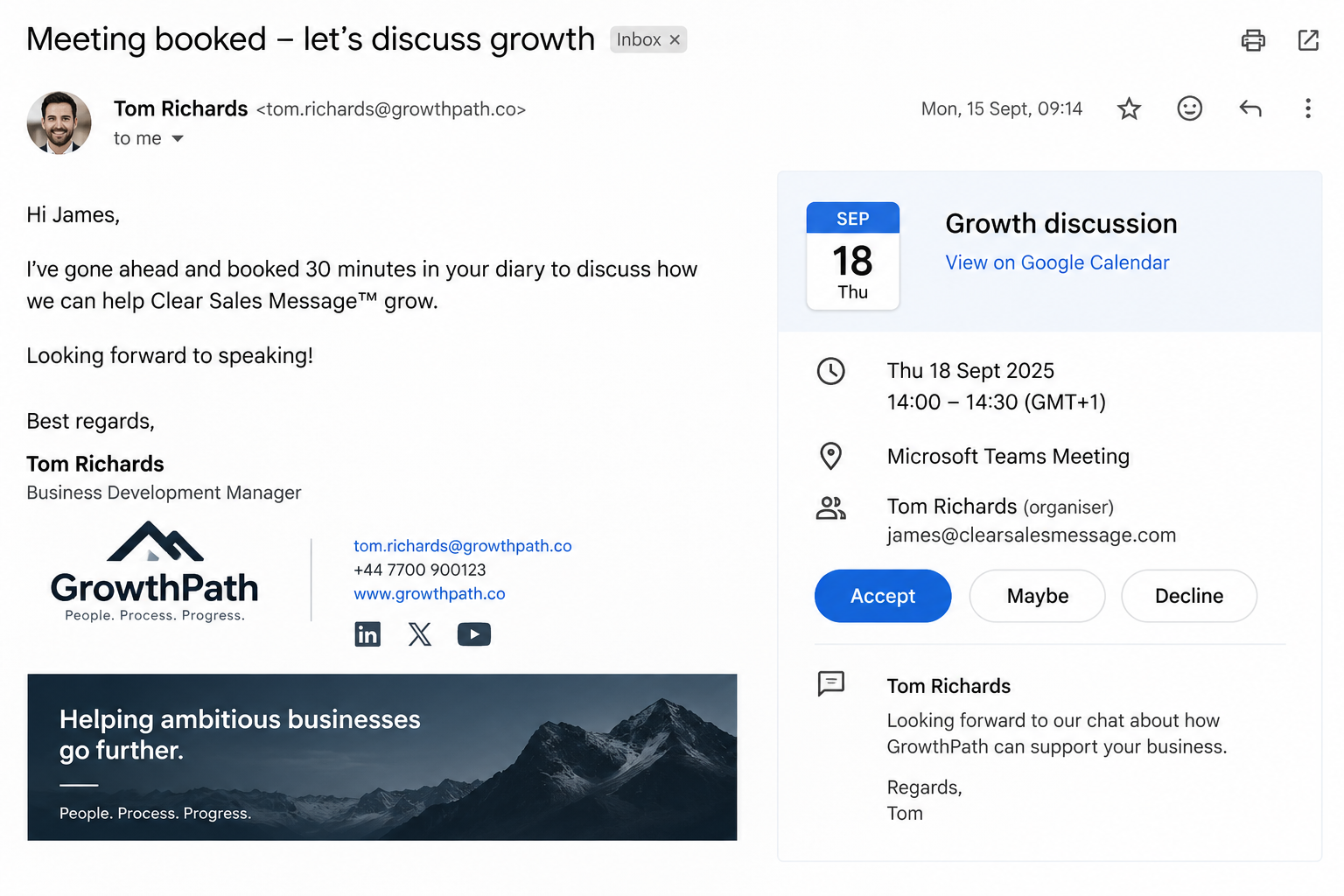
A seller you’ve never heard of emails you out of the blue. “I’ve gone ahead and booked 30 minutes in your diary to discuss how we can help Clear Sales Message grow.” Attached is an invite called “Growth discussion”.
Look at what’s missing. There’s no question, no reason to say yes and no sign they know anything about the business. They’ve simply decided your time is theirs. So instead of a meeting, most buyers reach straight for the Decline button.
See Also