

Practical Sales Training™ > How To Get Attention > The Christmas Effect
The Christmas Effect
For a few weeks every year, Christmas takes over every conversation. So why not let it take over your messaging too?
The Christmas Effect is about leaning into that. You shape your offering to fit the season, even if it has nothing to do with Christmas the rest of the year.
And because the window is short, the urgency does half the selling for you.
What Is The Christmas Effect?
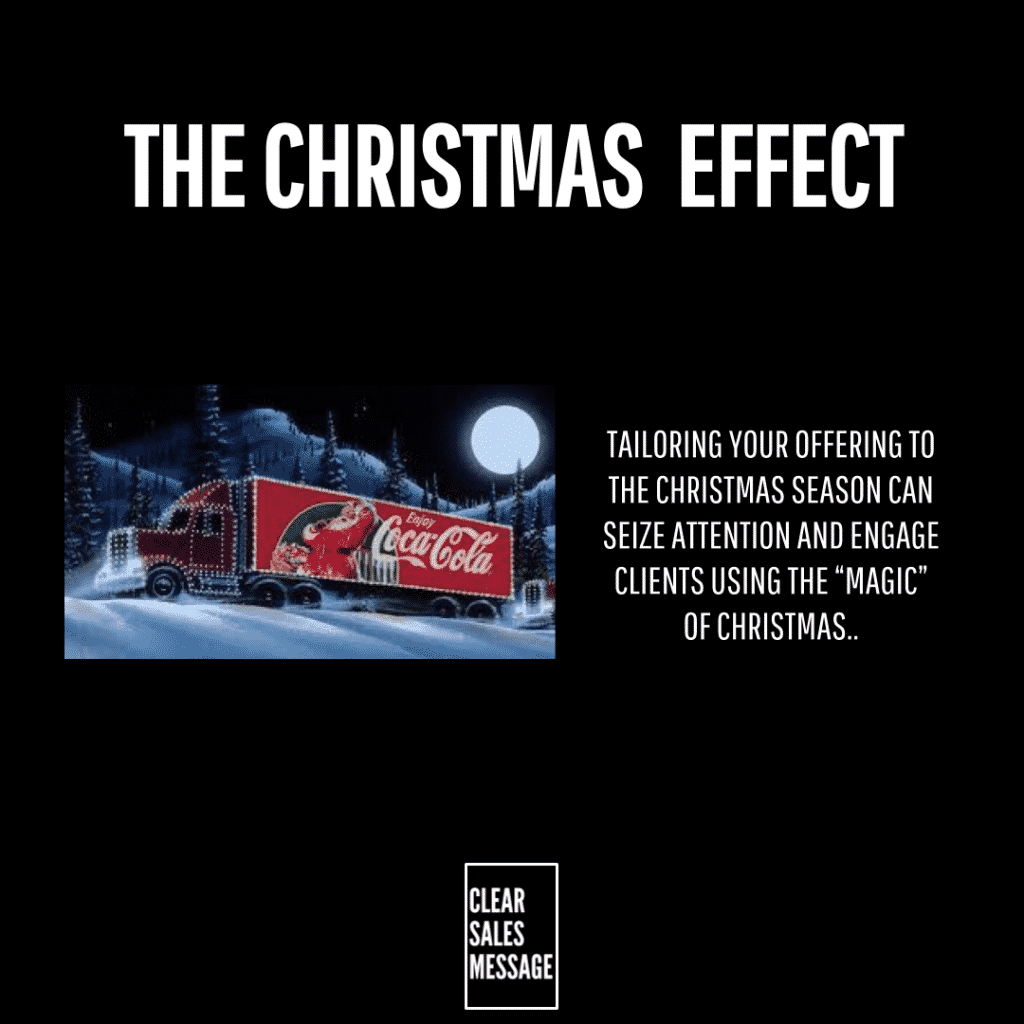
The Christmas Effect occurs when you tailor your offering in some way to make it more relevant to the Christmas season. It can be as simple as new packaging or as involved as a fully reworked offer.
Even the most ordinary product can feel fresh again once it’s wrapped in a bit of festive context.
Why Does The Christmas Effect Work?
It works because at Christmas, all we talk about is Christmas, starting around November and ending promptly at midnight on Christmas Day. So even the most pedestrian products or services can be repackaged in a festive way to capture attention.
The Christmas Effect is really The Timely Effect in disguise. But because Christmas is such a universally celebrated and commercially focused holiday, it earns a category of its own.
How Can You Use The Christmas Effect In Sales?
Repackage your offering as a gift
Could what you sell work as something to give, rather than something to buy for yourself? Framing it as a gift opens up an entirely different buying reason.
Align your offer to Christmas itself
Think about how your product or service could connect to the season directly, rather than just being sold alongside it.
Add festive touches to your messaging
Decorations, language, and visuals all matter. So inject Christmas into any area of your offering, and you can ride the crest of the Christmas wave while it lasts.
When The Christmas Effect Works Best
It works best when you act early enough to actually benefit, since the window is short and competition for attention gets fierce as the season builds.
It also works well for products that naturally suit gifting or seasonal indulgence, because those categories already have buyers actively looking for festive options.
When The Christmas Effect Becomes Dangerous
It becomes dangerous if the festive theme feels forced or tacked on, since a half-hearted attempt can look more desperate than seasonal.
It can also backfire if you over-invest in a campaign that has to perform within a tiny window, because by December 26th it will all be over, so make hay while the snow shines.
Common Christmas Effect Mistakes
Leaving it too late
Launching a Christmas campaign in mid-December gives buyers almost no time to act. So plan and launch with weeks to spare, not days.
Adding festive touches without real thought
Slapping a snowflake on your logo isn’t enough on its own. So think about what genuinely makes your offer more relevant to the season.
Overcommitting resources to a short window
A huge investment in a campaign that only runs for a few weeks needs careful planning. So make sure the potential upside justifies the effort involved.
The Christmas Effect – An Example
A bakery’s “12 Cupcakes of Christmas” gift box
A bakery that normally sells standard cupcakes could release a “12 Cupcakes of Christmas” gift box, featuring festive flavours like gingerbread, cranberry, and eggnog, all decorated with holiday-themed designs.
This limited-edition packaging and festive branding wouldn’t exist in June. But during November and December, it instantly feels more relevant and giftable, boosting sales simply because it’s tied to the Christmas spirit.
See also