Practical Sales Training™ > How To Convert > Exploding Offer
Exploding Offer
You’ve done the work. The buyer liked the quote and nodded along on the call. Then they said they’d think about it, and you haven’t heard from them since.
Most deals die right there. Waiting costs the buyer nothing, so they wait. An exploding offer changes that. It puts a price on delay, so saying yes today looks better than saying maybe next month.
What Is an Exploding Offer?
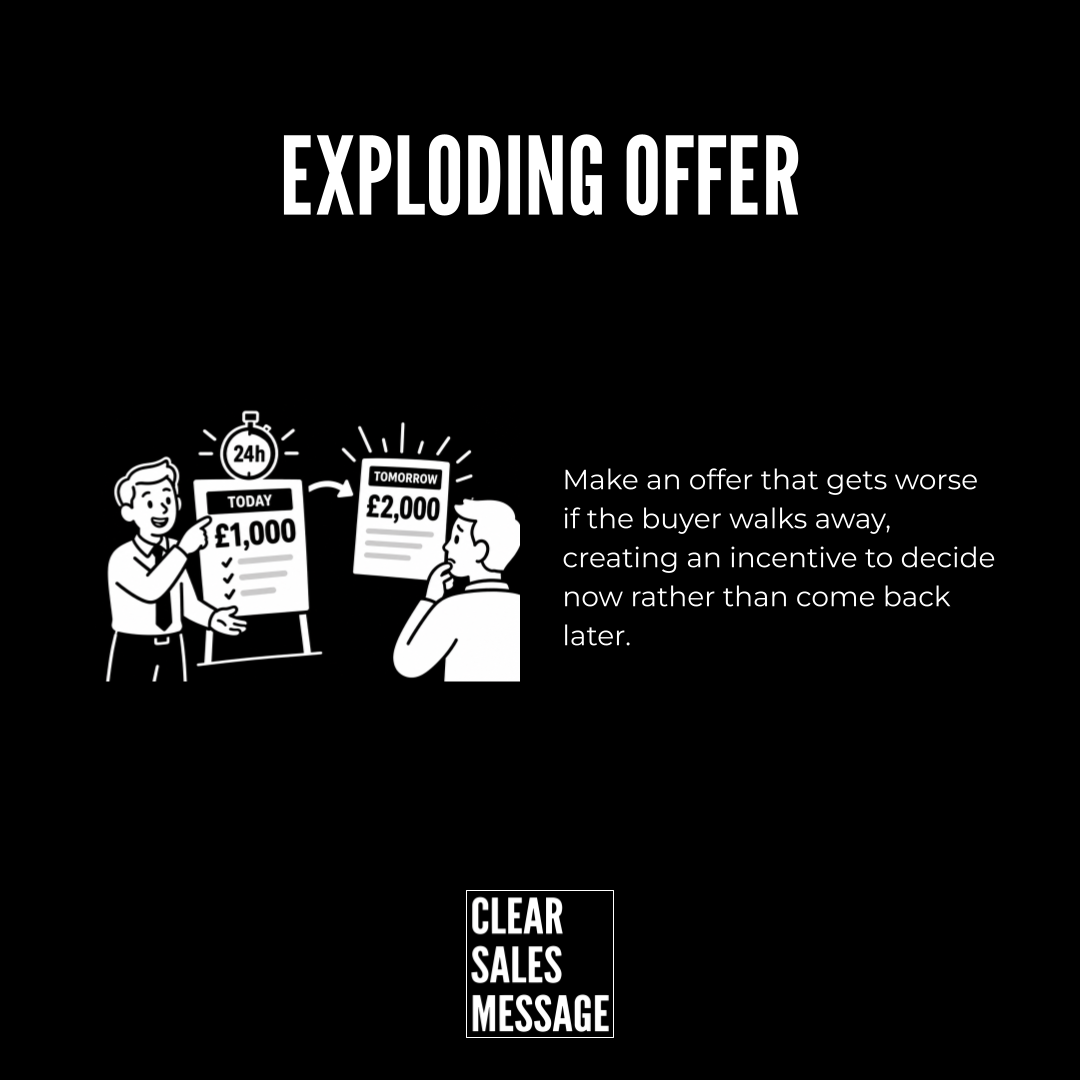
An exploding offer is a deal with a clock on it. If you take it now, you get the good version. But if you walk away and come back later, the deal gets worse.
The loss can take lots of forms. For example, the price might go up. You might lose a bonus, a start date or a spot in the queue. Either way, the buyer can see what waiting will cost them.
That’s the key part. A normal deadline just says “hurry up”. In contrast, an exploding offer shows the buyer exactly what they lose if they don’t act.
Why Does an Exploding Offer Work?
People hate losing things more than they like gaining them. So a £1,000 saving that might vanish feels bigger than the same £1,000 as a plain discount. Loss simply shouts louder.
Delay also feels free to most buyers. In fact, “let me think about it” is the safest thing they can say. Nobody blames a buyer for waiting. But an exploding offer gives waiting a price tag, and suddenly doing nothing looks like the risky choice.
It helps your buyer inside their own business too. Most people need to sell your idea to a boss. A clear deadline gives them a reason to push it up the list this week. So your deal jumps the queue.
How Can You Use an Exploding Offer?
The idea is simple. Getting it right takes more care, though. A clumsy exploding offer feels like a trick. So here’s how I’d set one up.
Give the Deadline a Real Reason
Buyers can smell a made-up deadline. So tie yours to something real. Maybe you only have two start slots next month. Or perhaps your own costs go up in the new year. Then the deadline feels like useful news, rather than a push.
Show Exactly What They Lose
Specific loss moves people. “Prices may change” means nothing to a busy buyer. But “£1,000 today, £2,000 from Monday” is hard to ignore. So put the two versions side by side and let the gap do the talking.
Name the day as well. “Friday” feels much closer than “in two weeks”.
Match the Clock to How They Buy
A 24-hour offer can work for a £50 course. However, it’s a mess for a big contract that needs three people to sign. So ask how long a proper yes takes for this buyer. Then set the deadline just past that point.
Too long, and the buyer forgets about it. But make it too short and they feel trapped.
Put the Extras on the Clock
The safest way to run an exploding offer is to put a bonus on the timer. Think free setup or an early start. The main price stays the same, so nobody feels cheated if they sign late. Yet they still miss something they wanted.
This also keeps you honest. Raising the core price later can look greedy. Losing a bonus just feels like missing the bus.
Write It So Your Contact Can Forward It
Your contact often isn’t the only one who decides. So put the offer in writing, in one or two plain lines. Spell out what they get, the date it ends and what happens after. That way your contact can forward it to the boss without adding a word.
When Does an Exploding Offer Work Best?
It works best when the buyer already wants what you sell. They’ve seen the value, they like you, and they’re just stalling. So a deadline gives them the nudge they were half waiting for.
It also works well when your limits are real. If you can only take on two new clients a month, tell them. A limit that’s true feels helpful. Similarly, it suits simple buys where one person can say yes on the spot.
Repeat buyers who know you hold the line act fast too. They’ve learned your deadlines mean what they say.
When Does an Exploding Offer Become Dangerous?
An exploding offer speeds up a yes that was already on its way. If they can’t see your value yet, the clock just feels like pressure. So they walk away, and often tell people why.
Fake deadlines are the other big risk. Buyers talk, and they spot patterns fast. So if your “last chance” deal comes back every month, nobody believes the next one. Worse, they wonder what else you faked.
Be careful with big group buys too. Buying teams often see a hard deadline as a pressure move. Then they slow down on purpose to prove nobody pushes them around.
What Are the Common Mistakes With Exploding Offers?
Most exploding offers fail for the same few reasons. So here are the ones I see most.
Moving the Deadline When They Ask
The buyer asks for another week. It feels harmless, so you agree. But you’ve just taught them that your deadlines bend. From now on, every offer you make comes with a silent “or later”. So if you set a deadline, keep it. And if you might move it, call it something else.
Pulling the Trigger Too Early
Some sellers open with the deadline before the buyer even knows what they’re buying. That’s backwards. The buyer has nothing to lose yet, so there’s nothing to fear losing. Build the value first, then start the clock.
Hiding the Deadline in the Small Print
A deadline tucked into page six of a quote does nothing. The buyer can’t feel a loss they never spotted. Say it on the call. Then put it in the email subject line and the first line of the quote. Make it impossible to miss.
Making the Gap Too Small to Matter
If waiting costs 1% more, nobody rushes. The gap has to feel worth acting on. As a rule, the loss should be big enough that your buyer would feel silly missing it. If not, it’s just noise.
Letting the Offer Die in Silence
When the deadline passes, most sellers go quiet. That’s a mistake. Send a short, friendly note with the new terms. It feels awkward, but it proves the deadline was real. As a result, buyers believe your next exploding offer.
Exploding Offer – An Example
The Quote That Sat in an Inbox
Say you run a small web design studio. Your quotes get great feedback, and buyers say they love the plan. Then they go quiet for three weeks while they “check budgets”.
So you change one thing. Every quote now ends with a short line like this:
“Sign by Friday and we start on the 1st, with a free content workshop. After Friday, the next start slot is six weeks away. The workshop also costs £600 from then on.”
Look at what that does. The price stays the same, so nobody feels squeezed. But waiting now costs the buyer six weeks and a workshop they wanted. Your contact also has something clear to take to the boss.
Now “we’ll get back to you” has a cost. So the buyers who were always going to say yes tend to say it sooner. And the ones who drift past Friday? They weren’t ready anyway, and you haven’t cut your price to chase them.
See Also