
Practical Sales Training™ > How To Lose The Sale > The Critical Effect

The Critical Effect
What Is It
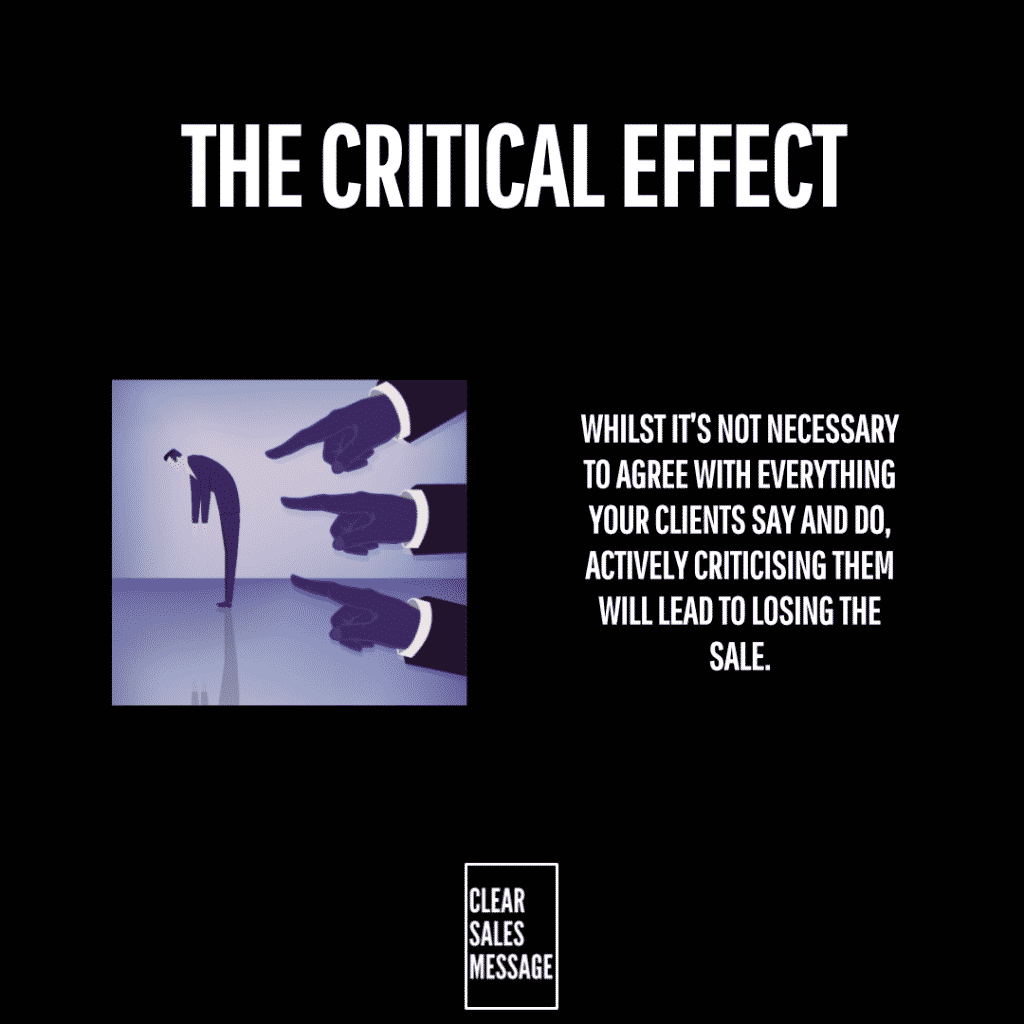
The Critical Effect happens when you actively criticise a potential client’s decisions or actions. You might be right. The problem isn’t accuracy. It’s timing, tone, and how it lands.
A buyer tells you what they’ve been doing. You point out the mistakes. That’s the trigger. From that moment, the conversation changes shape.
Why Does It Work
No one likes being criticised. Even when they know they’re wrong. Especially when they know they’re wrong.
Criticism triggers defence, not reflection. The buyer stops listening to your advice and starts protecting their ego instead. So the message gets lost, even if every word of it is true.
You might be the most accurate person in the room. But accuracy without tact rarely builds trust. And trust is what gets deals over the line, not being right.
How Can You Use It
Spot The Urge
A client explains their situation. You see the mistakes straight away. That urge to correct them is the moment to watch.
Reframe Before You Speak
Instead of pointing out what they got wrong, show them what’s possible instead. Lead with where they could go, not where they’ve been. This keeps the door open rather than putting them on the back foot.
Watch What Happens When You Get It Wrong
Tell a client what they should have done, and why the mess is their fault. Then count to ten. Watch the rapport disappear in front of you.
When It Works Best
Honestly, criticism rarely works as a sales tactic. The closest thing to a use case is constructive feedback, delivered gently, only once trust is already established. Even then, it’s a small dose, not a strategy.
When It Becomes Dangerous
It becomes dangerous the moment you criticise before you’ve built any trust. A stranger telling you you’re wrong feels very different to a trusted advisor doing the same. Early in a relationship, criticism reads as judgement, not help.
It also backfires when delivered publicly or in writing, since tone is easy to lose. A message that feels blunt on screen can feel like an attack, even if that’s not the intent.
Common Mistakes
Leading With The Problem
Opening with everything wrong about a buyer’s current approach puts them on the defensive instantly. They stop hearing your solution because they’re too busy defending the decision you just attacked.
Confusing Honesty With Tact
Being right isn’t the same as being persuasive. You can be completely accurate and still lose the sale, because the buyer remembers how you made them feel, not your data.
Skipping The Future Picture
If all you offer is criticism with no vision of what’s possible, you give the buyer nothing to move towards. They’re left feeling judged, with no reason to keep talking to you.
The Critical Effect – An Example
A Real Outreach Message
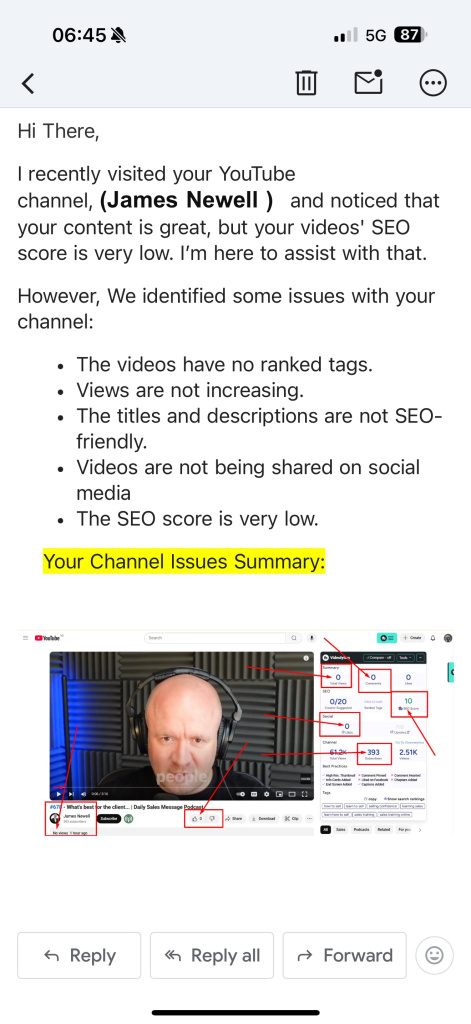
I once received a cold outreach message about my YouTube channel. The sender had done their homework. Their points about my SEO and tagging were accurate.
But the message opened by listing everything wrong with my channel, one issue after another. By the time I’d read it, I didn’t feel curious. I felt criticised.
Compare that to an approach built on anticipation. Something like “here’s what you could be doing” instead of “here’s what you’re doing wrong.” Same expertise, completely different reaction. One makes me defensive. The other makes me want to know more.
That’s The Critical Effect in action. Accurate, well-intentioned, and still the wrong way in.
See also:

