Practical Sales Training™ > Wordplay > Aposiopesis

Aposiopesis
“If you wait too long to act…” Nobody finishes that sentence for you. Your brain does it automatically.
That’s aposiopesis. You stop short, and the silence does more persuading than any extra words could.
What Is Aposiopesis?
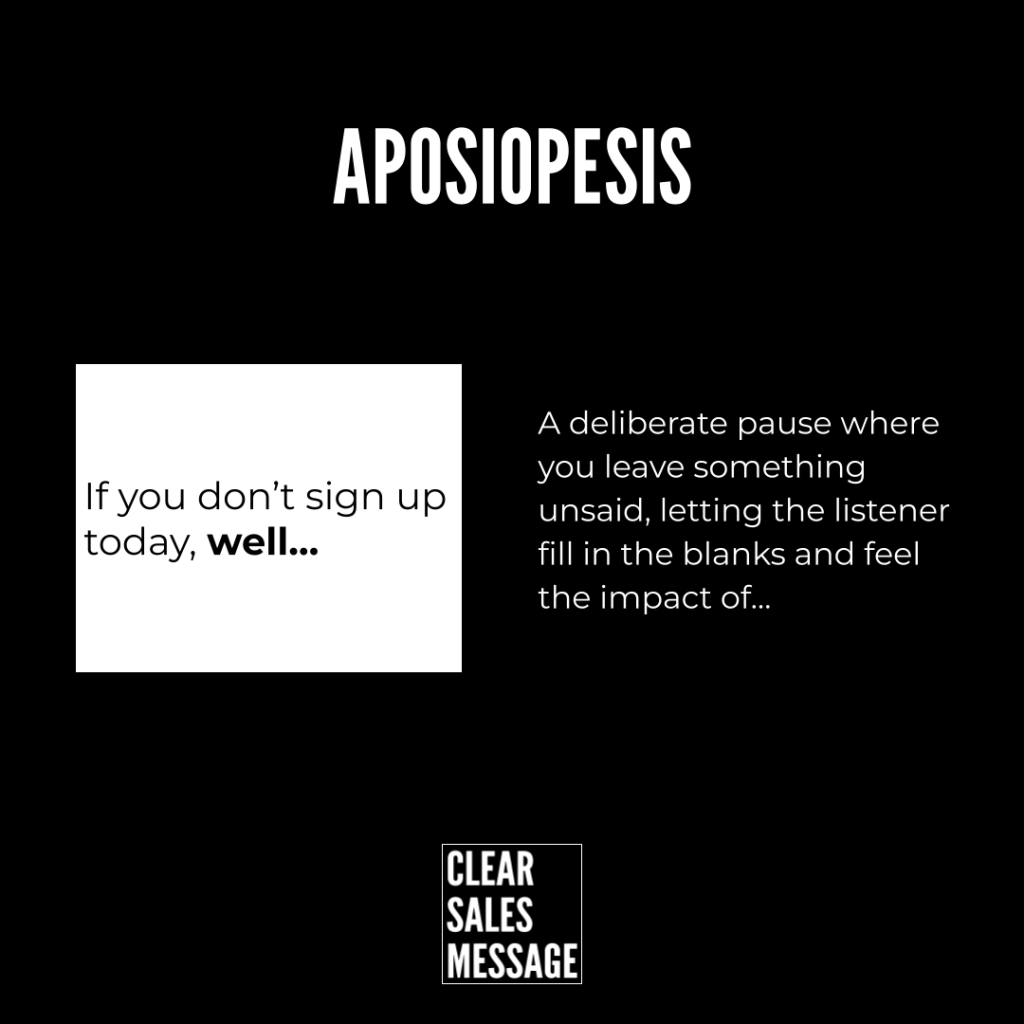
Aposiopesis is a rhetorical device where you intentionally leave a sentence unfinished. You trail off, and you let the listener fill in the rest themselves.
The word comes from Greek, meaning “becoming silent.” Instead of saying everything, you deliberately stop short. That creates suspense, stirs emotion, or simply lets your buyer complete the thought in their own head.
“If you do that again, I swear…” “Well, if that happens…” “One more mistake and…” Each one trails off at exactly the point where the reader’s imagination takes over. In sales, this technique involves your buyer directly, heightens emotion, and often persuades more than spelling everything out ever could.
Why Does It Work?
The human brain naturally completes unfinished thoughts. It can’t help it. So when you use this technique in sales, you create tension, since the unsaid often carries more weight than the said.
It also encourages participation. Your buyer mentally fills the gap themselves, which makes them more invested in the outcome than if you’d simply told them. It builds intrigue too, because silence draws attention, and people lean in to find out what comes next.
It applies subtle pressure as well. The unspoken consequence can motivate action without ever feeling pushy. Used well, this technique makes your buyer work with you in the conversation, rather than simply listening to you.
How Can You Use Aposiopesis?
Create Urgency
Let the unsaid raise the stakes. “If you wait too long to act…” “We’ve seen what happens when businesses ignore this…” Neither sentence needs an ending, because the reader supplies one instantly.
Handle Objections Gently
Use silence to soften a confrontation. “Of course, if you prefer to keep struggling with this problem…” “You could carry on as you are, but…” Both lines make the point without ever sounding critical.
Position Your Value
Let the buyer finish the benefit themselves. “Imagine landing that client, growing your revenue, and then…” “Once you’re fully booked…” The unfinished thought feels more exciting than anything you could spell out directly.
Add Drama To Your Pitch
Create an emotional hook with a deliberate pause. “We’ve helped clients double their revenue in six months, and that’s just the beginning…” The trailing thought suggests there’s more worth hearing.
Calls To Action
Use an open-ended CTA to spark curiosity. “Book a call and see what happens next…” It invites action without demanding it outright.
When It Works Best
This technique works best when the ending is genuinely easy to guess, since the whole effect depends on your reader filling the gap correctly. It performs especially well in headlines, CTAs, and moments of building tension or intrigue.
It also works well paired with a genuine result or consequence, since a real stake behind the pause makes the silence feel earned rather than gimmicky.
When It Becomes Dangerous
Overuse turns a powerful pause into a predictable habit. If every sentence you write trails off, readers stop bothering to fill the gap, since they’ve learned there’s rarely anything worth finishing.
It also risks sounding manipulative if the implied consequence feels invented or exaggerated. A trailing threat with nothing real behind it just reads as pressure rather than genuine insight.
Common Mistakes
Making The Ending Too Hard To Guess
If your reader can’t easily complete the sentence, the technique fails completely. Keep the implied ending obvious enough that anyone can fill it in without effort.
Overusing The Trailing Pause
One well-placed pause lands hard. Five in a single email just feels hesitant, and the technique starts to look like a nervous habit instead of a deliberate choice.
Implying A Consequence That Isn’t Real
A trailing threat needs something genuine behind it. Invent the stakes, and buyers eventually notice, which damages trust far more than a plain sentence ever would.
Aposiopesis – An Example
A Follow-Up Email That Got A Reply
A recruiter used to close cold follow-up emails with “Please let me know if you’re still interested in discussing this opportunity.” Replies were slow, and most leads simply went quiet.
She changed the closing line to “If this role gets filled before we speak…” Replies came back within hours instead of days. The unfinished sentence made the cost of silence feel real, and it did more to prompt a reply than any direct request ever had.
See Also