Practical Sales Training™ > How To Lose The Sale > Distorted Logo
Distorted Logo
Buyers make judgements fast. Before they read your copy or speak to your team, they’ve already formed an impression. Your logo is often part of that first look. So when it looks wrong, the damage happens in seconds.
A distorted logo doesn’t say your product is bad. But it does say you don’t pay attention to detail. And a buyer who notices that before they’ve spent a penny is already less confident about spending one.
It’s one of the most preventable ways to lose trust. And because it’s so easy to fix, there’s no good reason to let it happen.
What Is a Distorted Logo?
A distorted logo is a version of a brand mark that appears stretched, squashed, pixelated, or incorrectly proportioned. It usually happens when images are resized without care, saved in the wrong format, or used in the wrong context.
The logo might still be recognisable. But it immediately looks unprofessional. As a result, it creates doubt in the buyer’s mind before a single word of your message has landed.
Because logos appear everywhere, including websites, proposals, social media, and print, a distorted version can spread quickly. So the problem rarely stays in one place. It tends to appear across multiple touchpoints at once.
Why Does a Distorted Logo Damage Your Sales?
Logos are designed with precision. Every curve, proportion, and font choice is intentional. When that design is altered, the visual signal the logo is meant to send changes. The buyer’s brain registers something is off, even if they can’t name what.
There are four ways a distorted logo affects buyer perception. First, it signals carelessness. If a brand doesn’t protect its own identity, buyers wonder what else it neglects. Second, it weakens trust. A buyer who spots an inconsistency in your branding starts to question your credibility more broadly. Third, it reduces recognition. A stretched or blurry logo is harder to process and remember. So your brand becomes less distinctive. Fourth, it makes the business feel cheap. Poor presentation lowers the perceived value of what you sell, regardless of its actual quality.
In short, the wrong version of your logo can do more damage than no logo at all. A blank space is neutral. A distorted logo is actively negative.
How Can You Fix and Prevent a Distorted Logo?
You can avoid the problem entirely with a few simple habits and the right files. Here’s what to do.
Use the Correct File Types
Keep vector versions of your logo, such as .AI, .EPS, or .SVG files, for any situation that involves scaling. Vector files resize without losing quality. So however large or small you make them, they always stay sharp. For web use, a high-resolution PNG with a transparent background works well in most contexts.
Always Resize Proportionally
Never stretch a logo to fill a space. Instead, resize it proportionally and adjust the layout around it. Most design tools let you lock the aspect ratio when resizing. Use that lock every time, without exception. Because a logo that’s even slightly stretched sends a subconscious signal that something is wrong.
Test Across Every Channel
Check how your logo displays on your website, social media, email signatures, presentations, and print. Each channel has different size requirements. A logo that looks perfect on a website may appear pixelated on a banner or squashed in a thumbnail. So test each one separately and keep a set of correctly sized files for each use.
Create Brand Guidelines
A simple brand guidelines document removes ambiguity for everyone who uses your brand assets. It should show correct logo usage, minimum sizes, approved colour versions, and required clear space. Without guidelines, team members make different decisions. As a result, inconsistency creeps in across every touchpoint. So create them once and share them widely.
Train Your Team to Spot Mistakes
Most distorted logos happen because someone was in a hurry. A quick check before anything goes live takes seconds and costs nothing. So train your team to look at the logo before publishing, printing, or sending. Because catching a distortion before a buyer sees it is always better than explaining it afterwards.
When a Distorted Logo Causes the Most Damage
It causes the most damage at high-stakes touchpoints. A proposal, a pitch deck, or a website homepage is where buyers form their first serious impression of your business. So a distorted logo in those contexts undermines credibility at exactly the wrong moment.
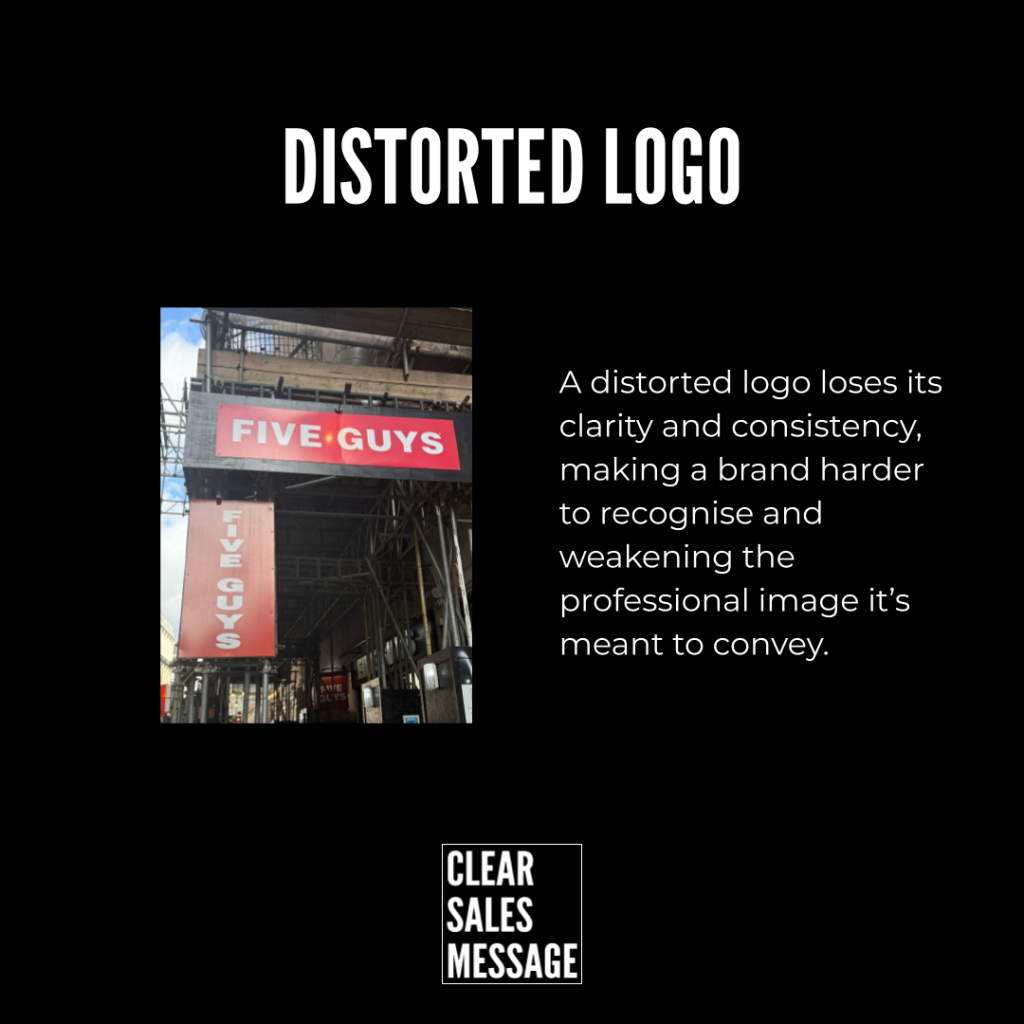
It also causes significant harm in physical environments. A sign or printed banner is seen by many people, often repeatedly. Because the distortion is permanent until corrected, every person who sees it forms the same negative impression. The Five Guys example shows this clearly. A temporary sign made during renovations shows the logo rotated and rendered incorrectly. However minor the cause, the effect is a brand that looks careless.
Similarly, it’s damaging in competitive sales situations. When a buyer compares two suppliers and one has polished branding while the other has a stretched logo, the subconscious signal is clear. Small details reflect larger values. So the brand with better presentation often wins, even when the product is comparable.
When a Distorted Logo Is Understandable But Still Costly
Sometimes distortions happen outside your control. A supplier uses the wrong file. A platform crops your logo automatically. A partner has an old version. In those cases, the distortion is understandable. But it still costs you, because the buyer doesn’t know the context. They just see the result.
So even when the cause is external, the responsibility for fixing it sits with you. It’s your brand. Buyers hold you accountable for how it looks, regardless of who made the error.
The most resilient approach is to reduce the risk at the source. Provide partners with the correct files. Set up a shared brand asset folder they can access directly. Then follow up to check how the files have been used. As a result, you minimise the chance of distorted versions appearing in places you can’t directly control.
Common Distorted Logo Mistakes
Saving Only a JPEG Version
JPEGs lose quality every time they’re saved and compressed. So a logo that starts sharp can become blurry after several rounds of resizing. Always keep a lossless master file. A PNG or a vector file preserves quality indefinitely. However many times you use it, the original stays intact.
Forcing the Logo Into a Fixed Space
When a layout has a fixed-size logo box, the temptation is to stretch the logo to fill it. Instead, resize the box to fit the logo. The logo is the non-negotiable element. Everything around it should adapt. Because the layout serves the brand, not the other way around.
Not Checking Third-Party Uses
Partners, suppliers, and platform algorithms all handle your logo without your direct oversight. So check regularly how your brand appears in those contexts. A quick search for your brand name on Google Images will often reveal distorted or outdated versions you didn’t know existed. When you find them, fix them or request corrections promptly.
Treating It as a Minor Detail
A distorted logo feels like a small thing. But because it appears at the very start of the buyer journey, the impression it creates is large. So treat logo quality as a priority, not an afterthought. A clean logo costs nothing to maintain once you have the right files. But a distorted one keeps costing you every time a buyer sees it.
Distorted Logo – An Example
During renovations, a Five Guys restaurant used a temporary sign beside the main entrance. The original horizontal logo, bold white text on a red background, was reproduced as a vertical banner with the letters stacked downward. The result looks rushed and off-brand. Next to the clean, correct sign above the entrance, the difference is obvious.
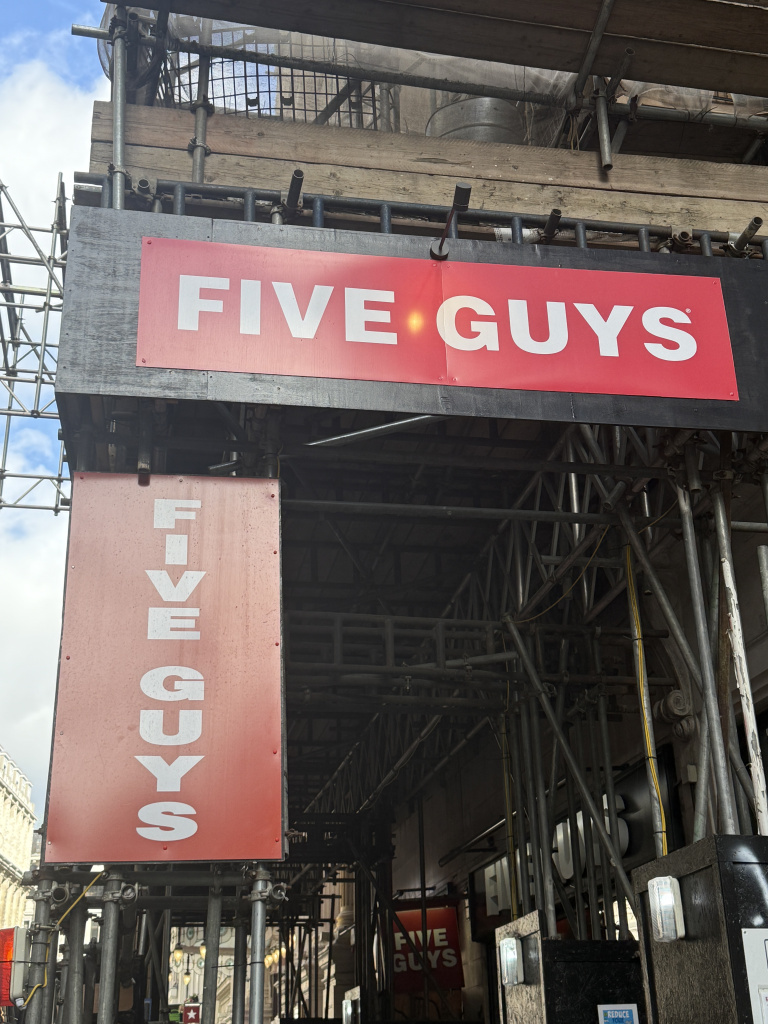
The brand hasn’t changed. The product inside is the same. But the first impression the sign creates is one of a business that cut corners. As a result, it undermines the premium positioning Five Guys has built. That’s the cost of a distorted logo: not a complaint, not a refund, but a quiet erosion of the trust that drives buying decisions.
See also