Practical Sales Training™ > How To Lose The Sale > Implied Blame
Implied Blame
Implied blame happens when your words point at the buyer, even by accident. A sentence like “you didn’t explain what you needed” sounds like an accusation. The buyer feels judged, even though you never meant it that way.
It’s rarely obvious. Most blame words hide inside ordinary sentences. “You forgot to.” “You should have.” “If you’d told us.” Each one quietly shifts responsibility onto the buyer.
Why Does It Work
People protect their self-image without thinking about it. The moment someone feels blamed, their brain shifts into defence. So they stop listening to your actual message and start defending themselves instead.
This happens fast, and it happens quietly. The buyer might not even know why they’ve gone cold. They just know the conversation suddenly feels tense, so they pull back.
Once someone feels blamed, trust drops immediately. Buyers do business with people who make them feel capable. Feeling wrong drives them away instead.
How Can You Use It
Spot the accusing “you”
Look for sentences that start with “you” followed by a negative verb. “You missed,” “you forgot,” “you didn’t.” Rewrite the sentence around the problem instead of the person.
Swap the subject from person to situation
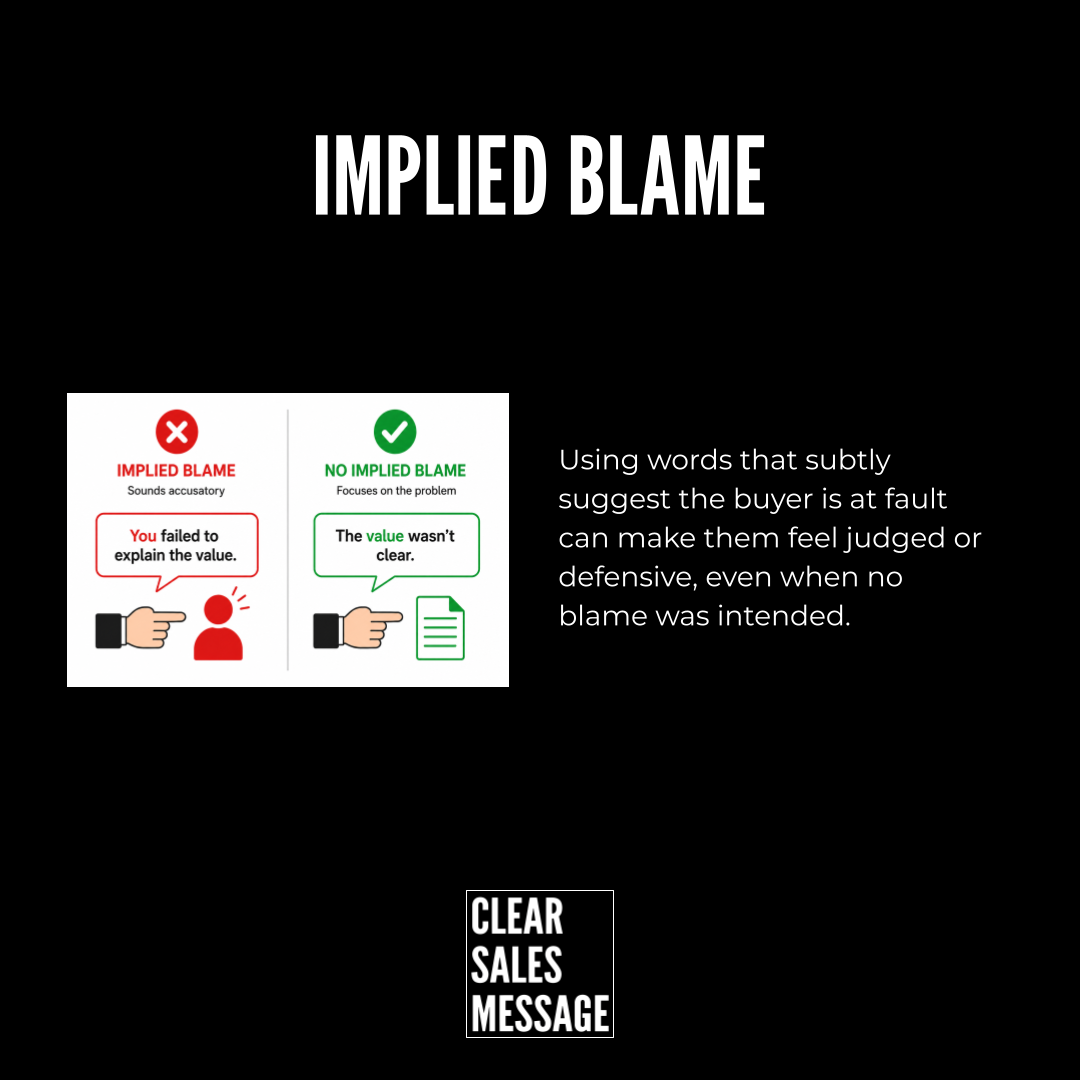
Move the blame off the buyer and onto the circumstance instead. “You failed to explain the value” becomes “the value wasn’t clear.” Same information, no accusation.
Run a blame check before you send
Read every message once looking only for blame language. This one extra pass catches most of it before it reaches a buyer.
When It Works Best
Catching implied blame matters most in written communication. Buyers read tone into text without your voice or face to soften it. So a message can land badly. There’s no way to walk it back in real time.
It also matters most early in a relationship, before you’ve built any trust yet. A new buyer has no track record with you yet. One blame-loaded sentence can end things before they’ve even begun.
When It Becomes Dangerous
The real danger is simple. It often goes unnoticed by the person who wrote it. You reread your own message and hear the tone you intended. The buyer hears something else entirely. That gap is where deals quietly die.
It also compounds over time. One blame-loaded sentence rarely kills a deal alone. But buyers remember the feeling. It stacks with every other small friction until they simply go quiet.
Common Mistakes
Assuming intent excuses the wording
You know you didn’t mean it as an accusation. But the buyer doesn’t know that. Intent lives in your head, while the words are all the buyer actually reads.
Shifting blame instead of removing it
Some rewrites just move blame from the buyer onto another department or process. That still sounds defensive. Aim for language with no target at all.
Editing once and assuming it’s fixed
Blame language sneaks back in under deadline pressure. Check every message you send, even the routine ones.
Implied Blame – An Example
A real rewrite, side by side
Picture a project update email. The first draft reads: “You didn’t send over the final assets, so we couldn’t hit the deadline.” The buyer may have caused the delay. But the sentence still points a finger at them.
The fixed version reads: “The final assets didn’t come through, so the deadline moved.” Same facts, same outcome, no accusation. So the buyer stays open to the next conversation instead of getting defensive.
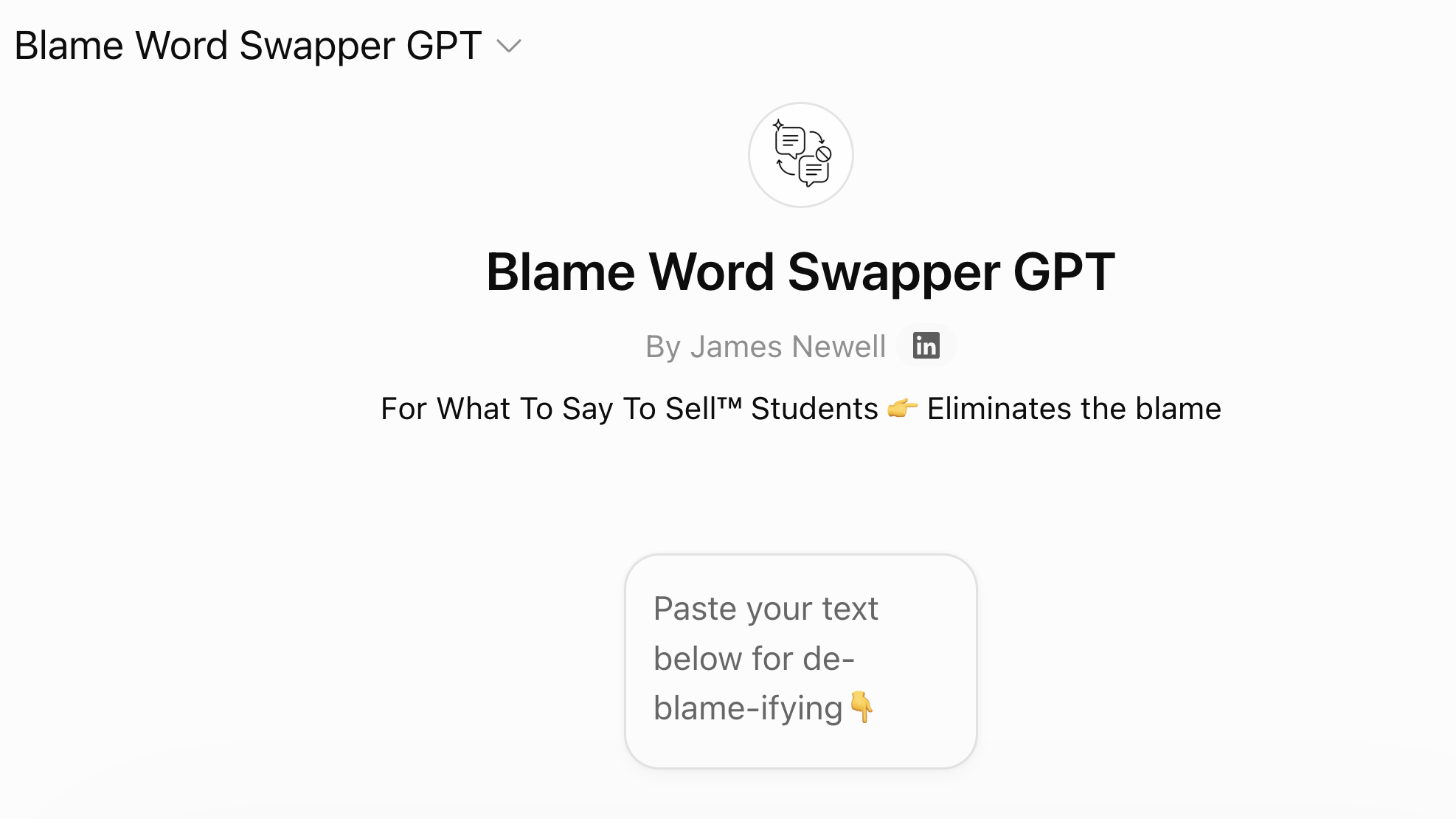
Try The Blame Word Swapper GPT
Reading examples is one thing. Doing it yourself is another. So I built a free tool for What To Say To Sell™ students. It’s called the Blame Word Swapper GPT. Paste in any sentence. It swaps your blame words for the less blame-y version.
See Also