Practical Sales Training™ > How to connect with your buyer > Question Prize Draw
Question Prize Draw
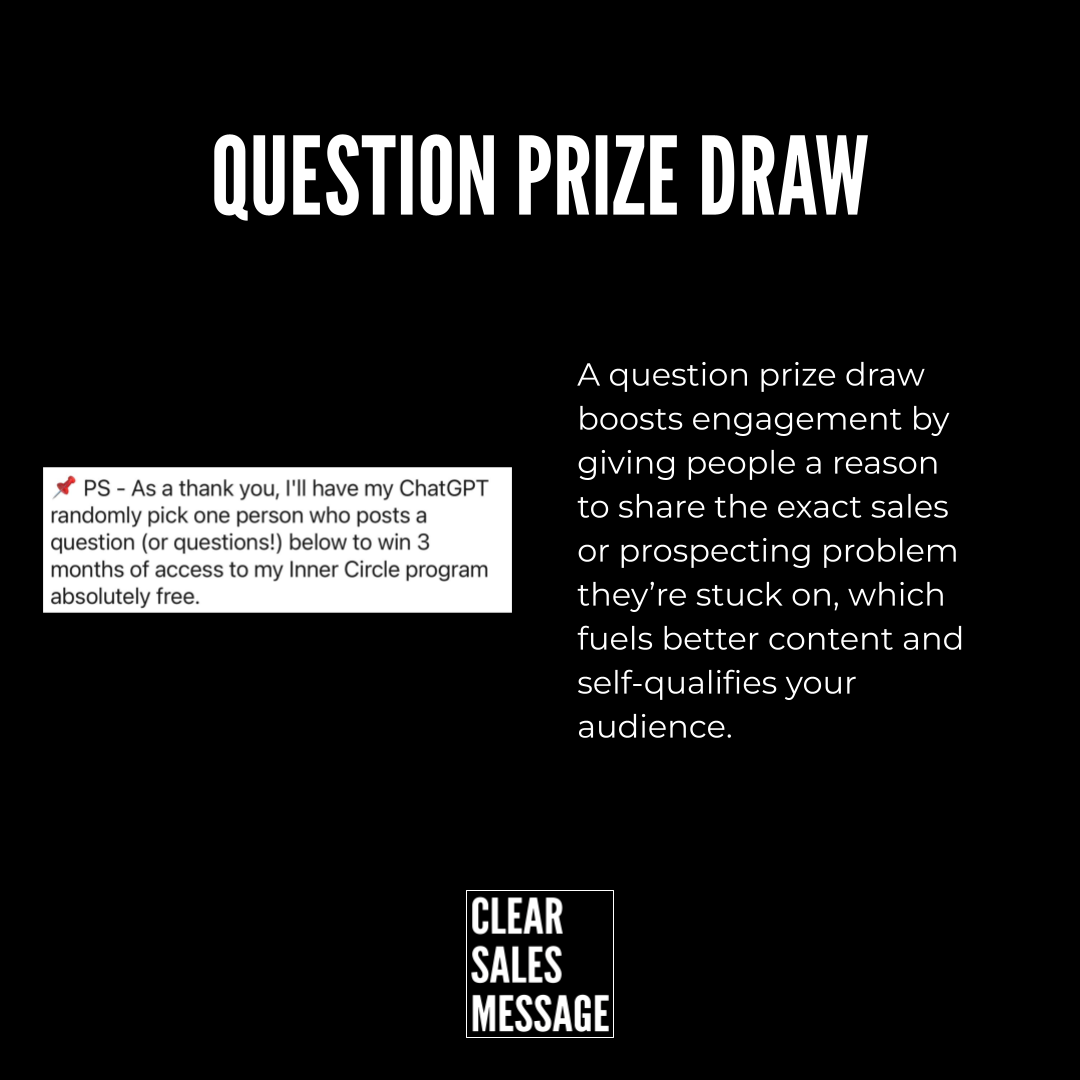
“Comment below to win” gets generic noise. “Tell us your biggest challenge to win” gets something far more useful. Same prize, completely different result.
That’s a question prize draw. The prize is the hook. The question people ask in return is the real value.
This page covers what a question prize draw is, why it surfaces real problems so easily, and how to use one in social posts or emails.
What Is A Question Prize Draw?
A question prize draw is a simple engagement tactic where you reward someone for asking a question.
Instead of asking people to like, comment, or engage generically, you give them a reason to share the exact problem they’re stuck on.
The prize is the hook. The question is the real value. So it turns passive followers into active participants, and surfaces real sales, prospecting, or messaging problems you can actually respond to.
Why Does A Question Prize Draw Work?
The mechanism is straightforward. You publicly invite questions and add a small incentive, for example access to a program, a resource, a session, or a free upgrade. People then comment with the thing they’re genuinely struggling with.
This does three things at once. It boosts engagement, because there’s a clear reason to reply. It also improves content quality, because the questions are specific and real. And it self qualifies your audience, by revealing who actually has the problem you solve.
The draw removes pressure too. People aren’t “asking for help.” Instead, they’re “entering a prize.” So that subtle shift dramatically increases how many people take part.
How Can You Use A Question Prize Draw In Sales?
Social Posts
Invite questions in the comments, then announce a random winner. So you get instant content ideas, straight from your actual market.
Email Lists
Ask subscribers to reply with their biggest challenge for a chance to win something relevant. So you learn exactly what to sell next, straight from the people you’re trying to sell to.
When A Question Prize Draw Works Best
It works best when you already have an audience willing to engage, even if they’re usually quiet. The prize gives a reason to speak up that a plain “ask me anything” post often doesn’t.
It also works especially well when you genuinely want fresh content ideas or insight into your market, since the questions themselves often reveal angles you wouldn’t have thought to ask about directly.
When A Question Prize Draw Becomes Dangerous
It backfires when the prize feels disconnected from your actual business, attracting people who only want the giveaway rather than a genuine solution to their problem.
It also risks looking insincere if you never follow up on the questions people raised, since asking for real problems and then ignoring them undoes the trust the format is meant to build.
Common Question Prize Draw Mistakes
Choosing An Irrelevant Prize
A generic prize unrelated to your offer attracts bargain hunters rather than real prospects. Pick something only your actual audience would want.
Never Following Up On The Questions
Collecting great questions and then ignoring them wastes the most valuable part of the exercise. Use the answers in future content or outreach.
Making The Ask Too Vague
A loosely worded prompt invites generic comments instead of real problems. Ask a specific question that points people toward the exact issue you want to hear about.
Question Prize Draw – An Example
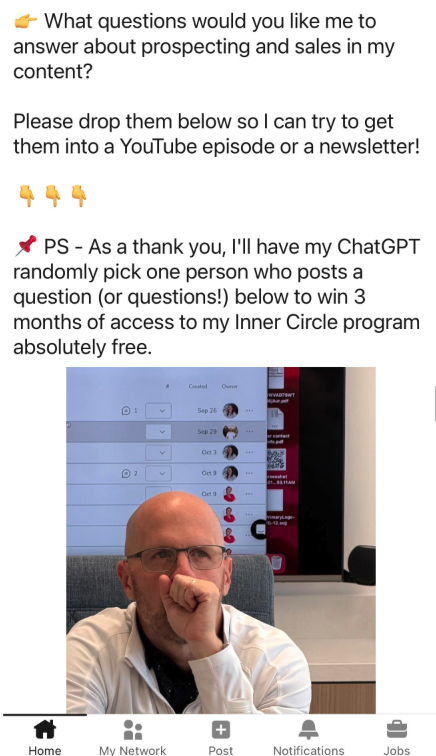
One LinkedIn user runs this exact strategy regularly, inviting followers to share their biggest challenge for a chance to win something relevant to their audience.
The replies don’t read like typical engagement comments. They read like real problems, written by people who clearly want help, not just a chance at a prize. That gives the poster genuine conversation starters with an audience that’s already told them what they’re struggling with.
That’s a question prize draw working exactly as intended. The prize got people to comment. The comments themselves became the real win.
See also