Practical Sales Training™ > Selling Communication Basics > Spelling Grammar Punctuation

Spelling, Grammar and Punctuation
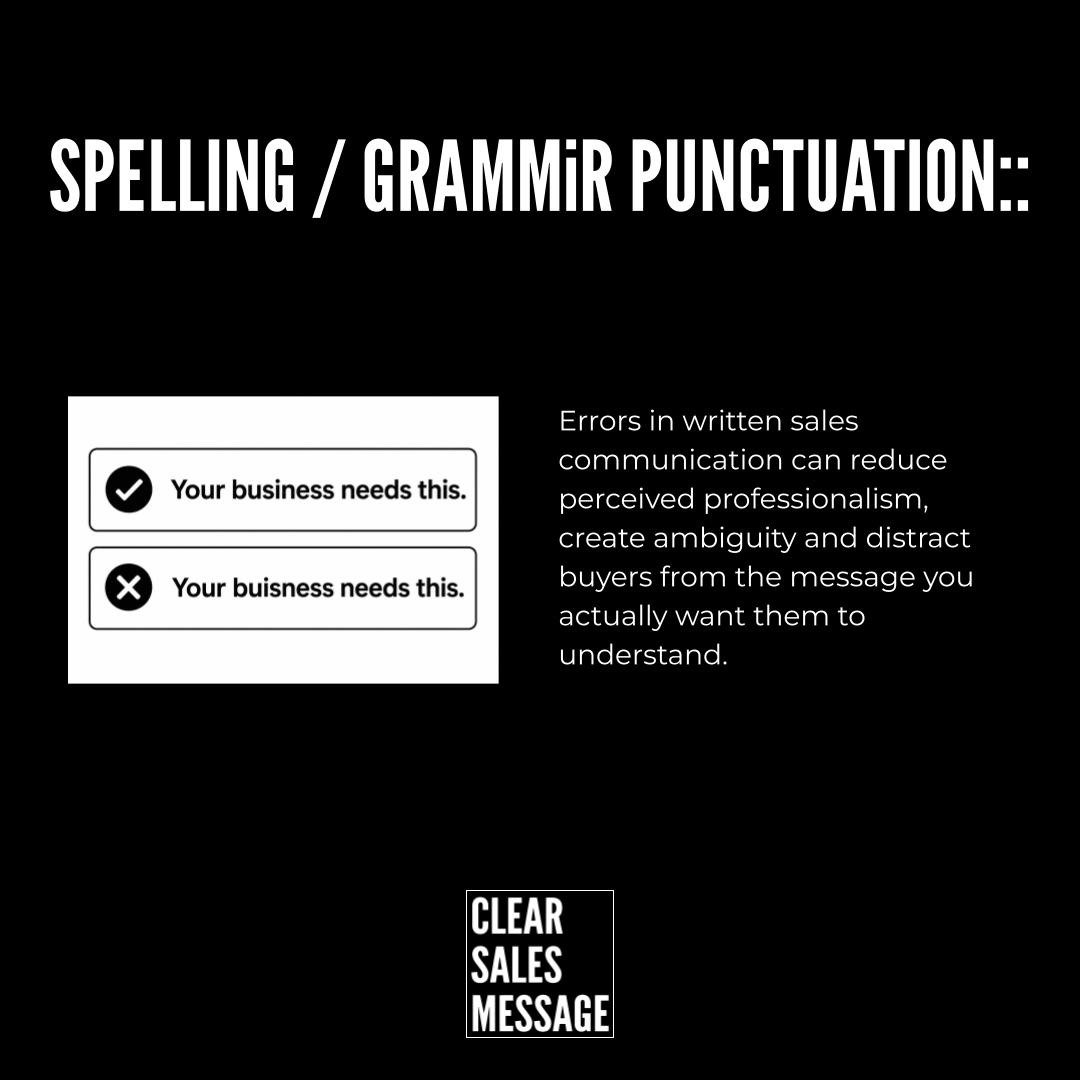
Spelling, grammar and punctuation are the small mechanics of your writing. They sit underneath your message and hold it together. Get them right and nobody notices. Get them wrong and everyone does.
Clean writing makes your ideas easy to follow. That’s why it matters more than people think. Errors slow your reader down. Even a small one makes them stop and reread a sentence. And every time they stop, you lose a bit of their attention.
This isn’t a lesson on grammar rules. It’s about protecting your message from getting lost in bad mechanics. Your buyer should spend their energy on your offer, not on decoding your sentence.
Why Does It Work
Buyers judge you fast, often before they finish your first sentence. A typo makes them pause. That pause breaks their focus, even for a second. And once focus breaks, persuasion gets harder.
There’s a deeper reason too. Punctuation works like a signal of care. Buyers read care as trust, even if they never say so out loud. So when your writing is sloppy, you’re quietly telling them you rushed. And nobody wants to hand money to someone who rushed.
Clarity also removes friction. Every sentence a buyer has to reread is a small tax on their patience. Pay that tax too many times, and they stop reading altogether.
How Can You Use It
Read Everything Out Loud Before You Send It
Your eyes skip mistakes because your brain already knows what you meant to write. Your ears don’t. Reading a sentence out loud forces you to hear the pause a comma should have created. If it sounds wrong, it probably reads wrong too.
Punctuate for Meaning, Not Habit
Don’t just add commas where you’d naturally pause when speaking. Ask what the sentence actually means without one. A missing comma can turn a clear sentence into a confusing one, and your buyer won’t ask you to explain. They’ll just guess, and sometimes guess wrong.
Let Your Copy Sit Before You Edit It
Write your pitch, then walk away for an hour. Come back and read it as if a stranger sent it to you. Distance makes errors easier to spot, because you stop autocorrecting them in your head.
When It Works Best
Clean writing matters most in the moments buyers can’t ask you questions. Cold emails, landing pages, proposals and ad copy all get read without you in the room to clarify. If a sentence confuses them there, you lose the sale silently, and you’ll probably never know why.
It also matters early. First messages set the tone for how careful people expect you to be later. Get the first email right, and buyers relax a little. Get it wrong, and they read every message after that one a bit more suspiciously.
When It Becomes Dangerous
Perfectionism is its own trap. Some people rewrite a sentence ten times chasing a rule that doesn’t matter, while the message underneath stays weak. Grammar should serve clarity. The moment it slows you down more than it helps your reader, you’ve gone too far.
It also becomes a problem when correctness replaces personality. Stiff, over-polished writing can feel cold and distant. Buyers buy from people, not from a style guide. Keep your voice. Just make sure the mechanics don’t get in its way.
Common Mistakes
Trusting Spellcheck With Meaning
Spellcheck catches typos, not confusion. A sentence can be spelled perfectly and still say the wrong thing because of a missing comma. Software checks words. Only you can check whether the sentence actually means what you think it means.
Ignoring Punctuation in Headlines
Headlines get the least editing and the most attention. That’s backwards. A comma left out of a headline or a banner can flip the entire meaning before the buyer reads a single other word. Check your headline last, not first.
Editing Your Own Copy Straight After Writing It
Editing too soon means editing from memory, not from what’s actually on the page. Your brain fills in gaps automatically. Wait, then reread. Better yet, get someone else to read it, since a fresh pair of eyes catches what yours will always miss.
Spelling, Grammar and Punctuation – An Example
Wealth Tax or Wealth, Tax?
A financial services banner promised to help a specific group of professionals “build wealth tax efficiently.” Read it once, fast, and your eye catches two words sitting next to each other that mean something completely different on their own. Wealth. Tax. Without a comma, the phrase briefly reads like it’s about a tax on wealth, the exact opposite of what the business does.
That’s the whole risk in one line. The words were all correct. Nothing was misspelled. But the missing comma created a flicker of confusion at the exact moment a buyer decides whether to keep reading or scroll past. One extra character, “build wealth, tax efficiently,” removes the flicker entirely and says exactly what was meant the first time.

See also