Practical Sales Training™ > How to connect with your buyer > The Ben Franklin Effect

What is it?
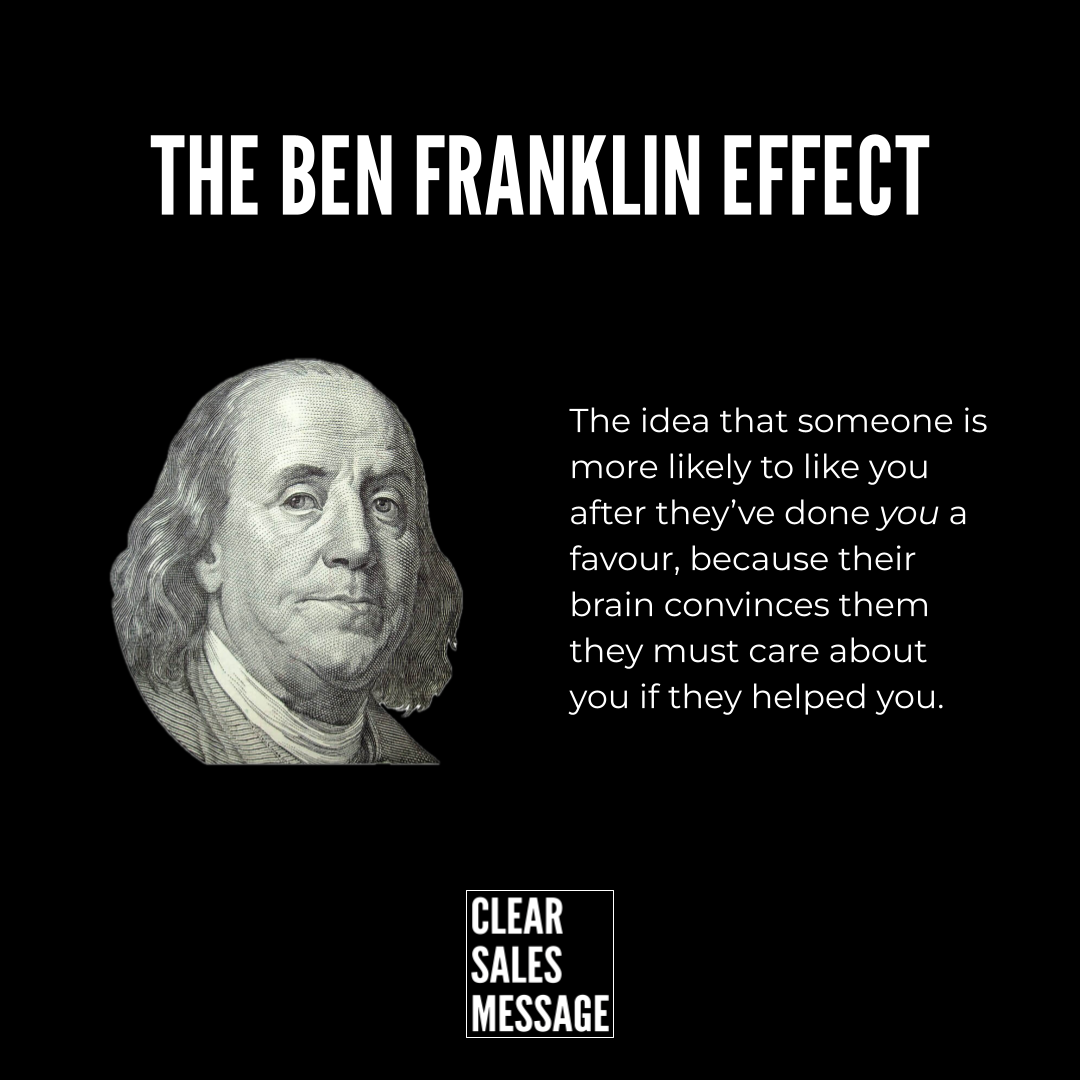
The Ben Franklin Effect is a psychological principle that says people are more likely to like you after they’ve done you a favour.
Their brain justifies the effort by deciding “I must like them, otherwise why would I help?”
It flips the usual logic:
We don’t help people because we like them…
We like people because we help them.
How does it work?
-
Cognitive Dissonance
When someone does you a favour, their actions create a tiny tension:
“I don’t normally help people I don’t like.”
The brain resolves that tension by upgrading how they feel about you. -
Self-justification
Humans want to believe they are consistent.
If they help you once, their brain says:
“Helpful people help people they like.”
And suddenly, they like you more. -
Reciprocity… in reverse
We usually think doing a favour builds goodwill.
But here, asking for a favour builds goodwill.
You let the other person invest in the relationship. -
Identity shift
Helping you becomes part of how they see themselves.
And people protect the identities they create – including liking the person they helped.
How can you use it?
1. In sales
-
Ask a prospect for a small opinion or quick thought early in the relationship.
-
Request one tiny action – like checking a link or confirming a detail.
-
Let them feel involved so they warm to you faster.
2. In client onboarding
-
Ask clients to send a small piece of information or confirm a preference.
-
This starts the relationship on a cooperative, invested footing.
3. In leadership and management
-
Ask team members for help with something they’re good at.
-
It builds rapport and makes them feel valued.
-
They respect leaders they actively support.
4. In networking
-
Instead of offering help first, ask for something small they can easily give.
-
A recommendation.
-
A quick perspective.
-
A resource or contact.
Small asks build big connection.
5. In content creation
-
Get people to contribute:
“What’s one thing you’ve tried that actually worked?” -
Ask for feedback on a draft or idea.
-
Invite small comments or votes – people who interact once are more likely to come back.
Used well, the Ben Franklin Effect makes relationships stronger, faster.
It turns a tiny favour into the start of genuine loyalty.
Example
Benjamin Franklin used this effect himself.
He once needed to win over a political rival who openly disliked him.
Instead of giving him a gift or doing him a favour, Franklin asked to borrow a rare book from the man’s personal library.
The rival agreed, sent the book, and Franklin returned it with a warm thank-you.
After that small favour, the man’s attitude completely changed – he became friendly, cooperative and far more open to Franklin.
Nothing else changed.
He simply liked Franklin more because he had helped him once.
See also