Practical Sales Training™ > Wordplay > Tricolon

Tricolon
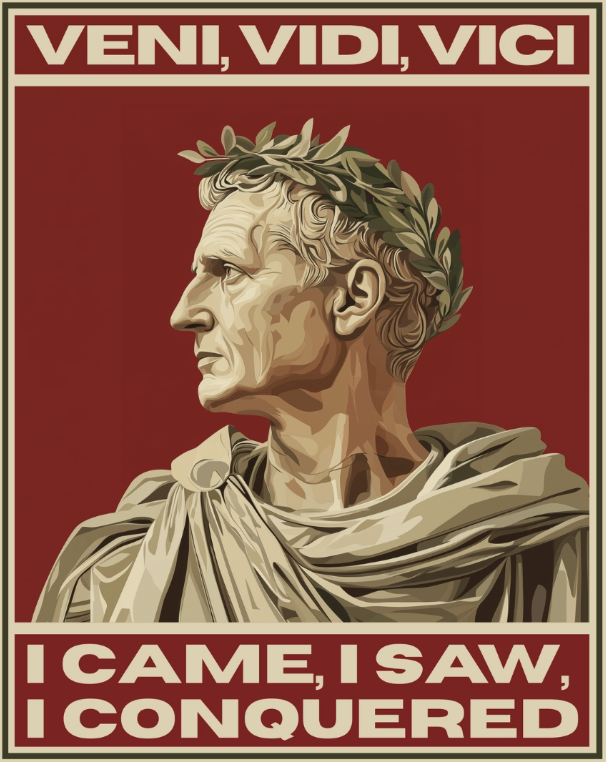
“I came. I saw. I conquered.” Three short lines, one single idea, said three different ways. That’s a tricolon, and it’s been working for over two thousand years.
Instead of making your point once, you make it three times, each version landing slightly differently. So the message gets clearer and stickier with every repeat, rather than feeling repetitive.
This page covers what a tricolon is, why threes work so well on the brain, and how to use one properly in your own sales messaging.
What Is A Tricolon?
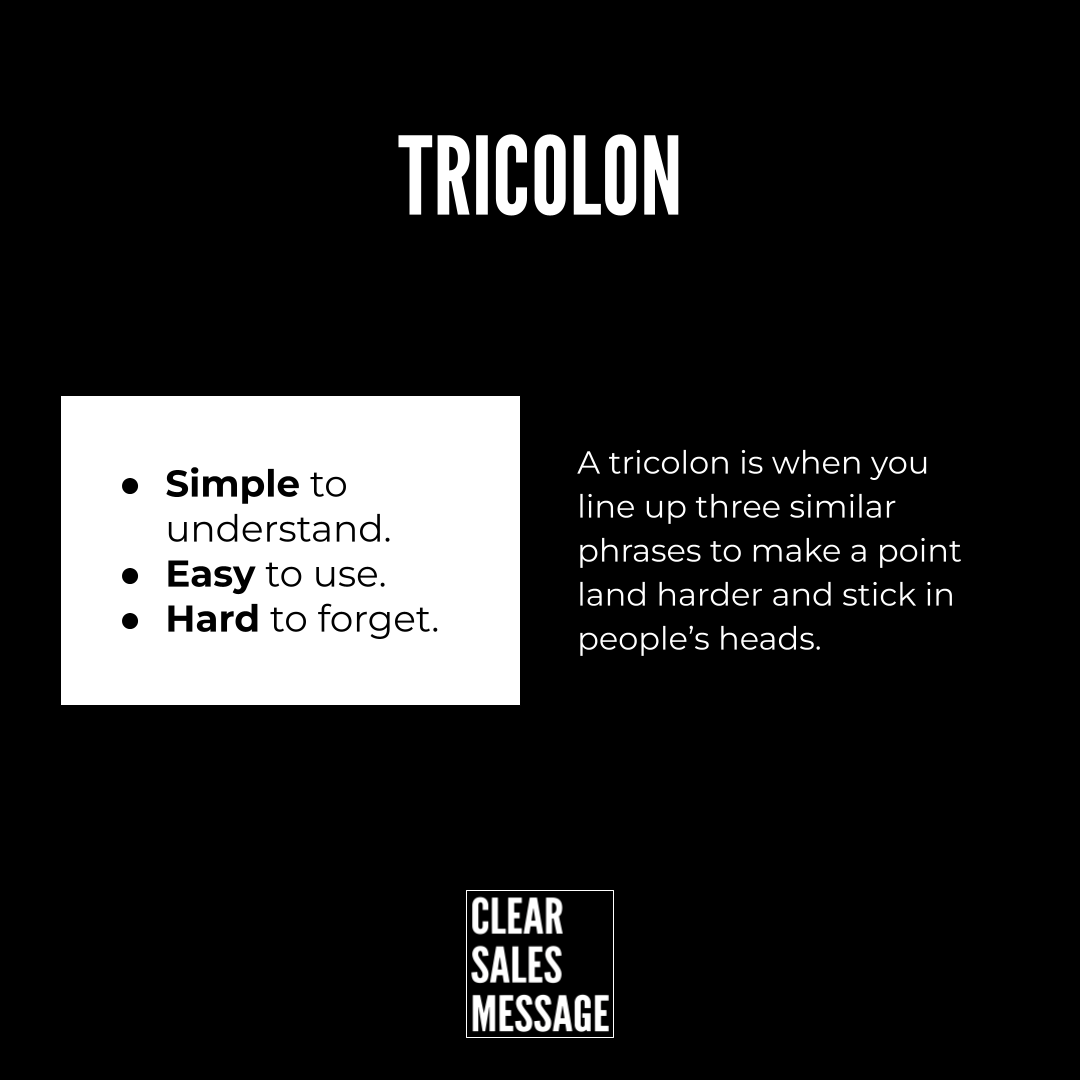
A tricolon is a communication technique where you line up three related words or phrases to express a single idea.
Instead of making a point once, you make it three times in slightly different ways. So the meaning becomes clearer, stronger, and easier to remember.
It isn’t about adding more information. Instead, it’s about giving the brain a pattern it already likes.
Why Does A Tricolon Work?
The human brain responds well to threes. One can feel weak. Two can feel unfinished. But three lands with a real sense of balance and resolution.
A tricolon works by building rhythm. Each phrase reinforces the one before it, guiding the listener or reader toward the same conclusion from a slightly different angle. So that repetition boosts comprehension and recall, without ever feeling repetitive.
Because the structure is predictable, the content feels easier to process. The message flows, the point lands, and the idea sticks.
This is exactly why tricolons turn up everywhere in effective communication, from speeches and slogans to headlines and sales messaging.
How Can You Use A Tricolon In Sales?
Use It To Make A Point Feel Obvious
A tricolon works especially well when you want to describe benefits, explain positioning, or summarise value without a long explanation. By grouping three aligned ideas together, you help buyers quickly understand what matters and why.
Use It To Slow Someone Down
A tricolon also works well when you want to slow someone down just enough to notice a message. The rhythm creates emphasis without ever needing to raise your volume.
Make Sure The Three Elements Genuinely Belong Together
Alignment is the key here. So the three parts have to genuinely relate to each other. When they do, the message feels intentional and polished. But when they don’t, it feels forced and a little awkward.
Used well, a tricolon doesn’t decorate your message. It sharpens it. And sharp messages are easier to remember, repeat, and act on.
When A Tricolon Works Best
It works best in moments built for emphasis, like a headline, a closing line, or a slogan, where you want one idea to land hard and stay memorable.
It’s also especially effective when you’re summarising something complex into a single, repeatable phrase, since the structure does the heavy lifting that a longer explanation would otherwise need.
When A Tricolon Becomes Dangerous
Trouble starts the moment the three elements feel mismatched, or forced together purely to hit the pattern. A tricolon built on a weak third item draws attention to the gap rather than the message.
It can also feel gimmicky if it’s overused. A tricolon in every single sentence stops feeling intentional and starts sounding like a tic, losing the impact that made it work in the first place.
Common Tricolon Mistakes
Forcing A Weak Third Item
Two strong points followed by a filler third one undermines the whole structure. All three need to carry real weight on their own.
Repeating The Same Idea Three Times
A tricolon needs slightly different angles on one idea, not the same sentence said three ways. Vary the phrasing so each line adds something.
Overusing The Pattern
A tricolon in every paragraph loses its impact fast. Save it for the moments that genuinely deserve the emphasis.
Tricolon – An Example
One of the most famous tricolons in history comes from Julius Caesar: “Veni, Vidi, Vici.” I came. I saw. I conquered.
Three short statements, each one building directly on the last. The structure itself tells the whole story, arrival, observation, and victory, without needing a single extra word of explanation.
That’s why it’s lasted over two thousand years. The rhythm does the remembering for you, which is exactly what a good tricolon is supposed to do.
See also