Practical Sales Training™ > How To Keep Your Clients Happy > Welcome Back Messaging
Welcome Back Messaging
What Is It
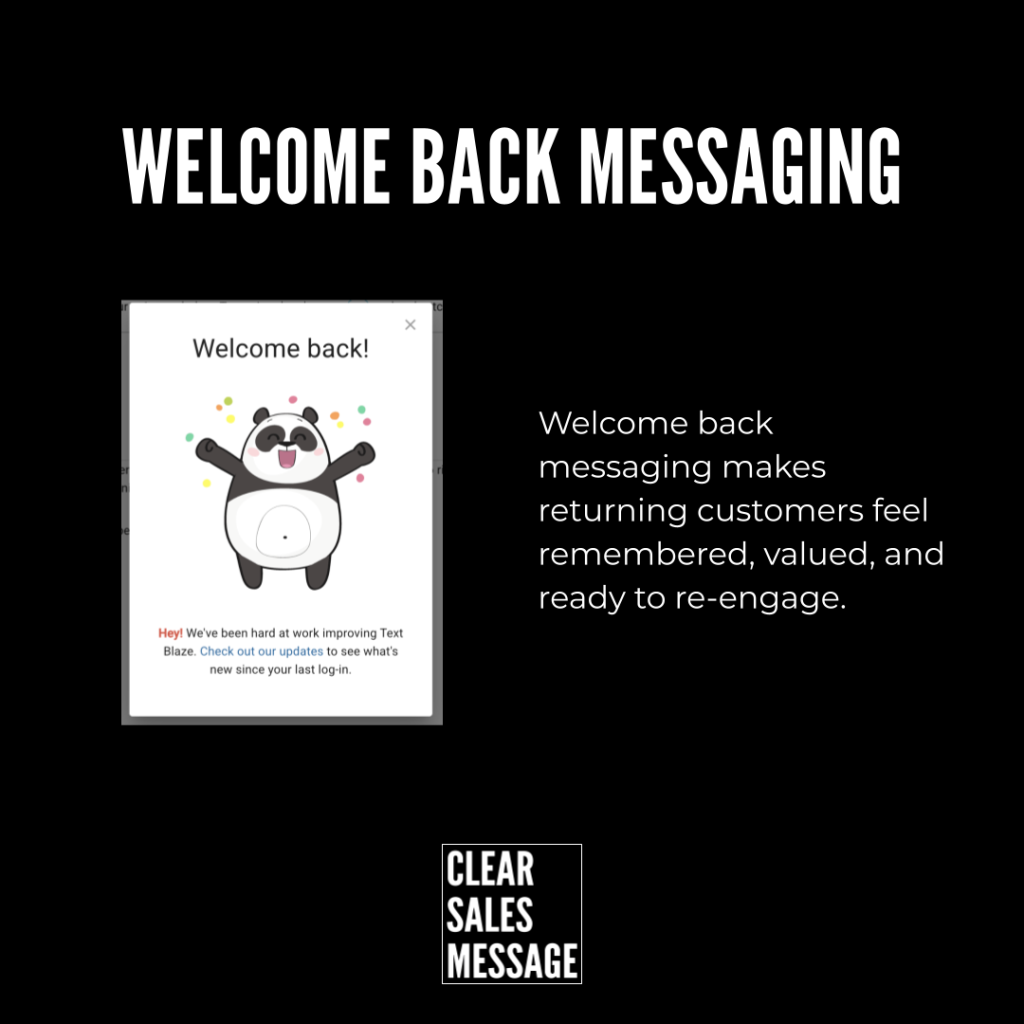
You open an app you haven’t touched in months, and it says welcome back, using your actual name. That small moment changes the whole visit.
That’s Welcome Back Messaging. It acknowledges someone returning after time away. So it says, we noticed, and we’re glad you’re here. This isn’t a reactivation campaign. Nor is it a win-back offer. It simply recognises a return that already happened.
Why Does It Work
It works because it triggers a warm, human response at the exact moment someone returns. So it starts with acknowledgement. That alone makes someone feel valued instead of forgotten.
It also works through context, referencing what changed since their last visit. So it closes with reinforcement, making the return feel welcomed rather than awkward. Timing matters most of all here. The message needs to land right after the absence.
How Can You Use It
Make It Personal
So make the message personal. Use their name if you have it, and reference their last interaction directly. A simple welcome back already creates real emotional lift.
Make It Relevant
Make them feel remembered too, without going over the top. So mention what’s changed since they left, new tools, new offers, or updates worth noticing.
Avoid The Guilt Trip
Avoid making anyone feel guilty about the time away. This isn’t about why they left. So it’s only about being glad they’re back.
When It Works Best
This works best right after a noticeable gap, the moment someone logs back in, revisits, or reopens an email. So closer timing means a stronger effect.
It also works well when there’s something genuinely new to mention, since that gives the welcome real substance. So real news lands harder.
When It Becomes Dangerous
This becomes awkward if the tone leans into guilt about the absence instead of warmth about the return. So that undoes the whole point.
It also falls flat if it arrives too late, long after the moment of return has already passed. So a delayed welcome reads automated.
Common Mistakes
Sending A Generic Message
Some brands send a generic message with no real personalisation at all. So a name and a specific reference matter more than clever copy.
Leading With A Discount, Not A Welcome
Others pile on discounts or offers instead of simply welcoming the person back. So let the message be about them first, and the offer second.
Triggering It Too Early
Some brands trigger the message too early, before the person has actually returned to do anything. So time it to the real moment.
Welcome Back Messaging – An Example
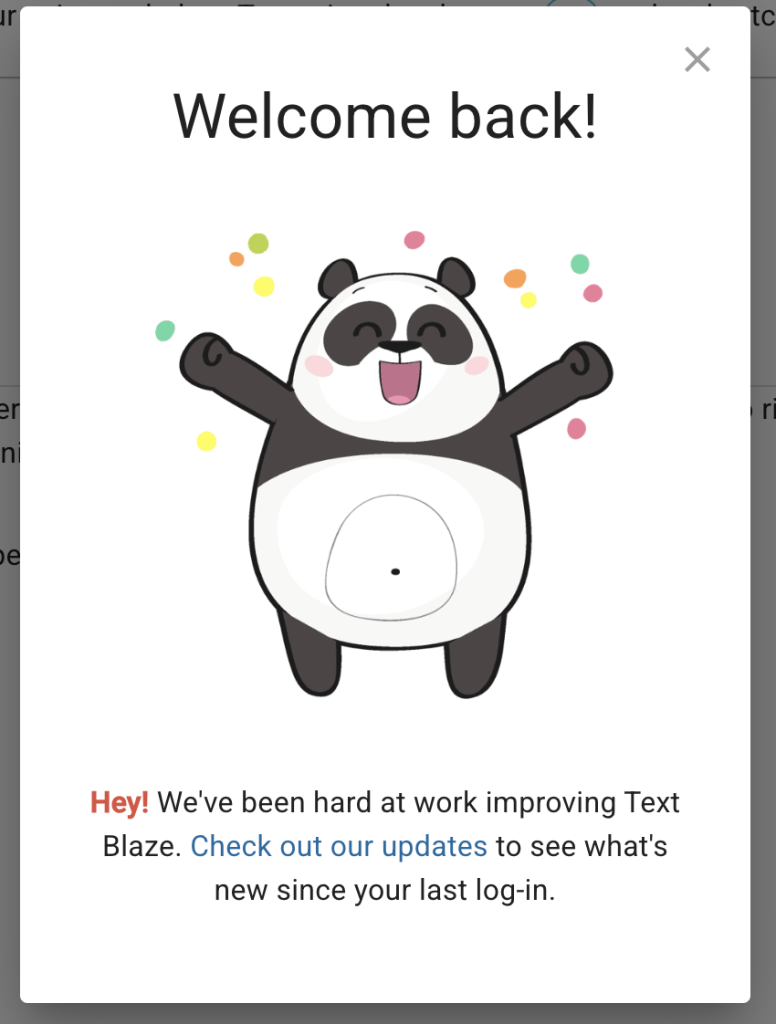
TextBlaze’s Return Popup
TextBlaze sent this exact popup after a long stretch with no logins. “It’s great to see you again. Since you were last here, we’ve made some exciting updates and improvements, all designed to help you get even more out of your experience. Take a look around and let us know if there’s anything you need.”
No mention of the gap itself, no guilt, just genuine warmth about the return. So the popup did its job in four short lines.
See also: